Skip to content
Briefings are running a touch slower this week while we rebuild the foundations.See roadmap
Iran Conflict 2026
8MAR

Ukraine cuts into Crimea's supply spine

2 min read
05:11UTC

Ukraine's Code 9.2 drone unit struck the Chonhar Bridge on 7 June as occupied Crimea cut petrol rationing to 20 litres per vehicle a week.

ConflictDeveloping
Key takeaway

Ukraine struck the Chonhar Bridge as Crimea cut petrol rationing to 20 litres a vehicle per week.

Occupied Crimea is now rationing petrol at 20 litres per vehicle a week, down from 20 litres a day, and the QR codes needed to buy it sold out within two hours on 7 June 1. ISW reports shortages of buckwheat, sugar, rice and flour spreading across the peninsula alongside the rationing. For ordinary drivers that means queuing for a code that buys barely a week's commuting.

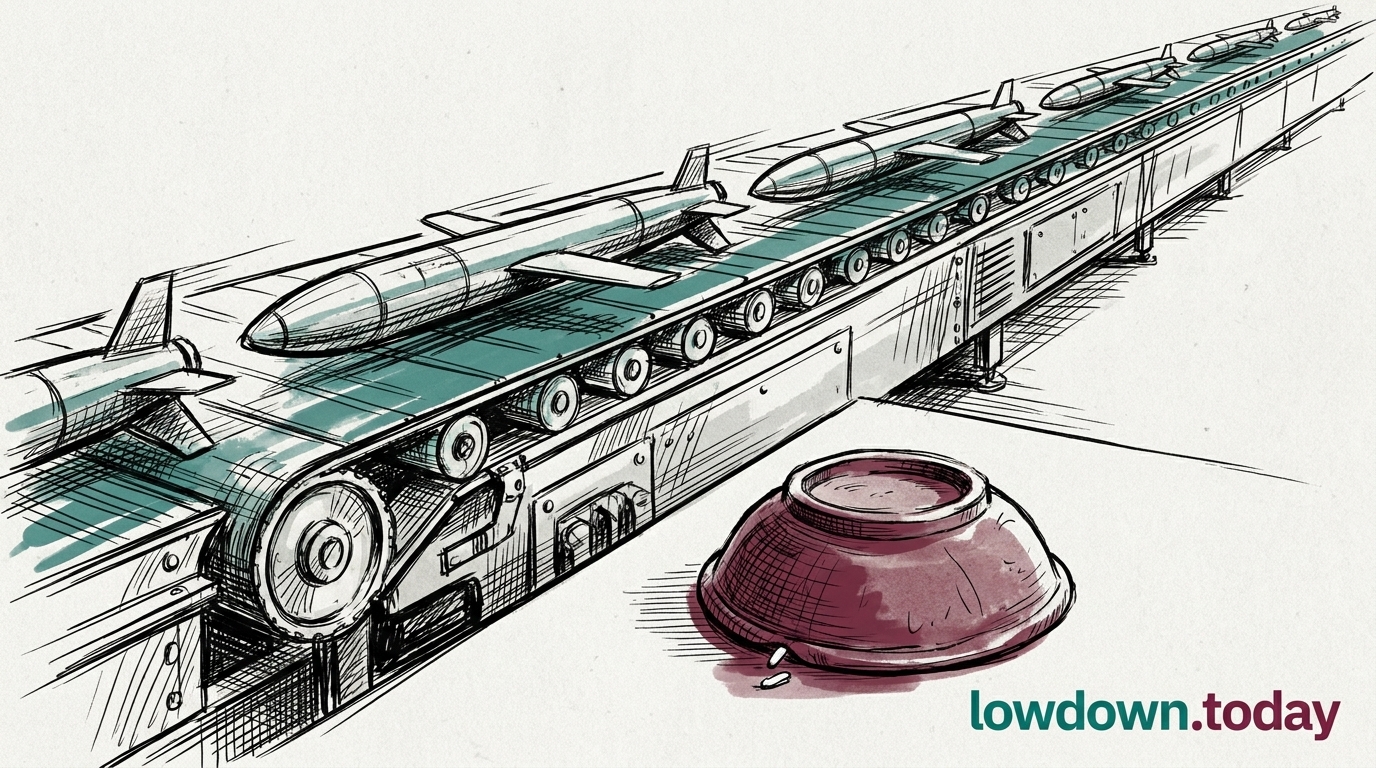
On 7 June, Ukraine's Code 9.2 drone unit struck the Chonhar Bridge, one of the road links from mainland Russia into Crimea, forcing traffic to reroute via Armyansk and adding roughly 130km to supply runs 2. A day earlier, ISW assessed Ukraine had achieved drone fire control over the T-22-09 land corridor, the route Russia opened in 2022 to bypass the Kerch bridge.

Russia can still resupply Crimea, yet the Kerch bridge, the T-22-09 corridor and now the Chonhar Bridge are each contested or lengthened. The squeeze is the same logic as Ukraine's strike on the Baltic Fleet and its run of net territorial gains since the spring : interdict the rear rather than batter a static front, and let the cost surface as queues and rationing far from the line of contact.


Deep Analysis

In plain English

Crimea is the Ukrainian peninsula Russia seized in 2014. Russia supplies it primarily by road across two bridges: the famous Kerch Bridge (which connects Crimea to mainland Russia across the Black Sea) and the smaller Chonhar Bridge (which connects Crimea to the Ukrainian mainland Russia now controls further north). Ukraine has repeatedly struck the Kerch Bridge in prior years. Striking the Chonhar Bridge now forces Russian supply convoys to take a much longer route via Armyansk in northern Crimea, adding roughly 130 kilometres of extra driving. Combined with the petrol ration being cut to 20 litres a week per vehicle (a seventh of what it was), civilian and military life on the peninsula is under severe supply pressure. The QR codes needed to buy fuel were selling out within two hours of release on 7 June.

Deep Analysis
Root Causes

Russia's Crimea logistics are structurally vulnerable because the peninsula has only two road corridors to the mainland controlled territory: Chonhar and Armyansk. The T-22-09 corridor was Russia's post-2022 bypass route after earlier Kerch Bridge damage.

Ukraine's drone reach now covers both routes simultaneously, a capability Ukraine did not have in 2022-23 when it relied on naval drones and cruise missiles. The 20-litres-per-week petrol ration is the downstream consequence of months of cumulative strike pressure on Crimea's supply chain.

What could happen next?
  • Consequence

    Russian military logistics to Crimea are degraded for as long as drone fire control over the T-22-09 corridor is maintained, raising the cost of every resupply run.

  • Risk

    Sustained Crimea supply pressure could force Russia to prioritise military over civilian fuel allocation, accelerating civilian discontent on the peninsula.

First Reported In

Update #19 · Ukraine burns the Baltic Fleet at Kronstadt

Institute for the Study of War· 9 Jun 2026
Read original
Causes and effects
This Event
Ukraine cuts into Crimea's supply spine
Every road link into Crimea is now contested or lengthened, and the petrol rationing is what that interdiction costs the peninsula in daily life.
Different Perspectives
Markets
Markets
Brent crude rose 2.2 per cent to $96.34 on 10 June, reversing a 7 per cent weekly decline built on deal optimism, as the overnight exchange repriced the Strait of Hormuz risk premium in a single session. The move reflects transit-risk repricing rather than supply shock: Iran's exports had already collapsed to below 300,000 barrels per day.
Pakistan
Pakistan
Pakistan's Naqvi channel, the only mediation track carrying both civilian and military buy-in, was stress-tested by live ordnance within 48 hours of the 6-7 June Tehran visit. Whether Washington informed Islamabad of the imminent strike plan while Naqvi was in Tehran remains undisclosed, putting the channel's neutrality under scrutiny.
Kuwait
Kuwait
Kuwait hosted the third Iranian strike on its soil since the 3 June airport drone attack, with Ali Al Salem airbase targeted in the three-country salvo. Its recent $1.98 billion Anduril Anvil counter-drone purchase signals it is rearming rather than reconsidering its hosting posture.
Bahrain
Bahrain
Bahrain absorbed the IRGC barrage via PAC-3 intercepts with its magazine already at 87 per cent depletion and no resupply before 2027. Sounding air-raid sirens over Manama, it faced the intercept burden with the thinnest defensive stack in the Gulf coalition.
Jordan
Jordan
Jordan reported all five incoming missiles intercepted with no injuries and no damage, a clean defensive performance that strengthens Amman's case for staying in the Western coalition without escalating its own posture. It now sits on Iran's target list for the first time despite not being a party to the Abraham Accords confrontation.
Iran / IRGC
Iran / IRGC
Foreign Minister Araghchi posted on X that US forces should 'leave our region if you want to be safe' and framed the exchange as a US defeat, while the IRGC claimed 21 targets hit and an F-35 hangar destroyed. The claims serve a domestic and Arab-audience framing rather than a verified battle-damage assessment.



