Skip to content
You can now search across every topic, entity and event.What's new
Iran Conflict 2026
8MAR

Eight crew killed on rescue tugboat

3 min read
05:11UTC

A tugboat sent to help an already-stricken tanker took two missiles. The eight dead are the first confirmed merchant crew killed in the IRGC's campaign against Gulf shipping.

ConflictDeveloping
Key takeaway

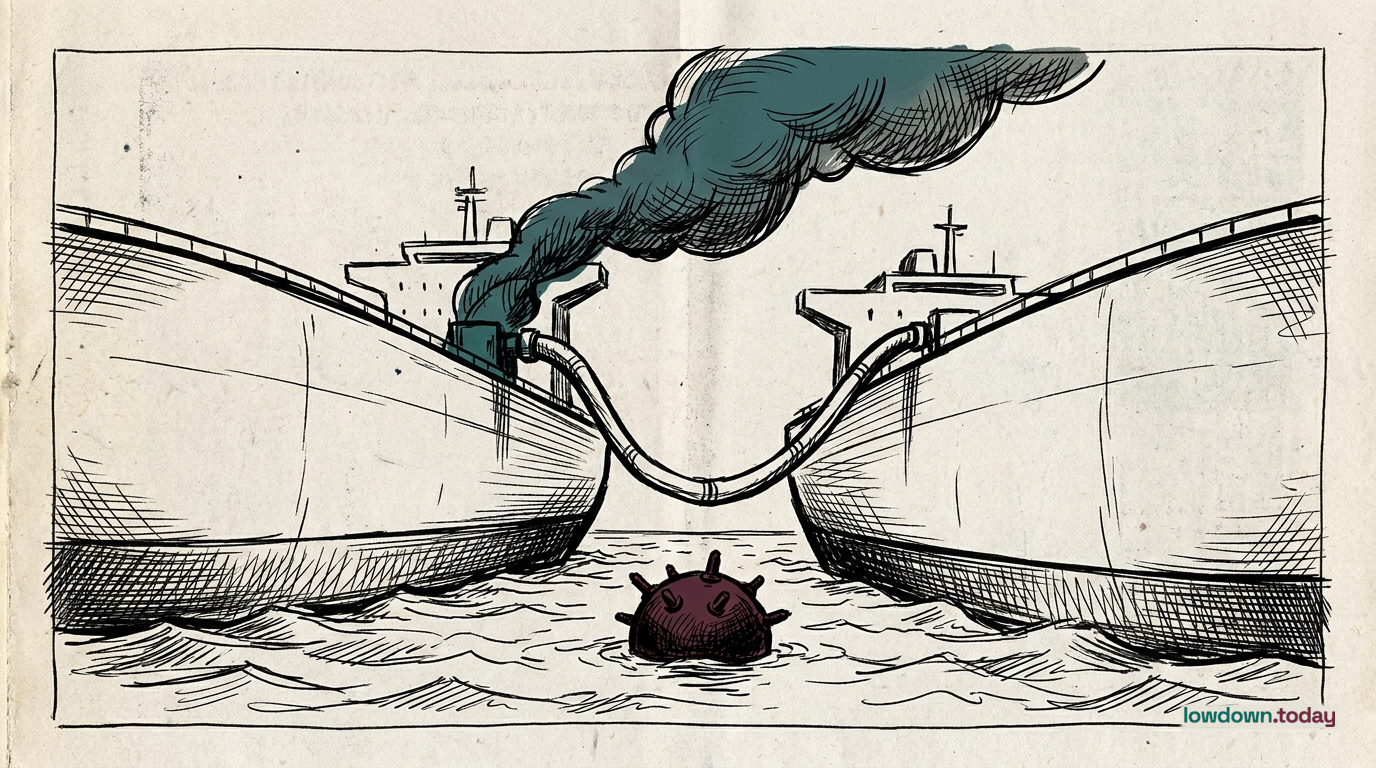
Striking a rescue vessel removes the humanitarian safety net that makes maritime transit viable: stricken ships become unassistable navigational hazards, and the SOLAS legal obligation to render assistance becomes a death trap.

A tugboat dispatched to assist the damaged tanker Safeen Prestige was struck by two missiles on 6 March. Eight crew members were killed — the first confirmed merchant seaman deaths from IRGC attacks on commercial shipping since the war began on 28 February.

The vessel was not making a commercial transit through the Strait. It was performing a rescue operation — sent to reach a tanker already hit in earlier fighting. Article 98 of the UN Convention on the Law of the Sea obligates all states to render assistance to persons in distress at sea. Striking a vessel engaged in that function carries separate legal exposure from attacks on commercial transits, which are themselves prohibited under UNCLOS unless the vessel is directly supporting military operations. No such claim was made by the IRGC.

The IRGC's shipping attacks have escalated through distinct stages. The Angolan-operated Sonangol Namibe was struck on Day 6 under a false IRGC claim that it was American-owned. Saturday's strikes on the Louise P and Prima followed a different pattern: the IRGC named both vessels, claimed responsibility publicly, and stated its rationale. The tugboat attack falls outside even that framework — no claim of enemy affiliation, no published justification. A rescue vessel destroyed while performing the duty maritime law requires.

The eight dead are the conflict's first confirmed civilian maritime casualties. Merchant crews operating in the Persian Gulf are drawn overwhelmingly from the Philippines, India, Myanmar, and Bangladesh — countries with no seat at any table where this war's terms will be set. With every major P&I club having withdrawn war risk coverage since 5 March and the world's three largest container lines refusing Gulf transits , the tugboat strike removes one more reason any commercial or rescue vessel would enter these waters.

Deep Analysis

In plain English

International maritime law requires ship captains to go to the aid of vessels in distress — it is a legal obligation, not a choice. When a ship in the Gulf was struck, a tugboat was legally required to respond and assist. The IRGC then struck that tugboat, killing eight people. This means Iran is not merely attacking ships trading in the Gulf; it is attacking the rescue system that makes maritime trade viable. Every seafarer in the region now knows that fulfilling their legal duty to assist another vessel could be fatal — a situation with no precedent in post-war Gulf crises.

Deep Analysis
Synthesis

The International Transport Workers' Federation (ITF) represents approximately 600,000 seafarers globally and has formal authority to declare a region unsafe and advise members — who make up the overwhelming majority of commercial maritime labour — to refuse transit. A formal ITF advisory triggered by confirmed crew fatalities in a rescue operation would achieve commercial paralysis of Gulf shipping without any state actor imposing a blockade and without any naval force having a clear mechanism to counter it. This non-military escalation pathway is the most consequential downstream risk from these eight deaths.

Root Causes

The IRGC's targeting of a rescue vessel serves a compound strategic purpose unavailable from attacking trading ships alone: it deters future rescue of IRGC-struck vessels, leaving them as persistent navigational hazards in the Strait, and signals that no humanitarian conventions apply in the Gulf — maximising the psychological deterrence value of each strike beyond the immediate casualty count.

Escalation

This is the most escalatory of the four assigned events. Confirmed crew fatalities in a legally mandated rescue operation create domestic political pressure in the victims' home countries — most likely the Philippines, India, or Indonesia given typical commercial crew demographics — to respond, impose travel advisories, or seek compensation, potentially internationalising the conflict beyond the direct belligerents.

What could happen next?
  • Precedent

    The IRGC has established that rescue vessels responding to IRGC-struck ships are valid targets, removing the customary humanitarian protection that rescue operations have held even in past Gulf crises and in the recent Houthi Red Sea campaign.

    Immediate · Assessed
  • Risk

    An ITF advisory declaring the Gulf unsafe for seafarers would create a crew-availability crisis for Gulf shipping entirely independent of state-level naval response, potentially achieving de facto commercial closure of the Strait.

    Short term · Suggested
  • Consequence

    Confirmed crew fatalities internationalise the conflict: the Philippines, India, and Indonesia — the primary labour sources for the global merchant fleet — face domestic political pressure to protect nationals, potentially triggering formal diplomatic protests or bilateral demands for naval convoy protection.

    Short term · Assessed
  • Meaning

    Stricken IRGC-struck vessels, now effectively unassistable, become persistent navigational hazards in the Strait of Hormuz — compounding the physical risk of transit beyond the direct threat of IRGC interdiction.

    Immediate · Assessed
First Reported In

Update #28 · Iran and Israel swap refinery strikes

Al Jazeera· 8 Mar 2026
Read original
Different Perspectives
India
India
India buys more Saudi crude than any other country and has 2.5 million nationals working in the kingdom, so a $100 Brent and a live strike on Saudi tankers reach New Delhi through both fuel bills and remittance risk. Neither channel has an alternative route the way Saudi Arabia's own pipeline does.
Qatar
Qatar
Qatar co-authored the four-mediator ten-day ceasefire proposal alongside Egypt, Pakistan and Oman, centred on resuming Hormuz navigation, while separately pursuing its dated compensation claim against Iran at the UN Security Council filed on 21 July. Doha is mediating and litigating in the same week.
Israel
Israel
Israeli intelligence, reported by the Wall Street Journal, assesses Iran moved thousands of centrifuges and part of its roughly 440kg enriched-uranium stock into Pickaxe Mountain after the June 2025 strikes on its three main nuclear sites. Some of the US refuelling aircraft now deploying to the region are bound for Israeli bases and Ramon Airport.
Houthis
Houthis
Yahya Saree announced the missile and drone strikes on the Encelia and Layla on 22 July as enforcement of the embargo his forces had declared by radio warning alone two days earlier. Six vessels already turned back on the broadcast; the strike shows Houthi forces will use weapons once warnings stop working.
Saudi Arabia
Saudi Arabia
Saudi Arabia's state news agency confirmed only a fire on the Encelia's bow, with the crew safe; the Layla strike remains unconfirmed by Riyadh. The kingdom built its Petroline pipeline specifically to bypass Hormuz through the Red Sea, so the tanker fire lands on the route Riyadh had already spent billions escaping.
United States
United States
Washington is weighing both ten-day proposals but wants a longer truce than either offers, and moved F-16 and F-35 jets plus refuelling aircraft into the region while it decides. That deployment, not Trump's Pickaxe Mountain remarks, is the measurable US action, buying options for the day talks fail rather than betting on them.