Skip to content
Briefings are running a touch slower this week while we rebuild the foundations.See roadmap
Iran Conflict 2026
5MAR

Congress asks if AI targeted the school

4 min read
04:57UTC

More than 120 House Democrats demand to know whether the Maven Smart System selected the Minab girls' school as a military target — shifting the investigation from bad intelligence to whether AI processed it without human review.

ConflictDeveloping
Key takeaway

Congress is asking whether AI processing of 5,000-plus targets makes IHL-required human review physically impossible.

More than 120 Democratic representatives wrote to Defence Secretary Pete Hegseth on Thursday asking whether the Maven Smart System — the Pentagon's AI-assisted targeting platform — or other automated tools identified the Shajareh Tayyebeh girls' school in Minab as a military target. The letter follows a similar demand from 46 senators, including independents Sanders and King , escalating the inquiry from the upper chamber to the lower one.

The question has narrowed since the strike on 28 February. Early reporting focused on whether outdated intelligence caused the misidentification. A preliminary US military investigation found the intended target was a nearby naval facility, and targeting data did not reflect current ground conditions . Three independent analyses — by the Washington Post, CNN, and CBC — used crater geometry, fragment analysis, and geolocated debris to conclude the strike was targeted and deliberate, aimed at a misidentified location . Between 165 and 180 people died, mostly primary-school girls. The Washington Post subsequently reported that the target list may have processed this outdated data through automated systems — and the question shifted from whether bad intelligence existed to whether an algorithm acted on it without a human checking the output.

The distinction matters because of the campaign's scale. Operation Epic Fury has struck more than 5,000 targets since 28 February — roughly 385 per day. At that rate, the question is whether meaningful human review of each targeting decision is physically possible, or whether the campaign's tempo has created a structural dependence on automated target generation that compresses human judgement to a formality. Project Maven was designed to accelerate target identification from hours to minutes. The Minab strike forces a specific question: at what point does acceleration make review impossible?

The Pentagon has not responded to the Senate letter. The House letter's explicit naming of Maven gives the administration a binary: confirm or deny the system's role. Hegseth's own statement on 2 March that US forces operate under "no stupid rules of engagement" will be read against whatever answer — or silence — follows. The accountability question has moved from the pilot who released the weapon to the system that selected the target.

Deep Analysis

In plain English

Project Maven is a US military AI system that analyses drone footage, satellite images, and intelligence data to help identify targets. In a campaign involving more than 5,000 targets, human analysts cannot individually verify every identification — there is simply not enough time or personnel. Congress is asking whether Minab's school was approved for a strike by an algorithm, without a human verifying it was a military site rather than a school. If true, the question is not just whether a mistake occurred. It is whether the entire targeting system is running faster than the legal safeguards designed to prevent civilian deaths can possibly operate.

Deep Analysis
Synthesis

The Maven inquiry exposes a structural gap in international humanitarian law that no existing framework has resolved: the doctrine of proportionality and precaution under Additional Protocol I was designed for targeting processes where human judgement is the rate-limiting step.

AI targeting shifts the rate-limiting step to computational throughput. The Minab inquiry is not primarily about one school — it is the first major legislative test case for whether IHL's precautionary principle is operationally compatible with AI-assisted warfare at scale.

Root Causes

The targeting tempo problem is not incidental — it is designed in. The US military developed Maven explicitly to compress the 'kill chain' from days to hours, drawing on counterinsurgency lessons where fleeting targets disappear before strikes can be approved.

Applied to a large-scale air campaign, the same compression logic transforms human review into a throughput bottleneck. Commanders facing operational pressure to maintain strike tempo face systemic institutional incentives to treat AI outputs as pre-approved rather than as recommendations requiring individual human verification.

What could happen next?
  • Precedent

    AI-assisted targeting at this scale, if uninvestigated, establishes a de facto standard that all major military powers will cite to justify equivalent systems in future conflicts.

    Long term · Assessed
  • Risk

    If Maven's role is confirmed, the US faces potential ICJ exposure or international tribunal proceedings for civilian strikes processed without adequate human review.

    Medium term · Suggested
  • Consequence

    Congressional pressure may force DOD to impose human-review requirements that reduce targeting tempo, directly constraining Operation Epic Fury's strike efficiency.

    Short term · Assessed
  • Meaning

    The shift in the inquiry's central question — from bad data to absent oversight — reframes Minab from an isolated accident to a systemic institutional failure.

    Immediate · Assessed
First Reported In

Update #33 · Oil breaks $100; war reaches Iraqi waters

NBC News· 13 Mar 2026
Read original
Causes and effects
This Event
Congress asks if AI targeted the school
The congressional investigation has escalated from the Senate to the House and narrowed from whether outdated intelligence caused the Minab strike to whether AI systems generated the target without adequate human review — a question with implications for the entire 5,000-plus target campaign, not just this single incident.
Different Perspectives
Gulf shipping and insurance markets
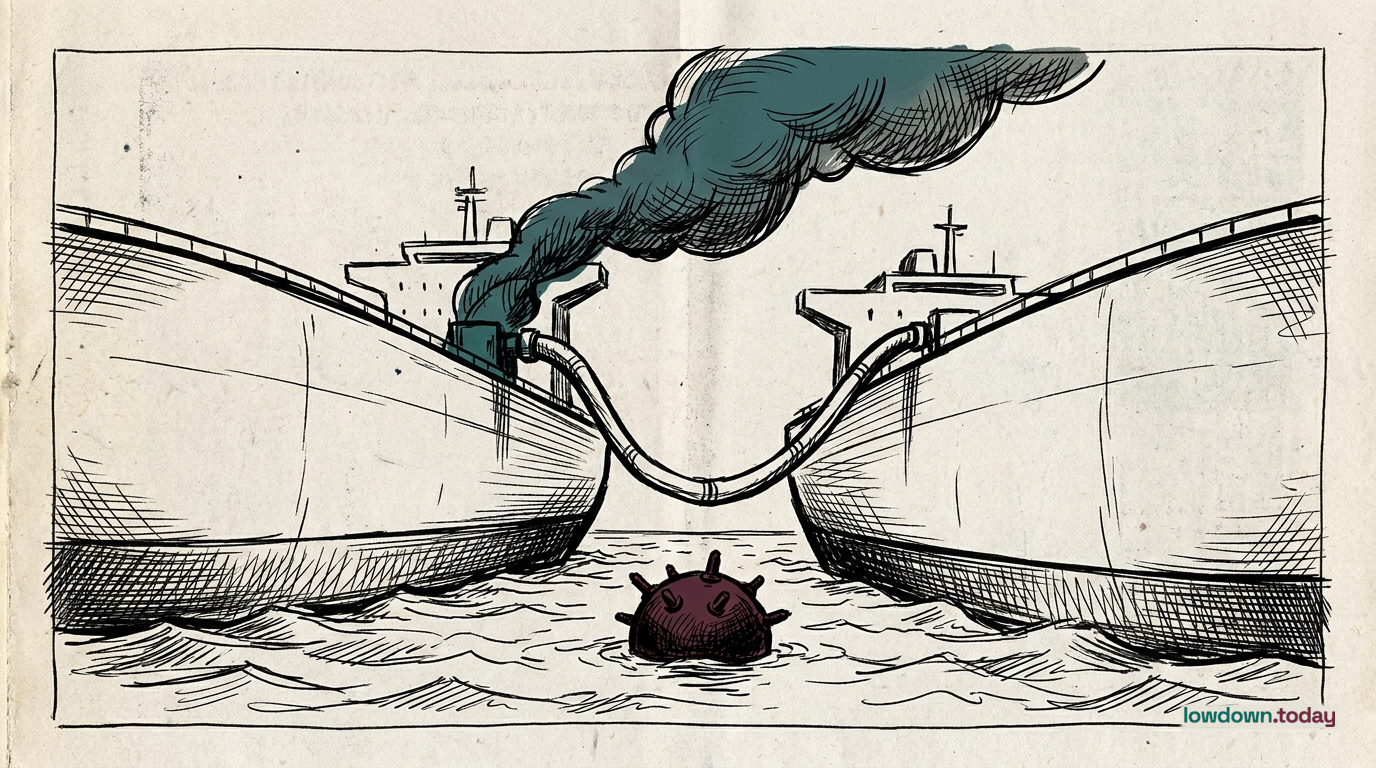
With Hormuz and Bab el-Mandeb both hostile at once, war-risk underwriters face their first dual-chokepoint pricing problem; the rerouting hedge that absorbed one closure is gone for Israeli-linked hulls. Any deal that reopens Hormuz without a Houthi stand-down clause delivers only partial shipping relief.
Russia and China
Russia and China
Russia and China met IAEA chief Grossi jointly in Geneva on 5 June to coordinate an advance blocking position against Washington's censure resolution, the first documented instance of proactive pre-session obstruction rather than reactive post-vote dissent. Beijing's move came four days after OFAC designated Shanghai Qianye Energy under Iran energy sanctions.
Saudi Arabia
Saudi Arabia
Saudi Arabia was left out of the emergency $4.01 billion Patriot waiver Qatar received on 2 May as its own PAC-3 stocks ran near-empty from intercepting Iranian salvoes over Aramco facilities. Riyadh is on a standard 18-month FMS queue behind a production line booked through 2030, with no equivalent priority to Qatar's Al Udeid basing role.
Houthis (Ansar Allah)
The Houthis declared a complete ban on Israeli Red Sea navigation on 8 June and struck Jaffa, their first attack on Israeli territory since April, seven days after the Tasnim authorisation to activate other fronts including Bab el-Mandeb. The declaration put both chokepoints under hostile authority simultaneously.
Iran
Iran
Iran agreed the 9 June mutual halt after the Mahshahr exchange and coordinated with Russia and China to block Washington's IAEA censure resolution, using the Board as a second front while the bilateral pause held on the military one. Tehran's acceptance of the Lebanon carve-out contradicts the linkage position it stated on 1 June.
Benjamin Netanyahu and the IDF
Israel struck the Karun Petrochemical plant at Mahshahr on 8 June over Trump's explicit objection, then agreed a halt with Iran the following day scoped on Israeli terms with Lebanon carved out. Netanyahu's posture is that the IDF will not accept Iranian missile factories as off-limits regardless of US diplomatic timelines.