Skip to content
Briefings are running a touch slower this week while we rebuild the foundations.See roadmap
Iran Conflict 2026
5MAR

46 senators demand Minab investigation

3 min read
04:57UTC

Nearly half the Senate demands a public investigation into the girls' school strike — but the demand carries no mechanism to compel one.

ConflictDeveloping
Key takeaway

Zero Republican signatures converts this letter into a partisan statement without enforcement power.

Forty-six senators — 44 Democrats plus independents Bernie Sanders and Angus King — wrote to Defence Secretary Pete Hegseth on Wednesday demanding a public investigation into the strike on the Shajareh Tayyebeh girls' school in Minab. Between 165 and 180 people were killed, mostly primary school girls, along with teachers and parents.

The letter quoted Hegseth's own words back to him: his 2 March statement that US forces operate under "no stupid rules of engagement." Three independent investigations — by the Washington Post, CNN, and CBC — had already concluded from crater geometry, fragment analysis, and geolocated debris that the strike was a US weapon fired at a misidentified target . The senators' letter arrived two weeks after those findings were published, and days after the Massie-Khanna war powers resolution failed by seven votes in the same Congress.

Forty-six senators is not a majority. It is not enough to compel disclosure under any existing mechanism. The same chamber that declined to assert its constitutional authority over the war's legality is now asking the executive branch to investigate itself. A letter is political pressure; it is not a subpoena. The investigation remains classified and preliminary. Neither findings nor accountability measures have been made public. The administration controls both the timeline and the classification level — and 46 signatures, without a Republican among them, do not change that arithmetic.

The historical pattern is instructive. Congressional inquiries into wartime targeting failures — from the 1999 Chinese embassy bombing in Belgrade to the 2015 Kunduz hospital strike — have consistently produced findings only after the political pressure that initiated them dissipated. The Pentagon's inspector general took 18 months to investigate the 2019 Baghuz strike that killed dozens of Syrian civilians. The question is whether Minab — where thousands gathered for a mass funeral in the town's central square — generates sustained domestic political cost sufficient to compress that timeline.

Deep Analysis

In plain English

Forty-six senators from one party wrote to the Defence Secretary demanding answers about a school bombing that killed over 165 people, mostly young girls. They used his own words — that US forces operate without restrictions — as evidence of a command culture problem. But a letter with zero signatures from the other party cannot compel hearings, subpoena documents, or force testimony. Under current Senate rules, the majority controls the committee calendar. This letter has no procedural mechanism to force a response.

Deep Analysis
Synthesis

The Hegseth ROE statement, now formally cited in a Senate letter, transforms pre-conflict doctrine rhetoric into a documented evidentiary record. If accountability proceedings emerge in any future forum — domestic or international — that citation connects command philosophy to a specific outcome. This is an unusual instance where a political appointee's public statement becomes load-bearing in a legal accountability chain.

Root Causes

The War Powers Act delegated broad force authorisation to the executive while retaining no automatic public accountability trigger for targeting failures. Congress has the power to demand investigations but not to compel declassification of preliminary military findings classified under national security grounds.

Escalation

The letter's partisan composition structurally caps its escalation potential. Binding oversight actions — subpoenas, compelled testimony, funding restrictions — require majority support the signatories do not have. The administration controls the investigation timeline and classification, allowing political pressure to dissipate before findings are due.

What could happen next?
  • Precedent

    If investigation findings are classified and no accountability follows, it establishes that executive targeting investigations need not be publicly disclosed even when mass civilian casualties are confirmed.

    Medium term · Assessed
  • Risk

    The administration controls the investigation timeline; political pressure from 46 senators without Republican support dissipates as the conflict continues and news cycles shift.

    Short term · Assessed
  • Consequence

    Hegseth's cited ROE statement creates a documented record linking command philosophy to a specific targeting outcome, available to future oversight processes or international forums.

    Long term · Suggested
First Reported In

Update #32 · UN condemns Iran 13-0; ceasefire blocked

Al Jazeera· 12 Mar 2026
Read original
Causes and effects
This Event
46 senators demand Minab investigation
The letter is the first organised congressional challenge to the conduct of Operation Epic Fury. It tests whether 46 signatures can force disclosure from an administration that controls both the investigation timeline and the classification level, after the same Congress failed by seven votes to assert war powers authority.
Different Perspectives
Gulf shipping and insurance markets
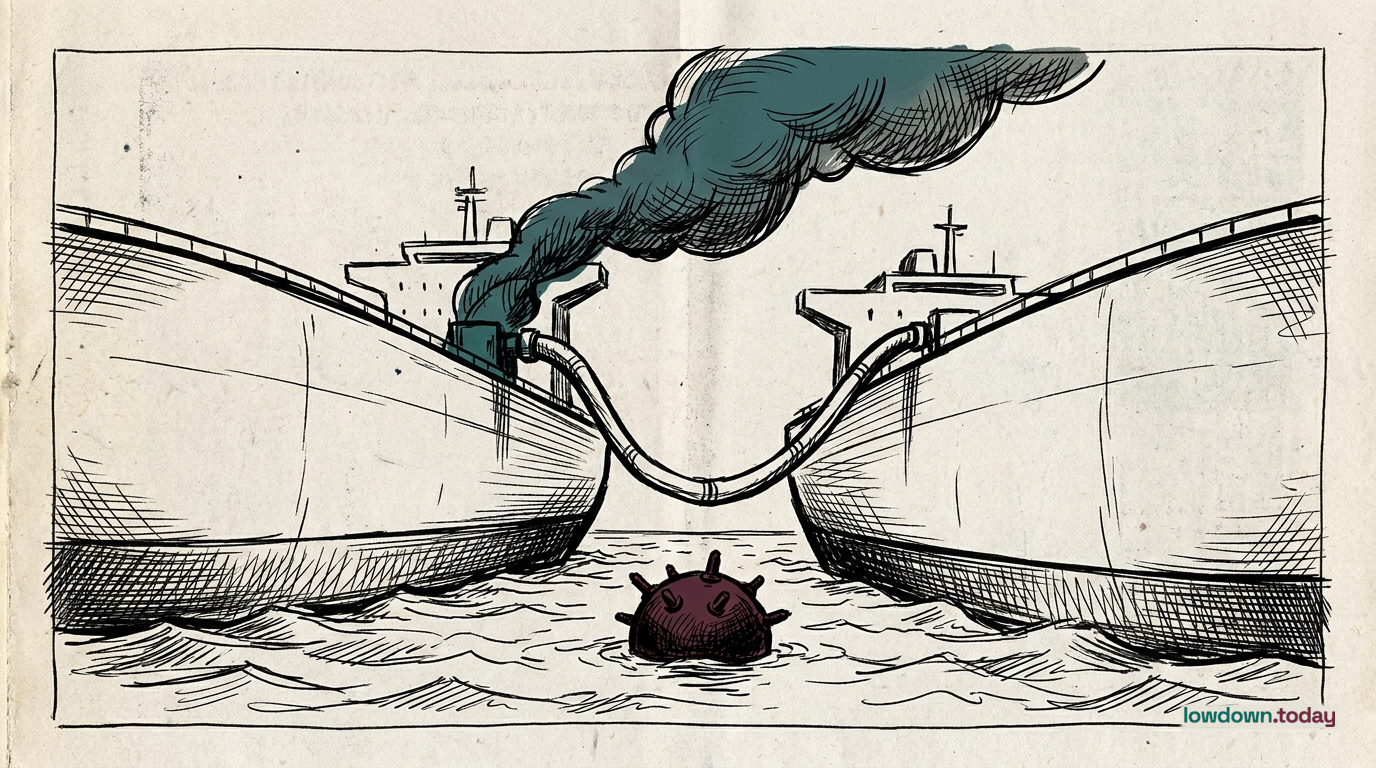
With Hormuz and Bab el-Mandeb both hostile at once, war-risk underwriters face their first dual-chokepoint pricing problem; the rerouting hedge that absorbed one closure is gone for Israeli-linked hulls. Any deal that reopens Hormuz without a Houthi stand-down clause delivers only partial shipping relief.
Russia and China
Russia and China
Russia and China met IAEA chief Grossi jointly in Geneva on 5 June to coordinate an advance blocking position against Washington's censure resolution, the first documented instance of proactive pre-session obstruction rather than reactive post-vote dissent. Beijing's move came four days after OFAC designated Shanghai Qianye Energy under Iran energy sanctions.
Saudi Arabia
Saudi Arabia
Saudi Arabia was left out of the emergency $4.01 billion Patriot waiver Qatar received on 2 May as its own PAC-3 stocks ran near-empty from intercepting Iranian salvoes over Aramco facilities. Riyadh is on a standard 18-month FMS queue behind a production line booked through 2030, with no equivalent priority to Qatar's Al Udeid basing role.
Houthis (Ansar Allah)
The Houthis declared a complete ban on Israeli Red Sea navigation on 8 June and struck Jaffa, their first attack on Israeli territory since April, seven days after the Tasnim authorisation to activate other fronts including Bab el-Mandeb. The declaration put both chokepoints under hostile authority simultaneously.
Iran
Iran
Iran agreed the 9 June mutual halt after the Mahshahr exchange and coordinated with Russia and China to block Washington's IAEA censure resolution, using the Board as a second front while the bilateral pause held on the military one. Tehran's acceptance of the Lebanon carve-out contradicts the linkage position it stated on 1 June.
Benjamin Netanyahu and the IDF
Israel struck the Karun Petrochemical plant at Mahshahr on 8 June over Trump's explicit objection, then agreed a halt with Iran the following day scoped on Israeli terms with Lebanon carved out. Netanyahu's posture is that the IDF will not accept Iranian missile factories as off-limits regardless of US diplomatic timelines.