Skip to content
Welcome, thoughtbot's Giant Robots listeners!Start here
Iran Conflict 2026
8NOV

Oil prices a Hormuz reopening that has not happened

4 min read
19:56UTC

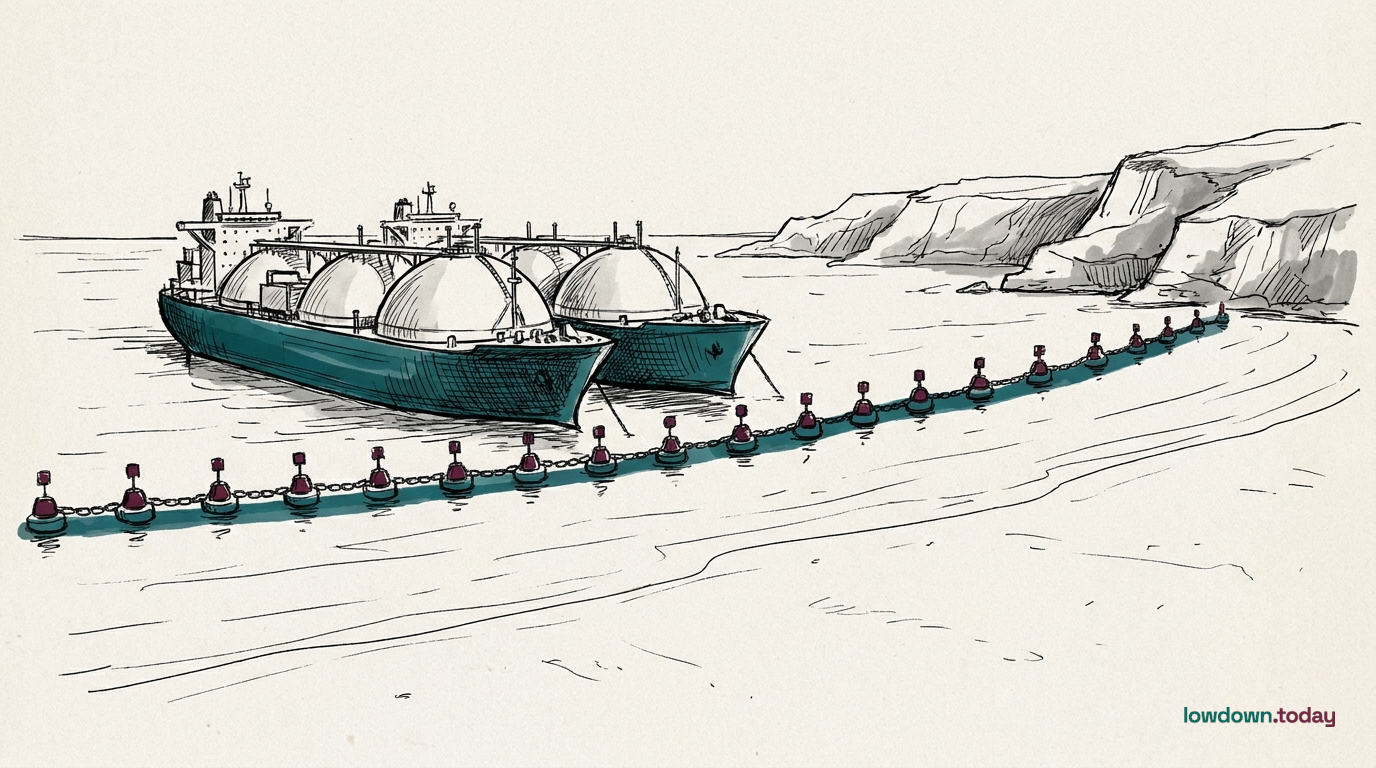
Brent crude fell to about $77.22 on 18 June, a pre-war level, while not one tanker resumed transit, insurers kept the strait excluded and the mines stayed live. The market is reading the signature; the water disagrees.

ConflictDeveloping
Key takeaway

Brent is pricing a reopening that no insurer, mine crew or transit log has yet confirmed on the water.

Brent Crude, the benchmark that sets the price of roughly two-thirds of internationally traded oil, fell to about $77.22 on 18 June, down 6.9 per cent from $82.98 and back to a level last seen before the war⁠1. Traders treated the signed Islamabad Memorandum of Understanding (MoU) as a completed reopening of the Strait of Hormuz. Not one tanker resumed transit.

The physical strait tells a different story from the screen. No Protection and Indemnity (P&I) club, the mutual insurers that cover roughly 90 per cent of ocean-going tonnage, has lifted its Hormuz war-risk exclusion; premiums sit at four to twenty times pre-war levels, and transits run near 6 per cent of baseline. Mine-clearance crews are still working uncleared waters: an IRGC vessel issued a radio warning to a US warship during that work on signing day. None of that has reached the insurance market that decides whether a hull moves.

Brent had touched $87.33 only days earlier and slipped below $90 when the ceasefire first looked probable; the slide now prices an operational resumption rather than a rising probability of one. If the OFAC waiver never lands, or the 60-day toll-free window lapses into a fee, the gap between paper and water closes upward. Brent at $77 runs several weeks ahead of any operational change in the strait itself.

Deep Analysis

In plain English

Financial markets and physical ships operate on different clocks. Traders in London can reprice oil within seconds of reading a news headline. A tanker captain deciding whether to sail through the strait of Hormuz needs to know the mines have been cleared, that his insurance still covers him, and that an armed vessel will not stop him halfway through. On 18 June, Brent fell 6.9% to $77.22 as traders priced the deal as a completed reopening. Yet BIMCO, the world's largest shipowner association, confirmed no P&I club had lifted its war-risk exclusion. CENTCOM's two carrier groups continued redirecting vessels. Iranian-laid mines remained uncleared. Zero commercial tankers completed a Hormuz transit that day. The price moved; the strait did not.

What could happen next?
  • Risk

    If no commercial tanker completes a Hormuz transit by 25 June, Brent is likely to rebound toward $82 to $84 as traders recognise the physical-to-paper gap.

    Immediate · Assessed
  • Consequence

    Saudi Arabia's four idle supergiant fields , representing 2 to 2.5 million barrels per day of capacity , will not restart until owners confirm Hormuz is operationally clear, because VLCC loading at Safaniya and Ras Tanura exits via the strait.

    Short term · Assessed
  • Opportunity

    The first commercial VLCC completing a Hormuz transit under P&I cover would be the most significant operational market signal since the conflict began, likely accelerating the Brent decline by a further $3 to $5.

    Short term · Reported
First Reported In

Update #131 · Iran deal's first death tests the text

CNBC· 18 Jun 2026
Read original →
Different Perspectives
Office for Budget Responsibility
The OBR's 28 October forecast assumed $82 oil for 2026 and 2027, from market prices for the ten working days to 19 August, and blamed dearer wholesale energy on the war without naming Iran. It expects CPI inflation close to 4% in early 2027 even at that price.
Hengaw, Kurdish rights group
Hengaw reported the 3 November hangings of Amirhossein Maleki and Amirhossein Ebrahimi in Isfahan, saying Ebrahimi was tortured into confessing and that nine of 12 people sentenced to death in the case have now been hanged. Iran's judiciary holds that the defendants killed members of the security forces.
FINTRAC, Canada's financial intelligence unit
FINTRAC worked with the US Treasury on the 6 November designation of eight money services businesses in British Columbia, Ontario and Quebec. Treasury says the businesses still operate, some under new names, so closing them falls to Ottawa.
Abdul Qadir al-Dakhil, Governor of Nineveh
Al-Dakhil cancelled three Mosul International Airport contracts on 7 November over alleged links to armed groups, after meeting Prime Minister Ali al-Zaidi in Baghdad. He named no group or company, and said the contracts will go to international companies.
Kuwait
Kuwait
Kuwait condemned the Houthi missile fired towards the Madinah region on 5 November and restated its support for Saudi Arabia, the Qatar News Agency reported. Its state tanker company, Kuwait Oil Tankers Company, is among the Gulf state fleets on Iran's expanded Hormuz list.
Scott Bessent, US Treasury Secretary
Treasury designated an alleged Chandigarh false-flag network on 4 November and eight Canadian exchangers on 6 November, while State sanctioned alleged MANPADS intermediaries. None of the actions touches an oil buyer; they target the paper, cash and procurement around Iran's trade.

Written with AI from Lowdown's published reporting. Not individually reviewed by an editor. Editorial standards.
