Skip to content
Welcome, thoughtbot's Giant Robots listeners!Start here
Iran Conflict 2026
8NOV

Med refiners face a thinner backfill

2 min read
19:56UTC

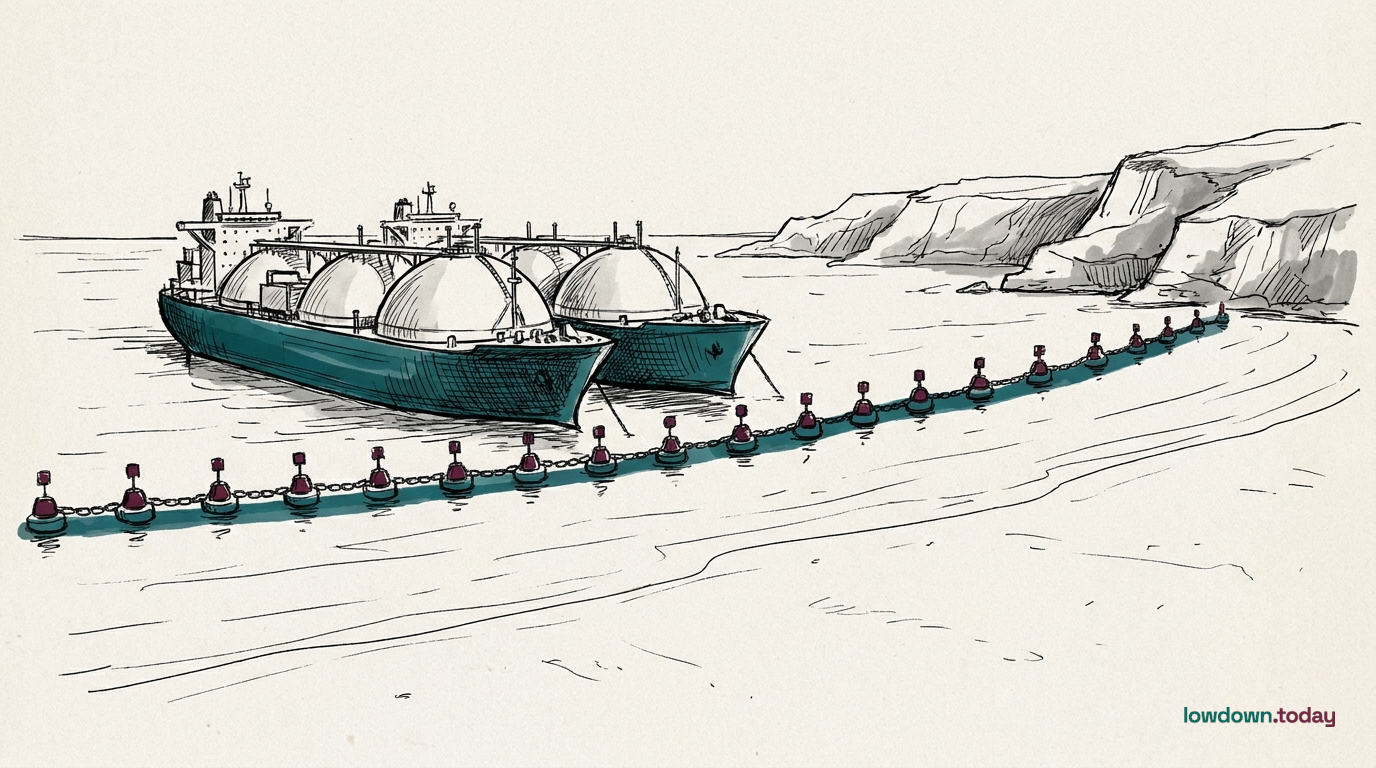
Egypt's Ain Sokhna terminal is drawing 23% of Yanbu's rerouted crude north through the same Suez corridor that Mediterranean refiners lean on to backfill their own product shortfalls.

ConflictDeveloping
Key takeaway

Ain Sokhna pulls crude up the corridor Med refiners need for product, tightening an already thin distillate backfill.

Egypt's Ain Sokhna terminal, the Red Sea inlet of the SUMED pipeline, is taking 23% of Yanbu's rerouted crude, Vortexa estimates⁠1. SUMED, the Suez-Mediterranean Pipeline, carries crude overland from Ain Sokhna to the Mediterranean coast, bypassing the canal itself. That crude draw runs up the same Suez corridor Mediterranean refiners rely on to bring in the product cargoes that cover their own shortfalls.

The diversion lands on a market already stretched. Fujairah light-distillate stocks collapsed 37% to a record low on 20 July, and independent ARA gasoil inventories sat near a two-and-a-half-year low around 13.48 million barrels. Both hubs feed the same Mediterranean and North-West European product balances now being asked to absorb a thinner backfill.

Watch Mediterranean gasoil and jet cracks for the repricing this sets up. If Suez-routed product cargoes thin while Ain Sokhna pulls crude north, the Med loses the cheapest leg of its backfill at the moment the Atlantic basin is already rationing distillate. The squeeze is structural rather than a headline move: it builds cargo by cargo as long as the corridor carries crude north instead of product west.

Deep Analysis

In plain English

The Suez Canal cannot fit every big oil tanker when fully loaded, so a pipeline called SUMED carries some of that oil across Egypt by land instead, from Ain Sokhna on the Red Sea to Sidi Kerir on the Mediterranean. Now that Saudi oil is being rerouted away from the southern Bab el-Mandeb route, almost a quarter of it is using this same pipeline, competing with the oil that normally flows through it. Because the pipeline has a fixed maximum capacity, unlike a canal where ships can simply wait in a queue, this squeeze is harder to absorb, and it is contributing to already-low fuel stocks in the Middle East and Europe.

Deep Analysis
Root Causes

SUMED exists because Suez Canal draught restrictions cap how much crude a fully laden VLCC can carry through the waterway; oversized cargoes discharge part-load into SUMED at Ain Sokhna and reload at Sidi Kerir on the Mediterranean side, making the pipeline's fixed capacity, not the Canal's queuing system, the true bottleneck for large-vessel crude.

Because that capacity is fixed rather than elastic, every barrel of Yanbu's rerouted crude that uses Ain Sokhna competes directly with the pipeline's pre-existing Gulf-to-Mediterranean flow, thinning the same backfill that Mediterranean refiners rely on to keep product stocks at ARA and Fujairah from drawing further down.

What could happen next?
  • Risk

    SUMED's fixed throughput ceiling, rather than Suez Canal queuing capacity, becomes the binding constraint on Mediterranean crude supply if the rerouting persists.

  • Consequence

    Fujairah and ARA product stocks, already near record lows, have less room to rebuild while crude backfill through SUMED is diverted toward absorbing Yanbu's rerouted volume.

First Reported In

Update #20 · Saudi crude reroutes to Suez, freight bites

AFP / AP / Reuters (Kpler and Vortexa data)· 27 Jul 2026
Read original →
Different Perspectives
Office for Budget Responsibility
The OBR's 28 October forecast assumed $82 oil for 2026 and 2027, from market prices for the ten working days to 19 August, and blamed dearer wholesale energy on the war without naming Iran. It expects CPI inflation close to 4% in early 2027 even at that price.
Hengaw, Kurdish rights group
Hengaw reported the 3 November hangings of Amirhossein Maleki and Amirhossein Ebrahimi in Isfahan, saying Ebrahimi was tortured into confessing and that nine of 12 people sentenced to death in the case have now been hanged. Iran's judiciary holds that the defendants killed members of the security forces.
FINTRAC, Canada's financial intelligence unit
FINTRAC worked with the US Treasury on the 6 November designation of eight money services businesses in British Columbia, Ontario and Quebec. Treasury says the businesses still operate, some under new names, so closing them falls to Ottawa.
Abdul Qadir al-Dakhil, Governor of Nineveh
Al-Dakhil cancelled three Mosul International Airport contracts on 7 November over alleged links to armed groups, after meeting Prime Minister Ali al-Zaidi in Baghdad. He named no group or company, and said the contracts will go to international companies.
Kuwait
Kuwait
Kuwait condemned the Houthi missile fired towards the Madinah region on 5 November and restated its support for Saudi Arabia, the Qatar News Agency reported. Its state tanker company, Kuwait Oil Tankers Company, is among the Gulf state fleets on Iran's expanded Hormuz list.
Scott Bessent, US Treasury Secretary
Treasury designated an alleged Chandigarh false-flag network on 4 November and eight Canadian exchangers on 6 November, while State sanctioned alleged MANPADS intermediaries. None of the actions touches an oil buyer; they target the paper, cash and procurement around Iran's trade.

Written with AI from Lowdown's published reporting. Not individually reviewed by an editor. Editorial standards.
