Skip to content
You can now search across every topic, entity and event.What's new
Iran Conflict 2026
21SEP

US, Iran and Qatar differ on Doha round

2 min read
15:34UTC

Trump called the Doha talks positive and said Iran requested them; Baghaei said Tehran will not meet the Americans at any level; Qatar said Witkoff and Kushner met mediators, not Iranians.

ConflictDeveloping
Key takeaway

Three governments gave three accounts of one Doha round, and nothing signed exists to settle which is true.

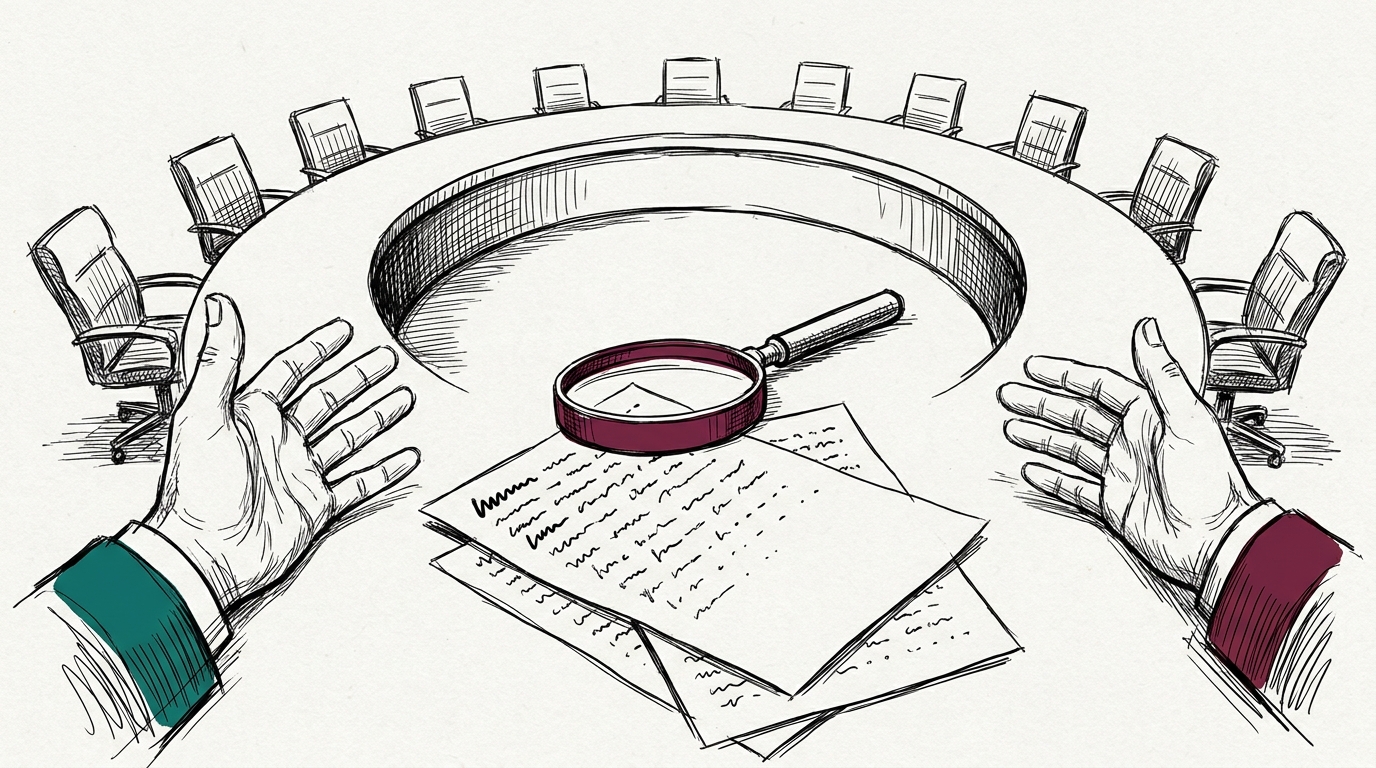
On 1 July, Washington, Tehran and Doha gave three irreconcilable accounts of the same negotiation in Qatar's capital. Donald Trump said Iran had "requested a meeting", and a senior US official told Bloomberg the technical talks were "positive and progressing" 1. Iran's foreign ministry spokesman Esmaeil Baghaei said the opposite: Tehran "will not have any negotiation meetings at any level with the American side in the coming days", and its delegation "has nothing to do with" the US visit 2.

Deputy foreign minister Kazem Gharibabadi called reports of technical working-group talks "not confirmed". Qatar backed neither version. Spokesman Majed al-Ansari said US envoys Steve Witkoff and Jared Kushner were meeting Qatari mediators, not Iranian officials 3. The two had flown in after the 29 June verbal halt in the fighting , and Iran had already fixed its posture, skipping the 28 June session and sending officials only to observe .

The $6 billion in frozen Iranian assets runs the same way. Masoud Pezeshkian claimed on 29 June that the funds, held in Qatar, would return to Tehran 4. Qatar and the United States contradicted him within a day: the money stays frozen and would move only "according to the advancement of negotiations" 56. A president announces a transfer its custodian says has not happened, over a meeting the counterparty denies attending.


Deep Analysis

In plain English

Three governments are describing the same meeting in Doha, Qatar, on 1 July, and telling three different stories about it. A senior US official called the talks 'positive and progressing'. Iran's foreign ministry spokesman, Esmaeil Baqaei, said Iran won't meet US officials at all in the coming days. Qatar, which is hosting and mediating, said the two American envoys, Steve Witkoff and Jared Kushner, only met the go-between mediators, not Iranian officials directly. The $6 billion mentioned is money Iran wants released from frozen accounts in Qatar. Doha says Iran only gets it if the wider talks keep moving. None of this is unusual for this kind of indirect diplomacy: each government can describe a closed-door session however it wants, because there is no shared, public record of what was actually said in the room.

Deep Analysis
Root Causes

The Islamabad MOU, signed 16 June, set up a shuttle format with Qatari and Pakistani mediators but did not require a joint communique after each round. Washington, Tehran and Doha are each free to brief their own press without contradicting a shared record.

Baqaei's flat denial also serves a domestic purpose. Iran's clerical establishment issued fresh statements the same day questioning whether the deal covers the Supreme Leader's demands, so a public 'no negotiations' line insulates Pezeshkian's team from an accusation of caving while the technical contact continues underneath it.

What could happen next?
  • Meaning

    Qatar's confirmation that Witkoff and Kushner met only the mediators, not Iranian officials directly, shows the US and Iran remain in indirect contact 15 days after the Islamabad MOU, with no upgrade to face-to-face talks.

  • Risk

    Baqaei's public 'not at any level' line gives Tehran's hardliners a talking point that could make any later concession look like a reversal, raising the domestic cost of compromise in the next round.

First Reported In

Update #142 · Doha: three stories, no signed paper

Al Jazeera· 1 Jul 2026
Read original
Different Perspectives
Shipping and insurance industry
UKMTO counted about 20 US-facilitated Hormuz transits a day to 11 September against only 6 visible on AIS, with traffic still around 90% below the 138-a-day pre-war baseline. War-risk underwriters cannot price hulls they cannot see, or resolve whether the tanker El Gaia hit a mine, as Iran claims, or a missile and drone, as CENTCOM says.
European refiners
European refiners
European refiners, including Poland's Orlen, absorbed a roughly $26 gap between Dated Brent at $130.80 on 15 September and ICE Brent futures settling at $103.87 on 18 September, a spread that widened from $13.45 on 9 September rather than newly opening. Their futures hedges no longer cover what they now pay for physical barrels.
Saudi Arabia
Saudi Arabia
Saudi Aramco zeroed European term customers' October allocations and rerouted roughly 60 million barrels to Asia through Ras Tanura and Sohar, using Red Sea and Gulf terminal capacity built years ago to cut Hormuz exposure. Riyadh reallocated existing supply rather than negotiating a shortfall with Europe.
Qatar
Qatar
Qatar's energy minister Saad al-Kaabi told Bloomberg at the Qatar Economic Forum on 20 September that Bessent's two-year Hormuz-obsolescence forecast is wrong, and that Doha has deliberately built no bypass pipeline. Qatar's gas exports run through one waterway by choice, not oversight.
Iran (foreign ministry and Majlis)
Iran's foreign ministry and 130 Majlis deputies moved toward NPT withdrawal this week, with lawmaker Hossein-Ali Haji Deligani filing a triple-urgency bill on 20 September that Speaker Qalibaf has not yet scheduled. Tehran treats treaty membership as leverage still on the table, not yet spent.
Russia and China
Russia and China
Moscow and Beijing vetoed the Panel of Experts' renewal, maintaining Resolution 2231 lapsed in October 2025 and the 2025 snapback was never validly triggered, so the sanctions architecture the Panel enforces has no current legal standing. Both governments frame the veto as upholding law, not shielding Tehran.



