Skip to content
You can now search across every topic, entity and event.What's new
Iran Conflict 2026
21SEP

Day 50 of Iran war, zero signed instruments

3 min read
15:34UTC

The White House presidential-actions index recorded 50 consecutive days of the Iran war with no signed Iran-related presidential paper; the most recent instrument is an 18 April executive order on mental-illness treatment.

ConflictDeveloping
Key takeaway

At 50 days of war, the Iran campaign is the only major sanctions programme without a signed instrument.

The White House presidential-actions index recorded 50 consecutive days of the Iran war with zero signed Iran-related presidential instruments as of 19 April 2026 1. The most recent signed paper on the index is an 18 April executive order on mental-illness treatment. The last five signed actions are an Enbridge Pipeline permit batch from 15 April and routine personnel notices.

Against the same index at successive milestones, the streak runs clean. The White House actions audit recorded the 45-day no-instrument baseline on 14 April . The count held at zero instruments at Day 48 on 17 April . Day 50 extends the same pattern on the same page.

Over the same 50-day window the Russia desk signed GL-134A and then extended it to GL-134B on 19 April; the Venezuela programme received fresh OFAC designations on 9 April. The Iran column produced no signed presidential paper. Saturday's two-tier outcome sits in signed instruments for Russia and in Truth Social posts for Iran . Bandwidth is available. Treasury and the executive branch have produced signed paper for every other major sanctions programme during the war, and have produced none for the programme at its centre.

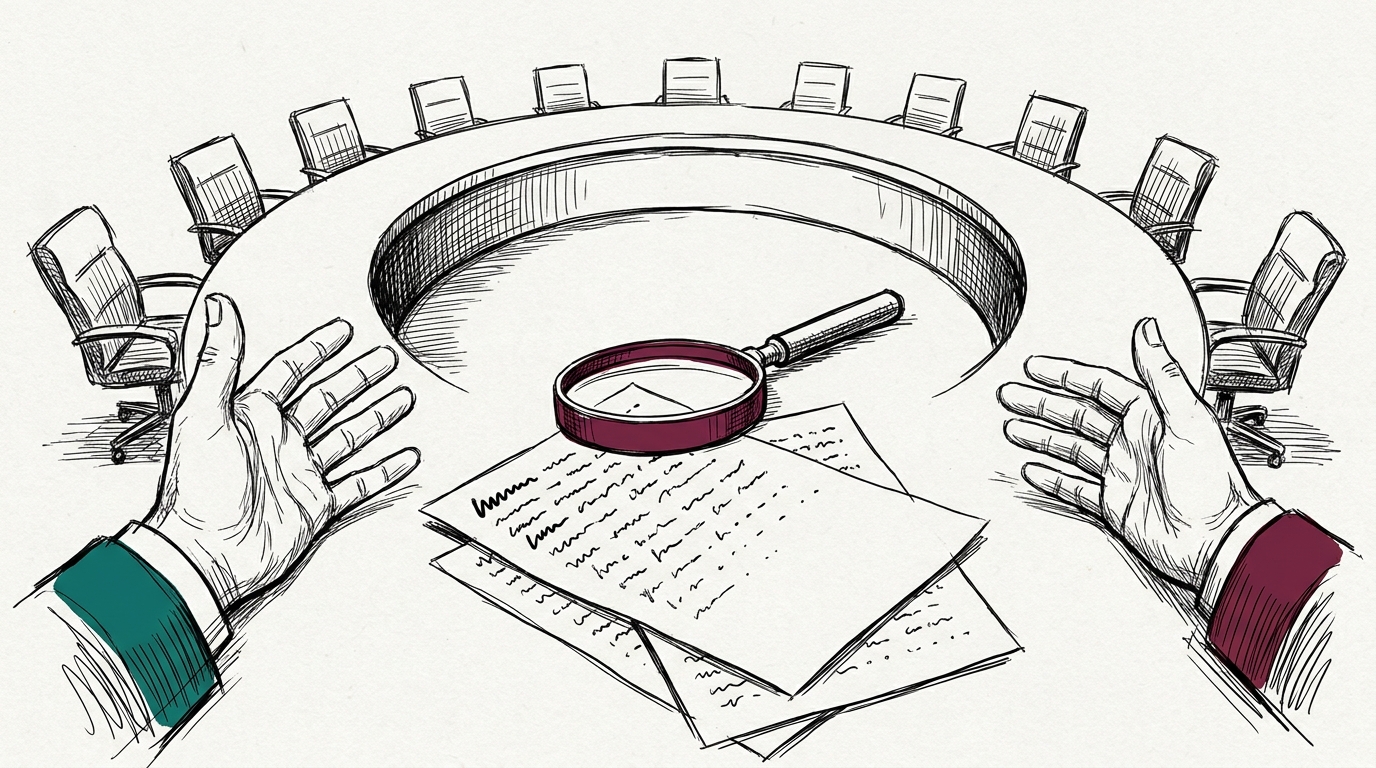
The absence of a signed instrument matters practically. Without an executive order or a new General License, litigants have nothing to challenge, Congress has nothing concrete to authorise, and foreign ministries have nothing to cite back. At 50 days in, the Iran column's gap on The White House page reads as deliberate method.


Deep Analysis

In plain English

In the United States, the President has enormous power ; but is normally expected to use it through official documents. Executive orders, presidential proclamations, and memoranda are published on the White House website and in the Federal Register (the government's official daily record). They create legally binding rules and can be challenged in court. Since Operation Epic Fury launched against Iran on 28 February 2026, President Trump has not signed a single document specifically about Iran. Not one executive order. Not one presidential memorandum. The most recent thing he signed was an executive order about mental-illness treatment on 18 April ; nothing to do with Iran. That means a war lasting 50 days, costing billions of dollars, and affecting 20% of the world's oil supply is being run entirely through verbal orders, social media posts, and the quiet expiry of old documents. No court can challenge what does not exist on paper.

Deep Analysis
Root Causes

The 50-day zero-instrument streak reflects a deliberate strategic choice: signed instruments create legal commitments, define limits, and establish accountability anchors that can be tested in court or Congress. An unsigned war gives the president maximum discretion to declare victory on whatever terms emerge without a document specifying what those terms required.

The GL-U lapse on 19 April is a direct product of this dynamic: rather than signing a new sanctions executive order that would define enforcement parameters and create a legal paper trail, Treasury simply allowed the existing instrument to expire ; producing sanctions escalation without a signed presidential instrument to match it to the 50-day pattern already documented.

What could happen next?
  • Risk

    Senators Murkowski and Hawley are drafting an AUMF precisely because the 50-day instrument-free streak creates a legal vacuum they intend to fill on congressional terms rather than presidential ones.

    Short term · 0.82
  • Precedent

    A sustained 50-day kinetic campaign without a signed presidential instrument establishes a working precedent that future administrations can cite for instrument-free executive war-making.

    Long term · 0.75
  • Consequence

    GL-U's lapse without a replacement instrument means sanctions escalation happened through administrative inaction rather than signed authority ; stripping counterparties of the legal text they need to assess their exposure.

    Immediate · 0.88
First Reported In

Update #73 · Russia yes, Iran no: Treasury signs only one waiver

The White House· 19 Apr 2026
Read original
Different Perspectives
Shipping and insurance industry
UKMTO counted about 20 US-facilitated Hormuz transits a day to 11 September against only 6 visible on AIS, with traffic still around 90% below the 138-a-day pre-war baseline. War-risk underwriters cannot price hulls they cannot see, or resolve whether the tanker El Gaia hit a mine, as Iran claims, or a missile and drone, as CENTCOM says.
European refiners
European refiners
European refiners, including Poland's Orlen, absorbed a roughly $26 gap between Dated Brent at $130.80 on 15 September and ICE Brent futures settling at $103.87 on 18 September, a spread that widened from $13.45 on 9 September rather than newly opening. Their futures hedges no longer cover what they now pay for physical barrels.
Saudi Arabia
Saudi Arabia
Saudi Aramco zeroed European term customers' October allocations and rerouted roughly 60 million barrels to Asia through Ras Tanura and Sohar, using Red Sea and Gulf terminal capacity built years ago to cut Hormuz exposure. Riyadh reallocated existing supply rather than negotiating a shortfall with Europe.
Qatar
Qatar
Qatar's energy minister Saad al-Kaabi told Bloomberg at the Qatar Economic Forum on 20 September that Bessent's two-year Hormuz-obsolescence forecast is wrong, and that Doha has deliberately built no bypass pipeline. Qatar's gas exports run through one waterway by choice, not oversight.
Iran (foreign ministry and Majlis)
Iran's foreign ministry and 130 Majlis deputies moved toward NPT withdrawal this week, with lawmaker Hossein-Ali Haji Deligani filing a triple-urgency bill on 20 September that Speaker Qalibaf has not yet scheduled. Tehran treats treaty membership as leverage still on the table, not yet spent.
Russia and China
Russia and China
Moscow and Beijing vetoed the Panel of Experts' renewal, maintaining Resolution 2231 lapsed in October 2025 and the 2025 snapback was never validly triggered, so the sanctions architecture the Panel enforces has no current legal standing. Both governments frame the veto as upholding law, not shielding Tehran.



