Skip to content
You can now search across every topic, entity and event.What's new
Iran Conflict 2026
3SEP

Omani Vessels Bypass IRGC Corridor, Disable Trackers

2 min read
16:40UTC

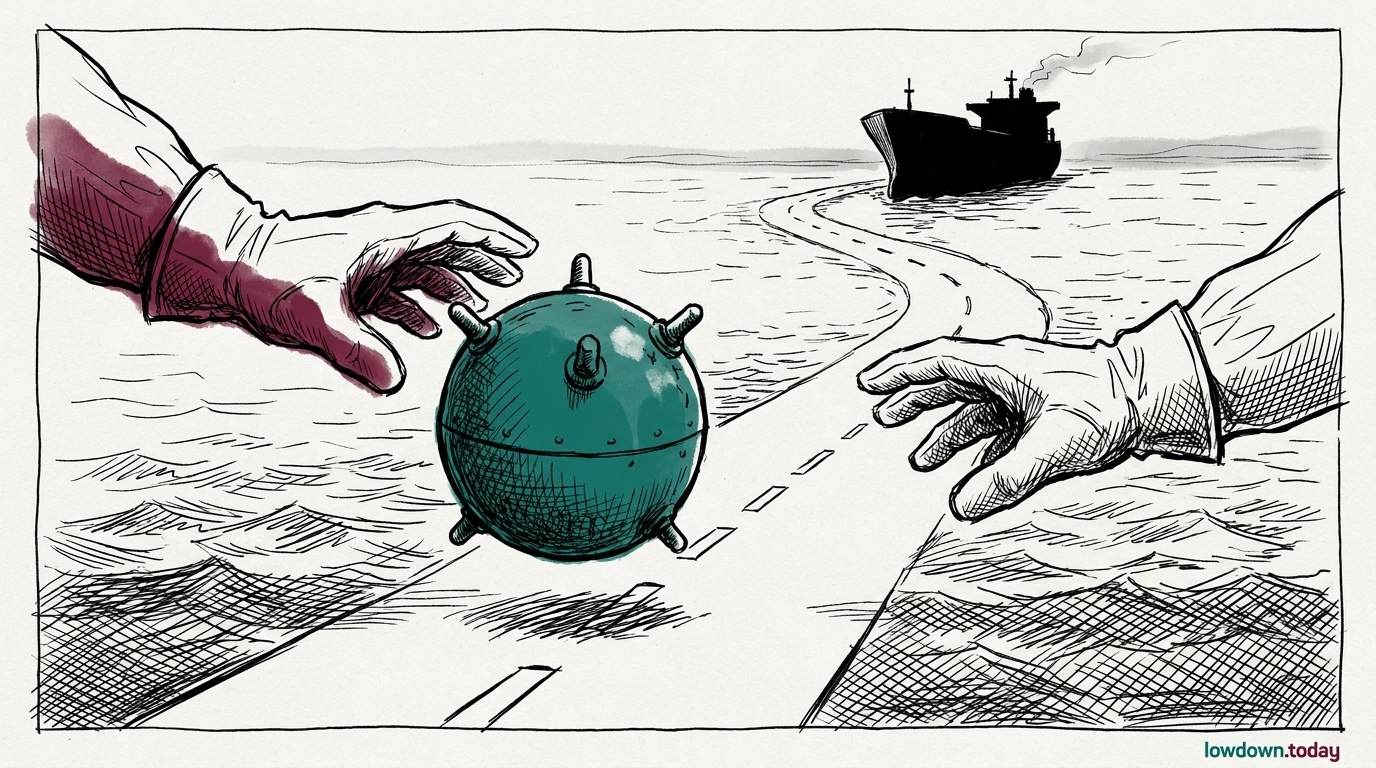
Three Omani vessels bypassed the IRGC's Larak Island toll corridor on 2 April, using the traditional international channel before disabling their AIS transponders, per Windward AI maritime intelligence.

ConflictDeveloping
Key takeaway

Oman's AIS-dark bypass suggests an undisclosed bilateral exemption from Iran's Hormuz toll, unconfirmed by either side.

Windward AI maritime intelligence tracked three Omani vessels using the traditional international Hormuz channel on 2 April, bypassing the IRGC's Larak Island toll corridor entirely. After completing the transit, the vessels disabled their Automatic Identification System (AIS) transponders, removing themselves from public tracking.

The Philippines deal and the Omani bypass occurred on the same day. The Philippines deal was announced through official diplomatic channels. The Omani manoeuvre was not. The deliberate AIS blackout after a corridor bypass is a signature of vessels that have received clearance through back-channels rather than the official toll mechanism. Vessels that have paid the IRGC toll have no reason to disable their transponders.

Oman has served as the primary Iran-West diplomatic backchannel for decades, facilitating the initial nuclear talks that led to the JCPOA. That history means Muscat's vessels bypassing the IRGC corridor is not an act of defiance; it is more likely an act of arrangement. An undisclosed bilateral exemption is consistent with both the AIS behaviour and Oman's established diplomatic pattern.

If confirmed, Oman's undisclosed deal and the Philippines' announced deal represent two distinct flavours of the same structural problem: the IRGC toll is already operating as a differentiated licensing framework rather than a blunt blockade, with exemptions allocated selectively across a fracturing coalition of former opponents.

Deep Analysis

In plain English

Three ships from Oman took a different route through the strait — one that avoids Iran's checkpoint — and then turned off their tracking systems. This strongly suggests Oman has a quiet deal with Iran that it has not announced publicly.

Deep Analysis
Root Causes

Oman's energy export dependency on Hormuz (it exports roughly 800,000 bpd through the strait) gives it both the motive and the leverage to negotiate a corridor arrangement with Iran.

Unlike the Philippines, which had to negotiate as a supplicant, Oman operates from a position of geographic leverage: its territory flanks the strait, and its cooperation with either side is operationally valuable.

Escalation

Stabilising for Oman-Iran relations; neutral for the broader conflict. Oman's backchannel function is a net positive for the prospect of indirect talks, as evidenced by the Axios report of US-Iran communication via Pakistan.

What could happen next?
  • Opportunity

    Oman's bilateral arrangement preserves its backchannel utility; Washington and Tehran are both likely to protect it as a communication line.

  • Meaning

    The IRGC's willingness to grant Oman an exception confirms the toll is a discretionary licensing system, not an absolute blockade — which creates negotiating space.

First Reported In

Update #57 · Bridge strike kills eight; Army chief fired

Windward AI· 3 Apr 2026
Read original
Causes and effects
Different Perspectives
China's foreign ministry
Spokesman Lin Jian rejected Treasury Secretary Scott Bessent's 25 August warning that Iranian oil buyers face an "economic D-Day", saying sanctions do not help and that Beijing would safeguard its own rights and interests. China's Iranian crude imports had already halved for unrelated reasons.
Iraq's government and Erbil authorities
Erbil authorities said 10 explosive-laden drones were shot down over the city on 1-2 September with no casualties. Iraq's government condemned the attacks without naming Iran as their source, and neither Washington nor Baghdad confirmed the IRGC's claim to have hit US bases there.
Bahrain Defence Force
The General Command said air defences intercepted several Iranian missiles and drones on 1-2 September and called the use of such weapons against civilians and private property a flagrant violation of international humanitarian law.
Kuwait's Fire Force and foreign ministry
KUNA reported a hostile Iranian drone struck a residential complex in Kuwait City on 2 September; Fire Force spokesman Brigadier General Mohammad Al-Gharib said losses were confined to property. Kuwait's foreign ministry called the attack a clear breach of its sovereignty.
Jordan's Armed Forces
Petra carried a statement that air defences intercepted eight missiles violating Jordanian airspace early on 31 August and 10 of 13 fired on 1 September. The statement named no target and did not address the IRGC's claim to have struck Camp Titin and killed US personnel.
CENTCOM
CENTCOM
CENTCOM's 1 September target list named IRGC air defence, radar, maritime and mine-laying sites in Iran but no tanker, after Axios reported anonymous officials describing a Trump-approved "tanker for tanker" drone policy. A CENTCOM spokesman declined to confirm the policy and referred questions to policymakers.