Skip to content
You can now search across every topic, entity and event.What's new
Iran Conflict 2026
3SEP

OFAC silent as sanctions licence lapses

4 min read
16:40UTC

General Licence V expired over the weekend, and on the first banking day after, OFAC posted no guidance on whether Hengli's last-minute restructure clears the 50% Rule. Four Chinese state banks must now decide for themselves.

ConflictDeveloping
Key takeaway

OFAC's unanswered 50% Rule question leaves four Chinese banks to self-adjudicate their dollar-clearing exposure.

The US Treasury's Office of Foreign Assets Control (OFAC), the sanctions bureau, posted no guidance on Monday 25 May about the Dalian Changxing ownership question, the first banking day after General Licence V (GL V) expired on 24 May 1. GL V was the OFAC authorisation that let banks wind down dealings with sanctioned Chinese refiner Hengli.

Days before the licence lapsed, Hengli moved 95% of its Singapore trading arm to Dalian Changxing International Trade Co., a Chinese state-linked entity, keeping just 5% . The arithmetic matters because of OFAC's 50% Rule: a company owned more than half by a blocked person is itself blocked automatically. At a 5% stake, Dalian Changxing sits below that line, but no OFAC document confirms the restructure clears it.

Monday 25 May fell on US Memorial Day, a federal holiday, so OFAC's offices were shut and the day's silence is partly a calendar accident. The deliberate-ambiguity reading does not rest on this one day: OFAC kept mainland Chinese refiners off its sanctions list across three prior rounds , a documented pattern that the holiday non-action does not itself prove.

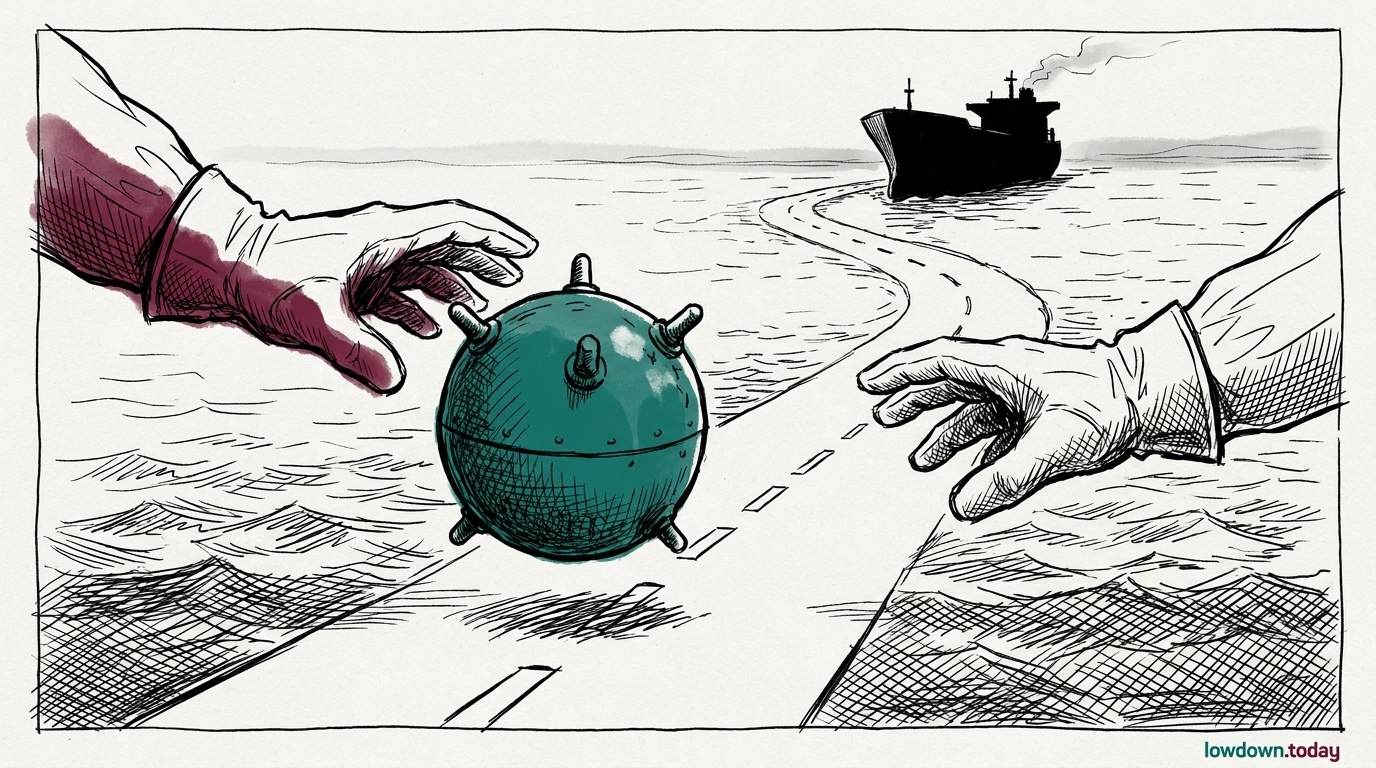
The banks cannot wait for the offices to reopen. Four Chinese state banks must decide, trade by trade, whether clearing dollar transactions for the restructured arm exposes them to secondary US sanctions, the penalty that cuts a foreign bank off from the dollar system . OFAC has published no safe-harbour they can point to. A wrong call on either side, freezing legitimate trade or clearing a still-blocked entity, carries a cost the banks alone now bear.

Deep Analysis

In plain English

The US Treasury's sanctions office, called OFAC (the Office of Foreign Assets Control), had placed a Chinese oil refinery called Hengli on its blocked list. That meant American banks, and most global banks that use American dollars, could not do business with it. Just before a special exemption expired, Hengli shifted most of its Singapore trading company into a different Chinese state-owned firm called Dalian Changxing. The idea was that the new owner is not on the blocked list, so trades should be allowed again. OFAC posted no guidance on 25 May. Four of China's biggest state banks now have to decide whether to process dollar trades for Dalian Changxing without knowing if doing so puts them at risk of US sanctions worth billions of dollars per institution.

Deep Analysis
Root Causes

OFAC's 50% Rule operates as an automatic algorithmic trigger: any entity 50% or more owned by a Specially Designated National (SDN) is treated as itself blocked, without a separate OFAC designation. OFAC does not vote or deliberate on each case; the threshold fires automatically on ownership data.

The Hengli-to-Changxing transfer exploited a structural gap in the rule: by dropping the designated entity's stake to exactly 5%, the restructured arm technically exits automatic blocking. But OFAC has the discretion to issue a formal determination letter stating that the restructure is a sham and the original block persists.

Its silence on Memorial Day left that determination un-issued, creating a 24-48 hour window in which banks self-adjudicate, and in which every trade they clear either sets or avoids a compliance precedent, without knowing which.

What could happen next?
  • Risk

    If ICBC chooses to clear Changxing trades and OFAC later issues a formal determination that the restructure was a sham, ICBC faces secondary-sanctions exposure on every transaction cleared in the window.

    Short term · Assessed
  • Consequence

    The MOFCOM blocking statute versus OFAC secondary-sanctions conflict, unresolved as of 25 May, forces Chinese state banks into a legal choice their boards cannot fully hedge.

    Immediate · Assessed
  • Precedent

    However ICBC and Bank of China resolve the Changxing question, their decision will become the de facto compliance standard for the full Chinese banking sector on similar OFAC grey-zone cases.

    Medium term · Assessed
First Reported In

Update #107 · Two markets, two prices on one Iran deal

OFAC / US Treasury· 25 May 2026
Read original
Different Perspectives
China's foreign ministry
Spokesman Lin Jian rejected Treasury Secretary Scott Bessent's 25 August warning that Iranian oil buyers face an "economic D-Day", saying sanctions do not help and that Beijing would safeguard its own rights and interests. China's Iranian crude imports had already halved for unrelated reasons.
Iraq's government and Erbil authorities
Erbil authorities said 10 explosive-laden drones were shot down over the city on 1-2 September with no casualties. Iraq's government condemned the attacks without naming Iran as their source, and neither Washington nor Baghdad confirmed the IRGC's claim to have hit US bases there.
Bahrain Defence Force
The General Command said air defences intercepted several Iranian missiles and drones on 1-2 September and called the use of such weapons against civilians and private property a flagrant violation of international humanitarian law.
Kuwait's Fire Force and foreign ministry
KUNA reported a hostile Iranian drone struck a residential complex in Kuwait City on 2 September; Fire Force spokesman Brigadier General Mohammad Al-Gharib said losses were confined to property. Kuwait's foreign ministry called the attack a clear breach of its sovereignty.
Jordan's Armed Forces
Petra carried a statement that air defences intercepted eight missiles violating Jordanian airspace early on 31 August and 10 of 13 fired on 1 September. The statement named no target and did not address the IRGC's claim to have struck Camp Titin and killed US personnel.
CENTCOM
CENTCOM
CENTCOM's 1 September target list named IRGC air defence, radar, maritime and mine-laying sites in Iran but no tanker, after Axios reported anonymous officials describing a Trump-approved "tanker for tanker" drone policy. A CENTCOM spokesman declined to confirm the policy and referred questions to policymakers.