Skip to content
You can now search across every topic, entity and event.What's new
Iran Conflict 2026
23AUG

Bombing resumes hours after Jordan salvo

2 min read
19:02UTC

CENTCOM struck dozens of IRGC targets inside Iran between 20:00 and 22:00 EDT on 29 July, ending a four-day pause the Pentagon had justified on munitions stockpiles.

ConflictAssessed
Key takeaway

Four days of pause survived the munitions argument; eighteen hours survived one Iranian salvo.

US Central Command (CENTCOM), the American military headquarters for the Middle East, struck dozens of Islamic Revolutionary Guard Corps (IRGC) targets inside Iran between 20:00 and 22:00 EDT on Wednesday 29 July, hitting military command centres, missile and drone facilities, coastal surveillance posts and air-defence sites 1. The command described the operation as "a powerful response to yesterday's attempted Iranian attacks on US forces" 2. Earlier the same day IRGC ballistic missiles had hit Muwaffaq Salti Air Base at Azraq in Jordan, the base that hosts American aircraft and, the Guard claimed, a CENTCOM headquarters element 3.

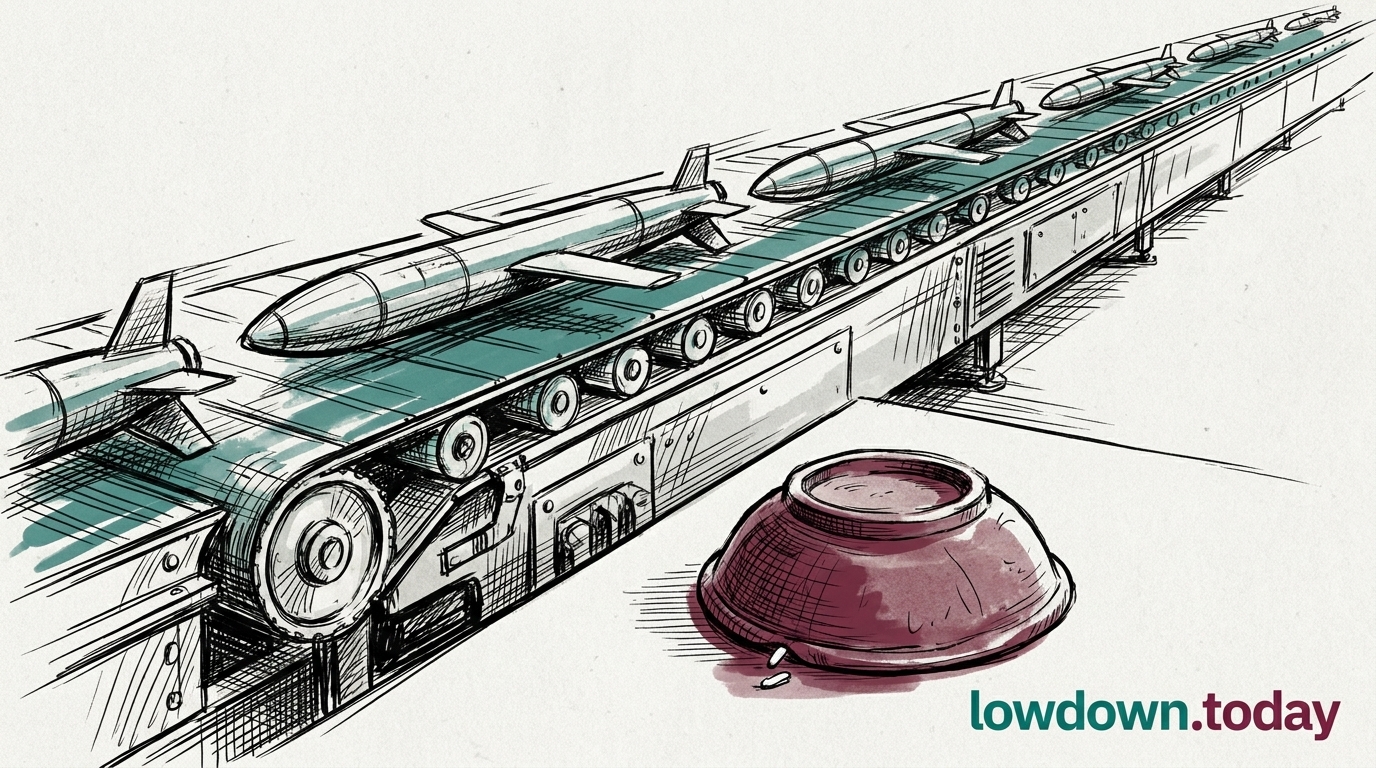
The strikes ended a bombing pause four days old. General Dan Caine, Chairman of the Joint Chiefs of Staff, had warned Donald Trump about munitions stockpiles and escalation risk, and thirteen nights of bombing stopped ; CENTCOM had already gone quiet for a night while the President weighed a larger operation . Washington gave a materiel reason for stopping. It took one Iranian salvo to start again.

Azraq had already absorbed three strikes before Wednesday. Jordanian air defences downed Iranian missiles over the base earlier in the month , and Wednesday's launch was the fourth strike there in seven weeks. What changed was the American answer rather than the geography: the previous attacks on the base drew no resumption of bombing over Iranian territory, and this one drew it inside a day.

A stockpile limit is governed by resupply schedules and cannot be waived by a decision in Washington. A retaliation can be ordered in an afternoon. Reading the two together, the constraint that broke first was the political one, and any forecast that treats the campaign as winding down for logistical reasons now has four days of evidence against it.

Deep Analysis

In plain English

The United States had stopped bombing Iran for four days while it worked out how many missiles and bombs it had left to use. That stopped on Wednesday when Iran fired missiles at a US base in Jordan called Muwaffaq Salti, also known as Azraq. Within hours, American planes and missiles hit dozens of targets belonging to the IRGC, Iran's most powerful military force, back inside Iran itself. This is now the fourth time this base in Jordan has been hit since the war widened in June.

Deep Analysis
Root Causes

CENTCOM's resumption depends on a munitions replenishment cycle that Gen. Caine flagged before the pause began: sustained nightly strikes since early July had drawn down precision stocks faster than resupply chains crossing the Atlantic could refill them, making any pause a logistics necessity rather than a negotiating gesture.

Jordan's repeated exposure at Azraq (its fourth strike in seven weeks) stems from hosting US Central Command's forward basing without the air-defence density of Gulf allies; Amman lacks the Patriot battery saturation Riyadh and Kuwait City have built up, leaving Muwaffaq Salti a softer target for any Iranian missile aimed at American assets.

Escalation

Direction: renewed and immediate. The four-day pause is now closed, and CENTCOM's response arrived within hours rather than days, a faster reaction cycle than the week-long gap seen after the 17 July Azraq deaths .

What could happen next?
  • Consequence

    Jordan's repeated exposure at Azraq may force Amman to request additional Patriot or THAAD coverage from Washington rather than relying on US forces already stationed there.

  • Precedent

    A sub-24-hour reaction window between an Azraq strike and US retaliation sets an operational tempo that leaves little room for diplomatic intervention before escalation.

First Reported In

Update #164 · The pause ends, and the map moves west

UPI· 31 Jul 2026
Read original
Different Perspectives
Hizballah
Hizballah
Has not commented on the US Treasury's 20 August designation of ten people, including named couriers, over a cash network Treasury says moved money to it from the IRGC-Qods Force. ACLED recorded a sharp rise in attacks around it the same day.
Kuwait
Kuwait
Kuwait's Chief of the General Staff, Lieutenant General Khaled al-Shriaan, co-chaired the 16th US-Kuwait Joint Military Commission at the Pentagon on 21 August. Kuwait has not published what was agreed; only a summary of the meeting's existence and attendees is sourced.
Qatar
Qatar
Has not commented publicly on the $4.5bn KC-46A tanker Foreign Military Sale notification the State Department approved on 20 August. The notification opens a sale process; Doha has not confirmed whether it will proceed to a signed transfer.
Mohammad Bagher Ghalibaf
Told a Baghdad business meeting on 20 August that Iran will not endure a hungry population regardless of its military strength, against 87.9% point-to-point inflation and 128.1% food inflation for Tir. His fellow Majlis Economic Committee member Samsami separately warned a petrol price rise would ignite unrest.
US Navy
US Navy
Signed a $22.9bn, seven-year contract with Raytheon on 17 August to raise Tomahawk output from about 60 a year to more than 1,000. The Acting Navy Secretary, quoted via an X post, framed it as the "Arsenal of Freedom" initiative; it replaces the 850 missiles fired by 1 April in about ten months at the new rate.
UK Maritime Trade Operations
UKMTO logged six armed men boarding a tanker 136 nautical miles east of Al Mukalla on 20 August and redirecting it toward Somalia. A vessel steered toward the Somali coast reads as an attempted seizure, a distinct hazard from the stand-off strikes the same lane has seen before.