Skip to content
You can now search across every topic, entity and event.What's new
Iran Conflict 2026
19AUG

Brent falls straight through the strikes

2 min read
18:42UTC

Brent crude settled at $71.99 on 26 June, down from $76.14 on 24 June, falling steadily through both the IRGC drone strike and the US bombing of Iranian soil.

ConflictDeveloping
Key takeaway

Oil markets have stopped pricing Hormuz violence and now price only Hormuz volume.

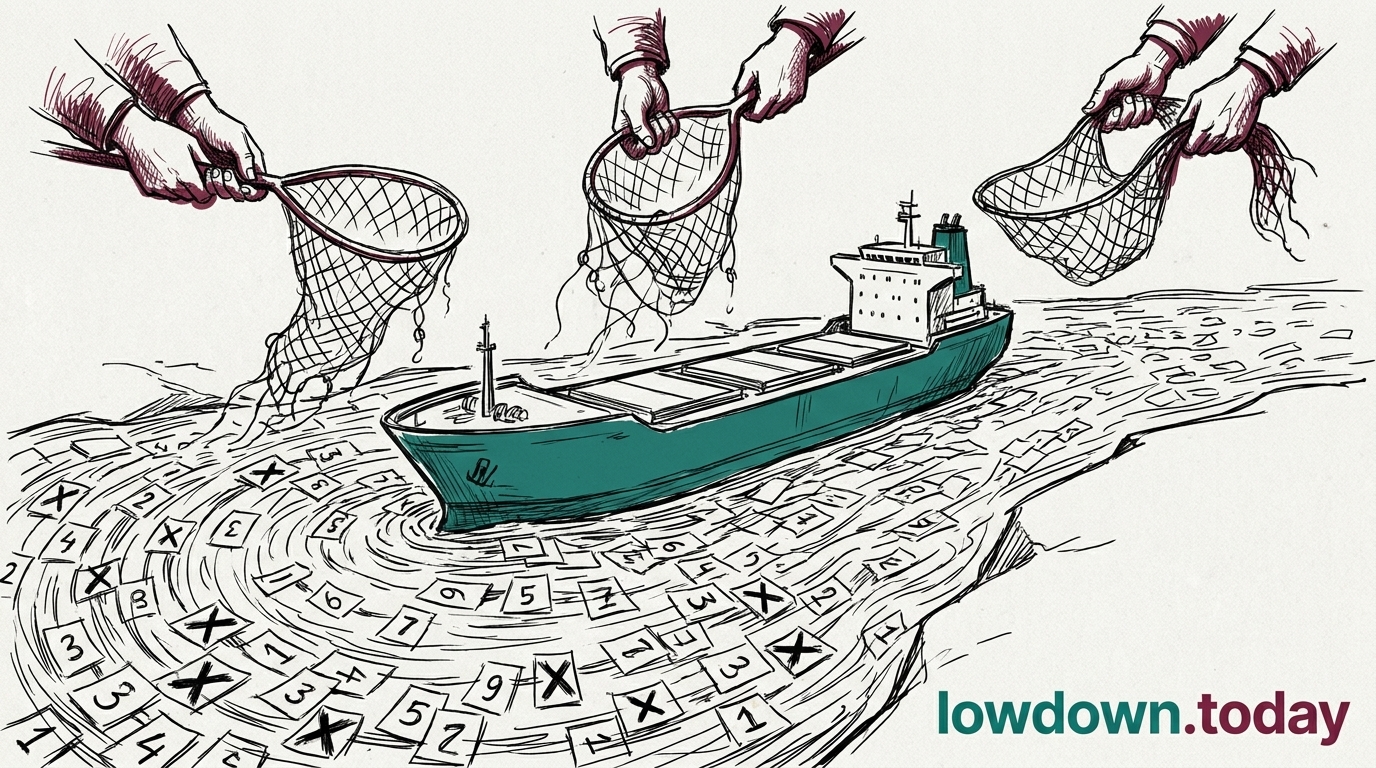
Brent Crude settled at $71.99 on 26 June, down from $76.14 on 24 June . The global oil benchmark declined steadily through both the IRGC drone strike on the Ever Lovely and the US bombing of Iranian soil. 1

A US attack on a major oil producer and two damaged ships pushed Brent down more than 5.4 per cent across two sessions, not up, despite a direct US-Iran kinetic exchange. The war premium that carried the benchmark above $100 at the crisis peak never returned.

As long as Hormuz keeps clearing oil at its pre-crisis volume, an isolated drone strike that kills no one and stops no cargo registers as noise. Traders are pricing the corridor, not the conflict. The link between Hormuz violence and the oil price has, for now, gone quiet. 2

Deep Analysis

In plain English

Brent crude oil, the main global oil price benchmark, fell from $76.14 on 24 June to $71.99 by 26 June, even though Iran attacked a container ship and the US bombed sites in Iran during those same two days. A 5.4 per cent price fall during an active military exchange between two nations is unusual, because crises usually push oil prices up. The reason markets were not alarmed is that record amounts of oil were moving through the Strait of Hormuz at the time: 20 million barrels on 25 June alone. Investors were watching how much oil was actually flowing, not how many weapons were being fired. The last time oil prices were this low was before the conflict began in February, meaning the market has concluded the fighting has not actually reduced supply.

What could happen next?
  • Risk

    Brent pricing below the pre-conflict level embeds unverifiable assumptions about MOU compliance and IAEA inspection timelines; a failure of either by the 21 August deadline would trigger a rapid reversal of the war-premium erasure, with the magnitude of the reversal amplified by how far markets have run ahead of verified supply restoration.

  • Meaning

    The IRGC's inability to generate a sustained oil-price response through the Ever Lovely attack and the corridor disruption removes the economic lever from its strategic toolkit: if attacks on individual vessels no longer move Brent, the financial cost of shipping attacks falls entirely on insurers and operators rather than on the global economy.

First Reported In

Update #140 · US bombs Iran, and the oil market shrugs

Trading Economics· 28 Jun 2026
Read original
Different Perspectives
UK Maritime Trade Operations
UKMTO logged six armed men boarding a tanker 136 nautical miles east of Al Mukalla on 20 August and redirecting it toward Somalia. A vessel steered toward the Somali coast reads as an attempted seizure, a distinct hazard from the stand-off strikes the same lane has seen before.
Mohammad Bagher Ghalibaf
Iran's Majlis speaker received Iraq's Hormuz carve-out request in Baghdad on 19 August, a request that treats passage as Tehran's to grant. Ghalibaf's authority over that grant sits alongside the Revolutionary Guard's separate transit rules, which have moved independently of Iran's foreign ministry before.
Haibat al-Halbousi
Haibat al-Halbousi
Iraq's parliament speaker asked Iran for special consideration on Iraqi Hormuz oil exports during Ghalibaf's 19 August Baghdad visit. Iraq presses the request from a weak position: Iran's central bank is simultaneously demanding Baghdad release Iranian reserves parked in Iraqi accounts.
Federal Department of Economic Affairs, Education and Research
Switzerland's economics ministry updated the Article 21 forms governing lawful Iran money transfers on 19 August, with only the revised forms accepted from 26 August. Bern operates one of the few remaining legal Iran payment channels and has just set a hard cutover on its control point.
Motegi Toshimitsu
Motegi Toshimitsu
Japan's foreign minister said in Muscat on 20 August that Tokyo wants closer coordination with Oman on safe Hormuz and Bab el-Mandeb passage. Japan has no naval presence of its own in the strait, so it is routing the ask through the state negotiating with Iran instead.
Badr bin Hamad Al Busaidi
Oman's foreign minister joined Japan's in Muscat on 20 August to call for intensified coordination on Hormuz and Bab el-Mandeb navigation. Oman also runs the mediation track with Tehran, so the appeal travels through the same channel as the negotiation.