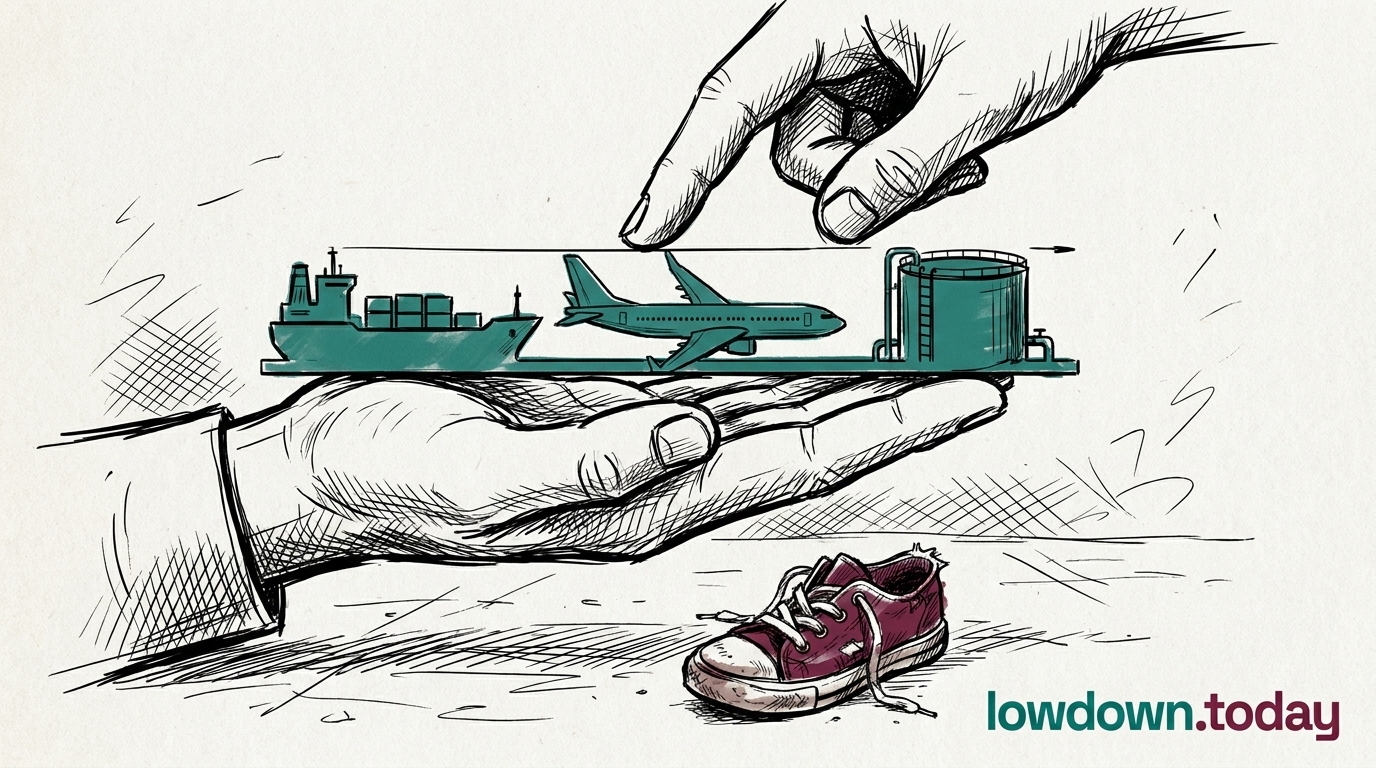
The JKM-TTF arbitrage, the spread between Asian and European spot gas that decides where a flexible LNG cargo sails, collapsed from $5.26/MMBtu on 12 June to about $2 by 22-23 June, after holding $4.35 as late as 18 June . Two forces pulled from opposite ends. JKM, the north-east Asian spot benchmark, fell 18% week-on-week to around $15.3 as Strait of Hormuz risk deflated 1, while the European heatwave held TTF up from the demand side.
Seven Qatar-linked LNG tankers transited the Strait of Hormuz between 11 and 22 June, six of them inbound to reload at Ras Laffan, Qatar's main export complex 2; the one outbound vessel, Al Ghashamiya, carried a cargo loaded on 1 March, pre-conflict stock rather than fresh output. Qatar's prime minister, Sheikh Mohammed bin Abdulrahman Al Thani, said on 24 June that output would return to normal within a few weeks, reaching half its capacity a month after safe passage and four-fifths within two 3. Two destroyed trains still cap recovery near 83% for three to five years .
The routing question may resolve before Qatar lands a fresh molecule. Six inbound tankers reloading at Ras Laffan are positioning, not producing, and the outbound cargo was March inventory. If the arb holds near $2, the Atlantic LNG that spent the spring sailing east loses its Asian premium, and the cheapest home for a flexible cargo becomes a European regas berth. Goldman Sachs dates LNG normalisation to end-July ; the spread says Europe could pull cargoes weeks earlier, on relative price alone.





