Skip to content
You can now search across every topic, entity and event.What's new
Iran Conflict 2026
31JUL

Two OFAC clocks, one supply problem

4 min read
09:24UTC

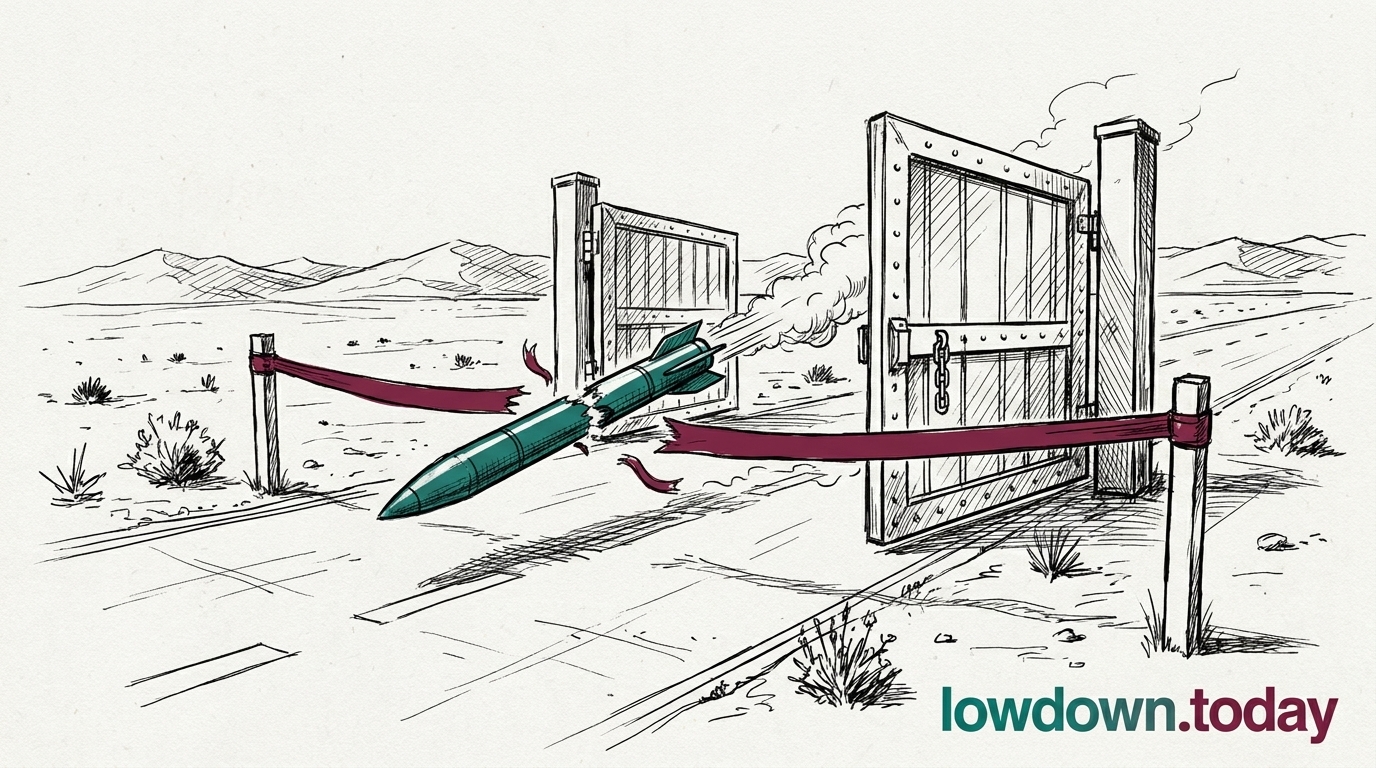
OFAC's General Licence 134C lapses 12:01 EDT on Wednesday 17 June with no successor announced, a 13-day cliff, while Ludoil Energy's signed ISAB deal faces a separate 27 June negotiation deadline.

ConflictDeveloping
Key takeaway

Two June OFAC deadlines reload Russian-supply risk through insurance cover and a refinery-sale clock, not a barrel embargo.

Two OFAC clocks converge on one supply problem. General Licence 134C, the vessel-services umbrella covering Russian crude loaded by 17 April, expires 12:01 EDT on Wednesday 17 June with no successor GL 134D announced as of 04 June, a 13-day cliff. 1 OFAC is the US Treasury sanctions bureau, and its general licences carve targeted exemptions inside the broader Russia regime. The umbrella runs through insurance, crewing and bunkering cover, not the cargo, so the binding cost of a lapse is hull uninsurability rather than a barrel ban.

GL 134C was signed on 18 May , the instrument that eased the Baltic Aframax compliance bid on the TD7 and TD19 routes . Its lapse without a rollover reloads exactly that bid. Russia is already loading above quota out of Baltic terminals, so the cover withdrawal lands on barrels that have nowhere compliant to sail.

Separately, the Lukoil divestiture advanced. Ludoil Energy, a Cyprus-registered buyer, signed a sale agreement on Monday 18 May for GOI Energy's stake in the ISAB Priolo Gargallo refinery in Sicily, a two-phase deal starting with 51%, pending Italian Golden Power clearance and a separate OFAC transaction licence. 2 General Licence 131F authorises negotiation only and runs to 27 June . The signing partly answers the prior 'no buyer can meet FAQ 1224' framing, but a signed contract is not a closed sale under a negotiation-only licence, and Ludoil cannot complete without a further authorisation before the clock runs out.


Deep Analysis

In plain English

The US Treasury's sanctions office (OFAC) uses 'general licences' to create temporary exceptions to sanctions rules. Two of these licences are about to run out, and both matter for European oil supply. The first, General Licence 134C, has been allowing ships to keep their insurance when carrying Russian oil that was loaded before mid-April. Without insurance, ships cannot legally operate in most ports. That licence expires on 17 June. If the US does not renew it, ships carrying that Russian oil lose their insurance cover, making it much harder and more expensive to deliver. The second licence, General Licence 131F, allows the Cypriot energy company Ludoil to negotiate buying a large oil refinery in Sicily , the ISAB refinery , that was owned by the Russian company Lukoil. That licence only covers the negotiation, not the actual purchase, and it expires 27 June. Ludoil signed a deal on 18 May, but they cannot actually complete the purchase without a separate special permission from the US Treasury. If that permission doesn't arrive before 27 June, the deal could fall apart.

Deep Analysis
Root Causes

GL 134C's expiry without a successor exposes the vessel-services gap through a specific mechanism: maritime insurance and P&I club cover for Russian-cargo vessels is written on English law contracts that require compliance with OFAC regulations.

When GL 134C lapses, London market P&I clubs , which cover roughly 90% of the world's ocean-going tonnage , lose their legal basis to maintain cover on vessels carrying Russian crude loaded before 17 April. The hull becomes uninsurable in the London market, not because the barrel is sanctioned, but because the club rules prohibit exposure to OFAC-non-compliant trade.

The ISAB divestiture timeline has a different root: GL 131F's FAQ 1224 requirements are commercially abnormal. Requiring the buyer to sever all Lukoil connections, park funds in a US blocked account, and obtain a separate transaction licence before any value flows means Ludoil Energy is taking full commercial risk on a 320kbd Sicilian refinery , a €2-3bn asset , without being able to close or fund the acquisition.

This is not a standard M&A structure; it is a Treasury-supervised fire sale with terms that make commercial financing extremely difficult.

What could happen next?
  • Risk

    A GL 134C lapse without a GL 134D rollover on 17 June would trigger a Baltic Aframax compliance-bid spike on TD7 and TD19 freight rates, adding approximately $0.30-0.50/bbl to delivered Urals costs in NWE.

    Immediate · Assessed
  • Risk

    GL 131F expires 27 June; without a specific OFAC transaction licence before that date, the Ludoil ISAB deal cannot close, leaving a 320kbd Sicilian refinery in regulatory limbo and complicating its crude supply planning into H2 2026.

    Short term · Suggested
  • Precedent

    A completed ISAB divestiture under FAQ 1224 terms would establish the first precedent for a OFAC-supervised Russian refinery sale in the EU, setting the template for any future Lukoil European asset wind-down.

    Medium term · Assessed
First Reported In

Update #5 · Sixth straight draw, the flat price won't say

Cyprus Shipping News· 4 Jun 2026
Read original
Different Perspectives
Shipping and insurance underwriters
Underwriters can price Houthi strikes because the group announces its targets, but an unclaimed drone at Damietta and a mandatory Iranian insurance scheme both deny them a pattern to price against. War-risk premiums are increasingly being set by the absence of a claimant, not the scale of the damage.
Jordan
Jordan
Azraq absorbed its fourth Iranian strike in seven weeks, again drawing no direct Jordanian retaliation, only an American one. Amman's exposure, hosting US basing without the Patriot density of Gulf allies, has not changed even as the war around it widens.
Houthi movement
Houthi movement
The Houthis' 20 July blockade of Saudi-linked shipping is the injury Riyadh's new 43-nation coalition directly answers, yet the group itself was never asked to join and remains outside every proposal on the table. Sanaa-aligned commentators call the coalition a paper reassurance for insurers rather than a deployable force.
Egypt's Cabinet
Egypt's Cabinet
Egypt confirmed the Damietta blaze was an attack, not an accident, on soil the war had never touched before. Cairo now faces an unclaimed threat to a facility supplying roughly 7% of its domestic gas, with no author to hold accountable and no pattern yet to defend against.
Oman
Oman
Muscat is running the only channel Iran will use, a voluntary Hormuz fee modelled on Malacca, but stayed out of Saudi Arabia's new naval coalition entirely. Oman's mediating leverage depends on treating Hormuz as shared and non-exclusive, the opposite of what Tehran is now demanding of it.
Iraq's Prime Minister
Al-Zaidi cancelled his first official Riyadh visit and convened the Coordination Framework, the coalition that keeps him in power and whose factions sit inside the PMF that Saudi jets just struck. He is caught between a five-year Saudi investment relationship and armed groups inside his own state he does not fully control.



