Skip to content
You can now search across every topic, entity and event.What's new
Iran Conflict 2026
31JUL

Senate war-powers vote falls ten short

3 min read
09:24UTC

The House passed its war-powers measure 215-208 on 3 June; in the Senate it sits roughly ten votes short of cloture, with only four Republicans crossed and the 8 June floor reserved for a judicial nomination.

ConflictDeveloping
Key takeaway

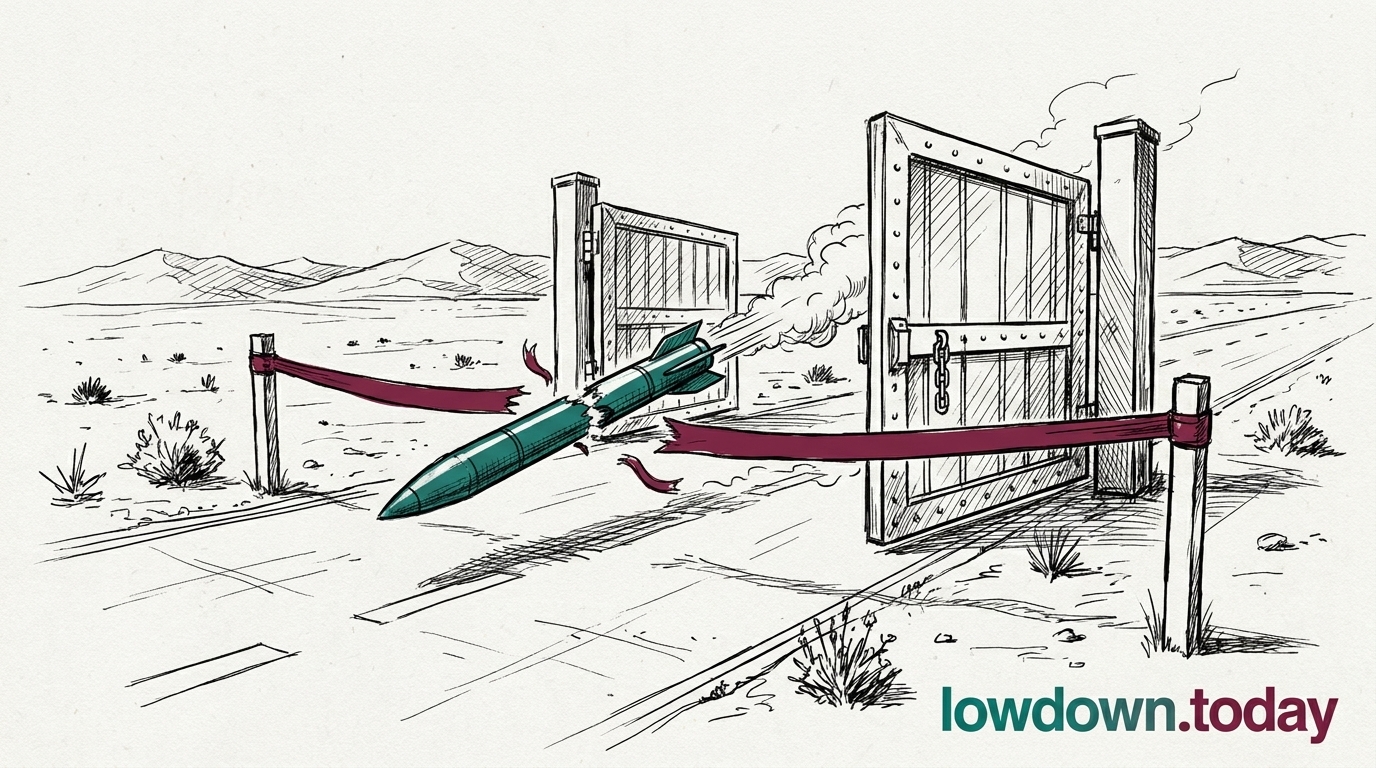
Congress has its first war position but cannot force the signed instrument the executive withholds.

The House passed its war-powers measure 215-208 on 3 June and sent it to the Senate, where ending debate requires 60 votes 1. The vote was the first recorded congressional position of the war, inverting the 14 May tie. Only four Republicans have crossed: Susan Collins, Lisa Murkowski, Rand Paul and Bill Cassidy, leaving the resolution roughly ten votes short of cloture. The Senate's floor time for 8 June is set for a judicial nomination, not Iran.

The War Powers Resolution (WPR), the 1973 statute that caps undeclared hostilities at 60 days and requires the President to seek authorisation, has now lapsed three times in this war, on Days 60, 72 and 93 , with no enforcement. The statute creates leverage for a floor vote but cannot compel one, and it carries no mechanism to force the executive to produce a signed instrument. So at the 100-day milestone the legislature can register a position yet neither chamber can compel the paper the administration declines to sign. Foreign Minister Abbas Araghchi has coupled any movement to the unsigned memorandum of understanding, tying Lebanon's fate to the same absent signature, which keeps every clock running against a document nobody has signed.


Deep Analysis

In plain English

The War Powers Resolution is a US law passed in 1973, after Congress felt it had been shut out of decisions to send troops to Vietnam. The law says that if the President deploys forces into combat without a formal declaration of war from Congress, he must report it within 48 hours and then stop within 60 days unless Congress approves. In this conflict, that 60-day clock has now run and lapsed three separate times, on Days 60, 72 and 93, with no enforcement action from Congress. On 3 June the House of Representatives passed a resolution 215-208 instructing the President to wind down US involvement. But that resolution still has to pass the Senate too, and to bring it to a full Senate vote requires 60 senators to agree to end the debate. Currently only 50 senators have crossed in favour, and four of those are Republicans who broke with their own party: Susan Collins, Lisa Murkowski, Rand Paul and Bill Cassidy. With the Senate's next floor session on 8 June set for a judicial confirmation vote rather than Iran, the war-powers measure sits ten votes short of its threshold. This means the President continues the conflict without a signed legal authorisation from Congress, and Congress has so far been unable to force one.

Deep Analysis
Root Causes

Two structural failures generate the ten-vote gap. First, the Republican Senate caucus holds institutional loyalty to executive war-making authority as a party norm, rooted in the doctrine of unitary executive theory which asserts that foreign-policy and military command powers belong constitutionally to the President, not Congress. Breaking that norm carries primary-election risk for most Republican senators in states where Trump's approval remains above 60%.

Second, the WPR's cloture threshold of 60 votes was never realistic given the Senate's current 53-47 composition. The 50-47 discharge vote of 20 May was itself a procedural advance that bypassed the 60-vote bar; the full floor vote reintroduces that bar. The measure was always designed to produce a recorded position, not legislative enforcement, given the arithmetic.

What could happen next?
  • Precedent

    Three WPR lapses without enforcement in a single conflict will be cited by future administrations as evidence that the statute's 60-day clock has no operative enforcement mechanism, weakening its deterrent value in future undeclared conflicts.

    Long term · Assessed
  • Consequence

    The House 215-208 vote creates a documented congressional record that future courts, Government Accountability Office reviews, or appropriations riders can cite as evidence that the legislature formally opposed the executive's conduct of hostilities.

    Medium term · Assessed
  • Risk

    Without a signed war authorisation, any future escalation that results in significant US casualties would face immediate judicial and legislative challenge using the existing House vote as standing evidence of opposition.

    Short term · Suggested
First Reported In

Update #120 · The deal's last 5% is uranium nobody can find

Congress.gov· 7 Jun 2026
Read original
Different Perspectives
Shipping and insurance underwriters
Underwriters can price Houthi strikes because the group announces its targets, but an unclaimed drone at Damietta and a mandatory Iranian insurance scheme both deny them a pattern to price against. War-risk premiums are increasingly being set by the absence of a claimant, not the scale of the damage.
Jordan
Jordan
Azraq absorbed its fourth Iranian strike in seven weeks, again drawing no direct Jordanian retaliation, only an American one. Amman's exposure, hosting US basing without the Patriot density of Gulf allies, has not changed even as the war around it widens.
Houthi movement
Houthi movement
The Houthis' 20 July blockade of Saudi-linked shipping is the injury Riyadh's new 43-nation coalition directly answers, yet the group itself was never asked to join and remains outside every proposal on the table. Sanaa-aligned commentators call the coalition a paper reassurance for insurers rather than a deployable force.
Egypt's Cabinet
Egypt's Cabinet
Egypt confirmed the Damietta blaze was an attack, not an accident, on soil the war had never touched before. Cairo now faces an unclaimed threat to a facility supplying roughly 7% of its domestic gas, with no author to hold accountable and no pattern yet to defend against.
Oman
Oman
Muscat is running the only channel Iran will use, a voluntary Hormuz fee modelled on Malacca, but stayed out of Saudi Arabia's new naval coalition entirely. Oman's mediating leverage depends on treating Hormuz as shared and non-exclusive, the opposite of what Tehran is now demanding of it.
Iraq's Prime Minister
Al-Zaidi cancelled his first official Riyadh visit and convened the Coordination Framework, the coalition that keeps him in power and whose factions sit inside the PMF that Saudi jets just struck. He is caught between a five-year Saudi investment relationship and armed groups inside his own state he does not fully control.



