Skip to content
You can now search across every topic, entity and event.What's new
Iran Conflict 2026
31JUL

Russia sends upgraded drones to Iran

2 min read
09:24UTC

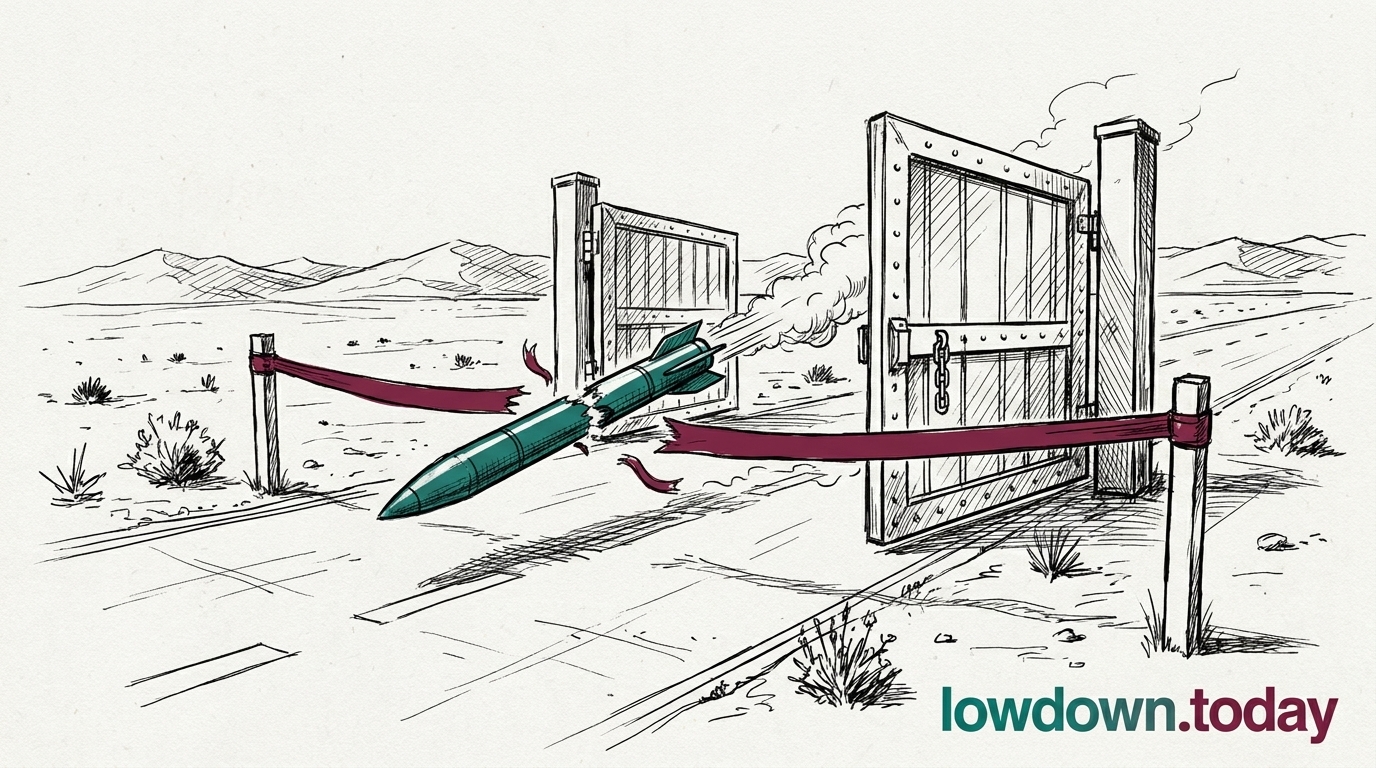
Iran taught Russia to build Shaheds. Russia industrialised the design and shipped upgraded versions back at 1,000 per day.

ConflictDeveloping
Key takeaway

Industrial-scale drone production reshapes the war's attritional arithmetic against depleting defences.

Russia shipped upgraded Geran-2 drone variants to Iran via sea, with delivery completed by end of March . President Zelensky confirmed the transfer. Russia also provided satellite targeting data, according to the Washington Post. Russia builds roughly 1,000 Geran-2s per day. 1

The reversal is strategically remarkable. Iran supplied Russia with the original Shahed-136 drones for use in Ukraine. Russia industrialised the design, upgraded it with jet propulsion and improved guidance, and is now shipping the product back. Iran's single-day intercept numbers on 3 April (47 drones in one UAE engagement alone) may reflect this expanded supply. With THAAD and Arrow stocks depleting, the attritional arithmetic favours the side that can produce munitions at industrial scale.


Deep Analysis

In plain English

Iran originally designed a cheap drone called the Shahed-136 and gave the design to Russia for use in Ukraine. Russia built a factory and upgraded the design, producing 1,000 of them a day. It then shipped upgraded versions back to Iran. This matters because Iran's missiles and drones are being intercepted at high rates, burning through expensive US and Israeli defensive rockets. With Russia supplying cheap drones faster than defences can be rebuilt, the war of attrition favours Iran.

Deep Analysis
Root Causes

Russia's incentive is threefold: degrade US military capacity and attention, test upgraded drone variants in live combat, and deepen Iran's strategic dependency for oil and political cover.

The Geran-2 improvement over the Shahed-136 includes jet propulsion and improved guidance, making it harder to intercept and more accurate. At 1,000 per day, Russia can sustain Iranian strike capacity indefinitely against depleting THAAD and Arrow stocks.

What could happen next?
  • Consequence

    Russian industrial supply allows Iran to sustain drone strike rates indefinitely, accelerating Arrow-3 and THAAD depletion beyond RUSI's March projections.

  • Precedent

    The Shahed-Geran supply loop creates a precedent for reverse-technology transfer between Russia and Iran that will outlast this conflict and reshape both arsenals.

First Reported In

Update #58 · First US aircraft fall over Iran

USNI Proceedings / War on the Rocks· 4 Apr 2026
Read original
Different Perspectives
Shipping and insurance underwriters
Underwriters can price Houthi strikes because the group announces its targets, but an unclaimed drone at Damietta and a mandatory Iranian insurance scheme both deny them a pattern to price against. War-risk premiums are increasingly being set by the absence of a claimant, not the scale of the damage.
Jordan
Jordan
Azraq absorbed its fourth Iranian strike in seven weeks, again drawing no direct Jordanian retaliation, only an American one. Amman's exposure, hosting US basing without the Patriot density of Gulf allies, has not changed even as the war around it widens.
Houthi movement
Houthi movement
The Houthis' 20 July blockade of Saudi-linked shipping is the injury Riyadh's new 43-nation coalition directly answers, yet the group itself was never asked to join and remains outside every proposal on the table. Sanaa-aligned commentators call the coalition a paper reassurance for insurers rather than a deployable force.
Egypt's Cabinet
Egypt's Cabinet
Egypt confirmed the Damietta blaze was an attack, not an accident, on soil the war had never touched before. Cairo now faces an unclaimed threat to a facility supplying roughly 7% of its domestic gas, with no author to hold accountable and no pattern yet to defend against.
Oman
Oman
Muscat is running the only channel Iran will use, a voluntary Hormuz fee modelled on Malacca, but stayed out of Saudi Arabia's new naval coalition entirely. Oman's mediating leverage depends on treating Hormuz as shared and non-exclusive, the opposite of what Tehran is now demanding of it.
Iraq's Prime Minister
Al-Zaidi cancelled his first official Riyadh visit and convened the Coordination Framework, the coalition that keeps him in power and whose factions sit inside the PMF that Saudi jets just struck. He is caught between a five-year Saudi investment relationship and armed groups inside his own state he does not fully control.



