Geran-2
Russian upgraded loitering munition derived from Iran's Shahed-136; now Moscow's mass-barrage weapon and a re-export to Iran.
Last refreshed: 22 September 2026 · Appears in 2 active topics
How does Russia sustain record drone barrages while shipping the same munition back to Iran?
Timeline for Geran-2
Mentioned in: Russia barrage collapses a Dnipro block
Russia-Ukraine War 2026Reported arriving at Ukrainian air defence with structural failures; lowest hit rate since March 2025
Drones: Industry & Defence: Russian Geranium drones falling apart in flightProduced in expanded volume with teenage and African contract labour at Alabuga facility
Drones: Industry & Defence: Alabuga recruits drone brigade on TelegramMentioned in: Interceptor Crisis Reaches Projected Depletion Window
Iran Conflict 2026Mentioned in: Riyadh Embassy Attack Was Far Worse Than Disclosed
Iran Conflict 2026Background
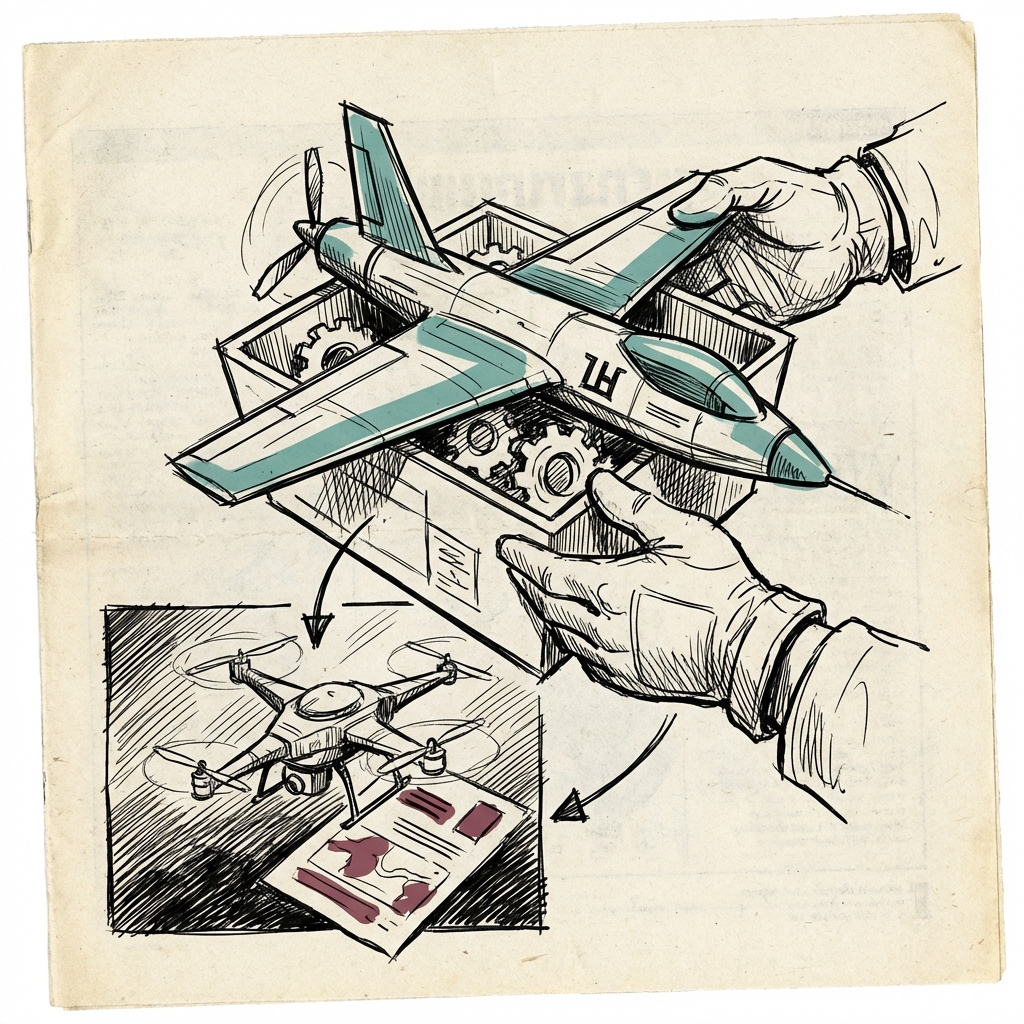
The Geran-2 is Russia's military designation for an upgraded variant of Iran's Shahed-136 loitering munition, which Russia has used extensively against Ukrainian infrastructure since 2022. The original Shahed-136 uses a delta-wing layout with a piston engine and a nose-mounted warhead, with a range exceeding 2,500 km; the Russian upgrades are reported to include improved navigation and countermeasure resistance.
In a significant reversal of the original supply relationship, Russia shipped upgraded Geran-2 variants back to Iran by sea, with delivery completed by end of March 2026; President Zelensky confirmed the transfer, and Russia also provided satellite targeting data alongside the drones. Iran originally supplied the Shahed design to Russia in 2022, so the Geran-2 is the production-evolved version returning to its source, deepening Russia-Iran military interdependence at a moment when Iran's drone stocks face sustained Coalition attrition.
Geran-2 drove a record month of Russian long-range strikes in May 2026: Russia launched 8,150 long-range drones across the month, and the campaign escalated into early June with a barrage of 656 drones and 73 missiles overnight into 2 June, the largest combined assault of the window, that collapsed a four-storey apartment block in Dnipro and killed 22 people. Zelenskyy said Ukraine's air defences could not stop a meaningful share of the incoming weapons.
The scale reflects the same mass-production logic that lets Russia re-export the munition to Iran while still saturating Ukrainian cities, a quantity advantage that air defence attrition struggles to match.
What is the Geran-2 drone?
Did Russia send drones to Iran in 2026?
How many Geran-2 drones does Russia produce?
What is the connection between the Shahed-136 and the Geran-2?
How many drones did Russia launch in May 2026?
What is the difference between a Geran-2 and a Shahed-136?



Written with AI from Lowdown's published reporting. Not individually reviewed by an editor. Updated 22 September 2026. Editorial standards.