Skip to content
Welcome, thoughtbot's Giant Robots listeners!Start here
Iran Conflict 2026
31JUL

ISAB Priolo's OFAC clock runs out

3 min read
09:24UTC

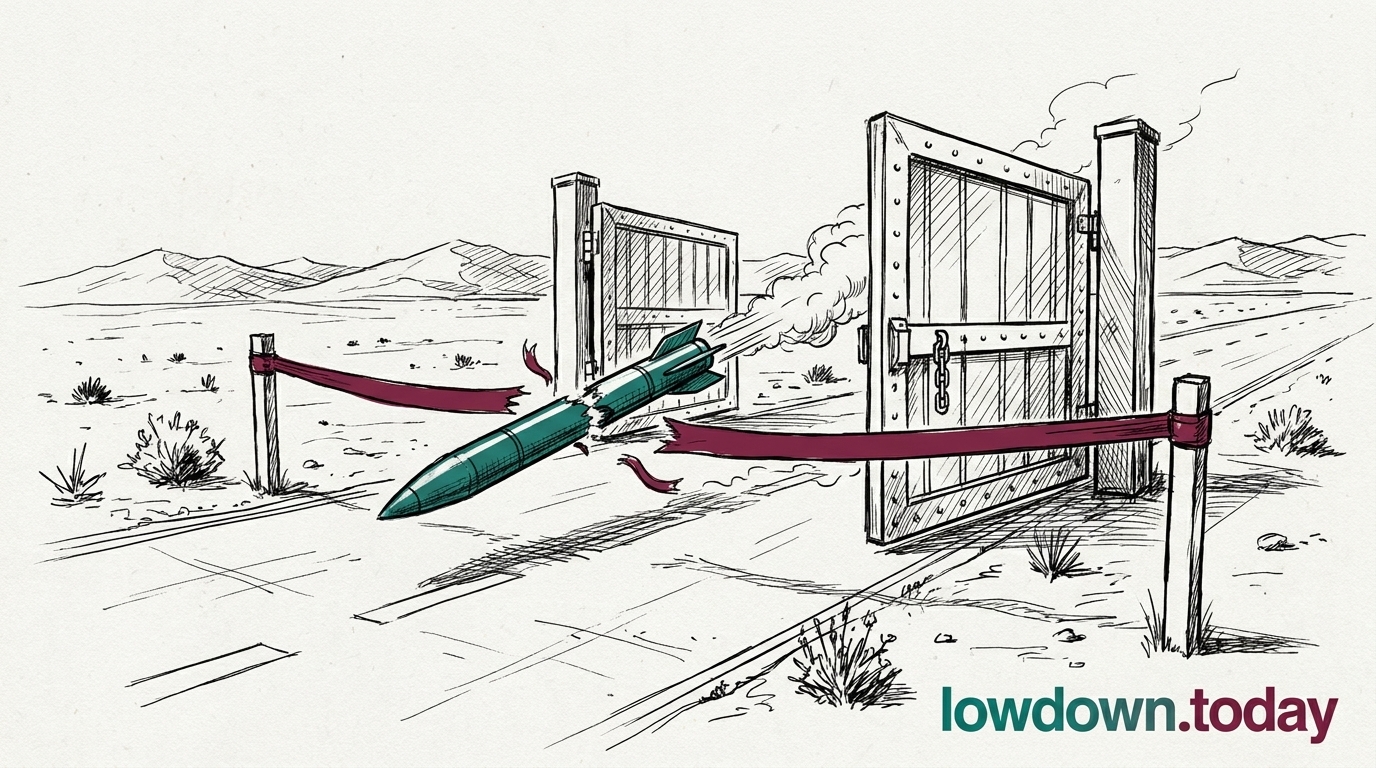
GL 131F, the OFAC licence that lets Lukoil negotiate the ISAB Priolo sale, expires on Sunday 28 June with no transfer licence issued and a 320,000 b/d refinery facing stranding.

ConflictDeveloping
Key takeaway

An OFAC transaction licence, not Italy's clearance, is the only thing that can move ISAB Priolo before Sunday.

OFAC moved the expiry of General License 131F (GL 131F), the authorisation that lets Lukoil International GmbH negotiate the sale of the ISAB Priolo refinery, to Sunday 28 June, one day later than the 27 June briefed last week⁠1. ISAB Priolo is the 320,000 b/d plant at Priolo Gargallo in Sicily, the largest Russian-owned refinery in the European system. No GL 131G has appeared, and the separate transaction licence that an actual title transfer requires has not been issued.

Italy cleared the deal in early June under its Golden Power foreign-investment framework, subject to conditions. A national-security sign-off in Rome cannot substitute for the missing licence in Washington. Until Sunday the buyer may negotiate; it cannot complete.

GL 131F authorises negotiation and contingent contracts, never the transfer of title. A plant that size with a willing seller, a conditional buyer and no lawful way to change hands becomes the largest stranded refinery in Europe since the war began. The Mediterranean products hole a stranding would open lands into the same flushed positioning book carrying everything else this fortnight.


Deep Analysis

In plain English

ISAB Priolo is a large oil refinery in Sicily, owned by Lukoil International GmbH, the European subsidiary of Russia's Lukoil oil company. It processes 320,000 barrels of crude per day into petrol, diesel, and jet fuel for European markets. That is equivalent to supplying roughly 3.5 million litres of fuel per day. After the invasion of Ukraine, US and EU sanctions targeted Russian companies including Lukoil. Rather than closing the refinery immediately, the US Treasury's Office of Foreign Assets Control (OFAC) issued a series of temporary authorisations called "general licences" allowing negotiations for its sale to a non-Russian buyer. A Cypriot-registered firm, Ludoil Energy, signed a sale agreement in May 2026. The current general licence, GL 131F, expires on 28 June. It allows the parties to negotiate, but does not allow the actual transfer of ownership. A separate "transaction licence" from OFAC is needed to close the deal, and no such licence has appeared. Without it, the 320,000 b/d refinery would remain legally owned by a sanctioned company, unable to be sold lawfully but still processing crude oil for European drivers and airlines.

Deep Analysis
Root Causes

The core structural problem is a three-layer consent requirement with incompatible timelines. OFAC's transaction licence conditions, set out in FAQ 1224, require: (a) the buyer to completely sever Lukoil International GmbH from Lukoil parent company; (b) funds owed to Lukoil to be parked in a US-jurisdiction blocked account; (c) no upfront value transferred to Lukoil.

These are covenanted closing conditions that typically require 45-90 days of legal documentation, escrow arrangement, and regulatory filings. GL 131F's 28 June deadline leaves eight business days from the date it was confirmed, which is structurally insufficient for a first-time transaction licence application.

Italy's Golden Power clearance, granted in principle under Law 21/2012, operates in a separate jurisdiction from OFAC and cannot substitute for the US sanctions authorisation.

The sale is denominated in a currency requiring US dollar clearing; any dollar-leg of the transaction flows through the US correspondent banking system and falls within OFAC's extra-territorial jurisdiction regardless of Italian domestic approval. The bottleneck is not Italian willingness but OFAC's absence of a specific licence instrument that the Italian process cannot supply.

First Reported In

Update #11 · Thin Brent book, heavy WTI length into a loaded week

OFAC· 26 Jun 2026
Read original →
Different Perspectives
United States (Joint Maritime Information Center)
The JMIC, the US-led naval reporting cell, rated the Hormuz threat "severe" in its 25 October advisory, as reported by gCaptain, and warned of possible renewed mining. Eight days earlier it found no substantiation for the Guards' mine claims, while US-facilitated transits ran at about 34 a day.
United Kingdom (CPS and Counter Terrorism Policing)
The CPS charged two men under the National Security Act 2023 over the RAF Fairford incident, and Counter Terrorism Policing said it believes the foreign intelligence service involved is Iran's, LBC reported. The case now runs through the courts; both men are charged, not convicted.
Aden and Yemen's recognised government
The Houthis told people to leave Aden airport, in the government-held south, before a missile fell there on 28 October, AFP reported, and police reported a second attack that afternoon. The fight between Riyadh and the Houthis is landing on the south's main civilian airport.
Qatar (mediators)
Qatar (mediators)
Qatar-led mediators put new terms to Iran this week, which an Iranian official called "ideas, not a proposal". Riyadh framed the Tehran meeting as support for Qatari and Pakistani mediation, keeping Doha at the centre of the indirect channel.
Korea Shipowners' Association
The association said the ships Iran listed were sub-chartered to an overseas oil company, not owned by Sinokor, carried no South Korean crew, and that Sinokor was unaware of the warning. South Korea's shipowners are contesting whose vessels the notice covers before it takes effect.
Kuwait (foreign ministry)
Kuwait summoned Iran's ambassador, Mohammad Toutounji, and handed him a protest note over the embassy's denial that its citizen took part in the alleged plot against Interior Minister Fahad Al-Yousef. Kuwait is answering through its courts and a diplomatic protest, citing international law and the UN Charter.

Written with AI from Lowdown's published reporting. Not individually reviewed by an editor. Editorial standards.