Skip to content
You can now search across every topic, entity and event.What's new
Iran Conflict 2026
31JUL

Five salvos at Israel in eighteen hours

3 min read
09:24UTC

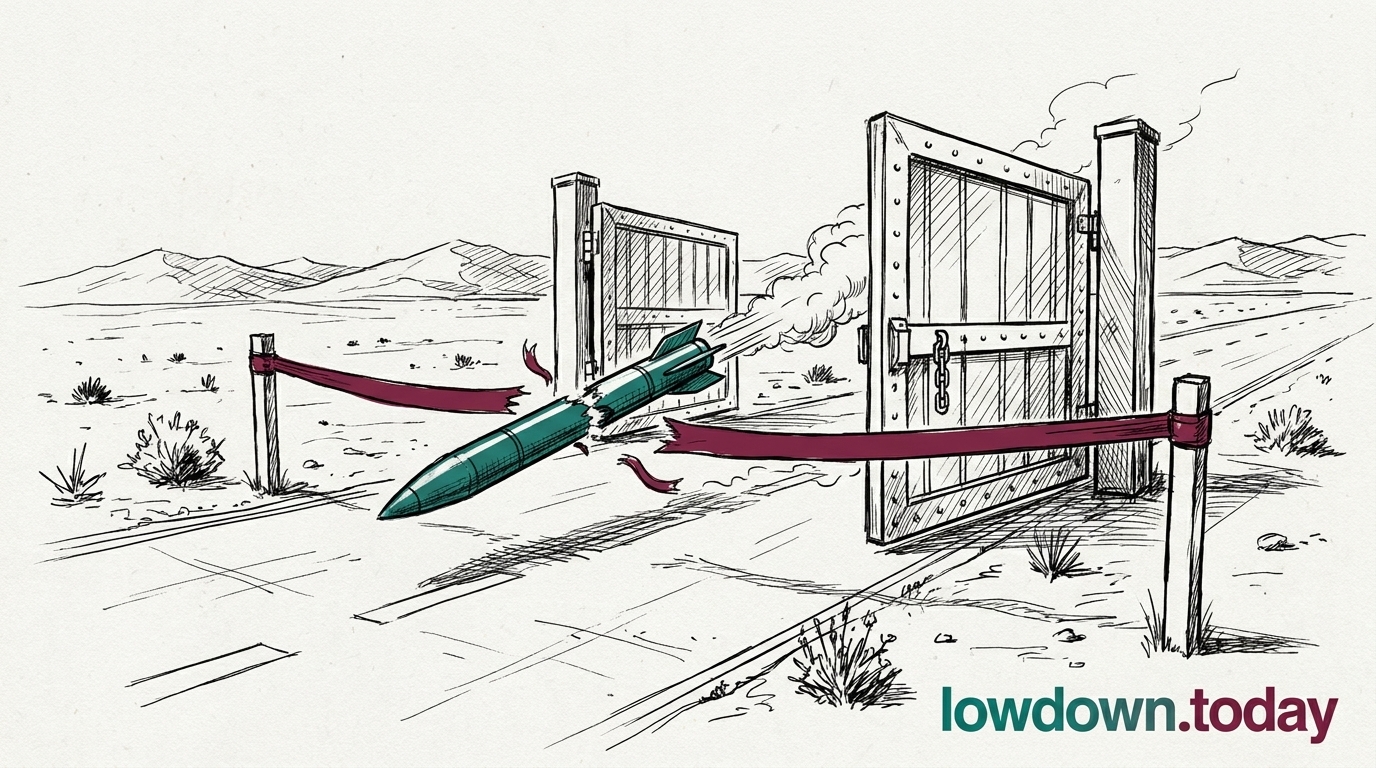
Iran sustained five missile salvos from Sunday night through Monday afternoon, forcing Israel's air defences into continuous operation while the IRGC claims its newer weapons have not yet been fired.

ConflictDeveloping
Key takeaway

Five salvos in 18 hours targets Israeli interceptor reload cycles, not merely warhead stockpiles.

Iran fired five missile salvos at Israel across roughly 18 hours from Sunday night through Monday afternoon. Air defences intercepted most incoming missiles. Debris reached residential areas — fragments fell near the Knesset and the Church of the Holy Sepulchre in Jerusalem, and one person was burned by shrapnel in East Jerusalem.

The sustained tempo, rather than any single salvo, is the pressure. Arrow and David's Sling interceptors cost $2–3 million each. Israel's cabinet approved NIS 2.6 billion (~$826 million) in emergency defence procurement last week , days after Semafor reported the country was running critically low on ballistic missile interceptors . The IDF denied the shortage; Israel Hayom suggested the Semafor report was Iranian disinformation. But the procurement approval itself — the largest emergency defence spend since the war began — confirms the burn rate is a recognised problem at cabinet level, whatever the current inventory.

The warhead design compounds the cost. Since the IRGC announced its shift to payloads exceeding one tonne , Iran has paired heavy kinetic warheads with cluster submunitions — testing two failure modes simultaneously. Heavy warheads stress individual interceptors; cluster payloads ensure dispersed damage even when interception succeeds, as Friday's 11 confirmed impacts in central Israeli towns demonstrated . An IRGC spokesman stated Monday that most missiles fired so far were produced "a decade ago" and that weapons manufactured after the initial strikes remain unused 1. If older inventory is already achieving residential-area impacts and forcing emergency procurement, the Kheibarshekan and Fattah hypersonic systems the IRGC claims to hold in reserve represent a capability ceiling Israel has not yet been asked to defend against.

The trajectory since Friday is an escalation in effect rather than volume: from the first confirmed impacts in central Israeli towns, to debris on the seat of government and Christianity's holiest church, to sustained multi-day bombardment that treats each salvo less as an attack than as an entry on a ledger — each one subtracting interceptors that cannot be replaced at the rate they are expended.


Deep Analysis

In plain English

Iran launched five separate waves of missiles at Israel over roughly 18 hours. Israel's missile defence network — a layered system including Arrow, David's Sling, and Patriot batteries — shot most of them down. However, there is a critical mechanical constraint that the raw intercept statistics obscure: every time a defensive interceptor fires, the launcher must reload before it can fire again. That reload takes time, crew effort, and logistics. If an adversary attacks in continuous waves, it can open windows during which defences are temporarily unable to respond. Iran appears to be deliberately probing whether those reload windows exist and how long they last. The cluster munitions that have already penetrated Israeli defences in previous days add a second pressure: some warheads are now getting through regardless of how quickly systems reload.

Deep Analysis
Synthesis

Iran is pursuing two complementary pressures simultaneously: cluster munitions that penetrate defences regardless of intercept rate, and multi-wave timing that probes reload windows. These are not redundant strategies — one degrades confidence in the defensive shield while the other degrades the shield's physical availability. Together they create a layered exhaustion campaign that Israeli and US planners did not publicly model before this war began.

Root Causes

Iran's salvo pattern reflects a strategic calculation that Israeli air defence reload capacity — not warhead accuracy — is the primary vulnerability to exploit. The IRGC's concurrent claim that newer missile inventory remains unused suggests this operational tempo is sustainable using older stock, preserving modern systems for a potential second phase.

Escalation

The shift from episodic salvos to five waves in a single operational period marks a doctrinal change from signalling to active attrition. Sustained salvo pressure historically triggers offensive escalation by the defending party once intercept confidence drops below roughly 85% — a threshold not yet confirmed as breached but under systematic test.

What could happen next?
  • Risk

    Sustained five-salvo daily tempo risks exhausting Israeli interceptor stockpiles faster than US emergency resupply logistics can replace them.

    Short term · Assessed
  • Consequence

    Israeli air defence saturation events, however brief, will accelerate domestic and military pressure for deeper offensive strikes inside Iranian territory.

    Short term · Assessed
  • Meaning

    Iran's shift from episodic strikes to sustained attrition salvos marks a doctrinal transition indicating strategic confidence in missile inventory depth.

    Immediate · Assessed
  • Risk

    Cluster munitions combined with reload-window timing could produce the first mass-casualty missile event inside Israel from this war.

    Immediate · Suggested
First Reported In

Update #38 · Israel enters Lebanon; Hormuz pact fails

AJ Day 17· 17 Mar 2026
Read original
Causes and effects
This Event
Five salvos at Israel in eighteen hours
Sustained multi-salvo bombardment forces continuous interceptor expenditure against a finite and expensive stockpile, while the IRGC's stated policy of holding newer systems in reserve raises the question of whether current Israeli defence architecture can absorb this attrition rate indefinitely.
Different Perspectives
Shipping and insurance underwriters
Underwriters can price Houthi strikes because the group announces its targets, but an unclaimed drone at Damietta and a mandatory Iranian insurance scheme both deny them a pattern to price against. War-risk premiums are increasingly being set by the absence of a claimant, not the scale of the damage.
Jordan
Jordan
Azraq absorbed its fourth Iranian strike in seven weeks, again drawing no direct Jordanian retaliation, only an American one. Amman's exposure, hosting US basing without the Patriot density of Gulf allies, has not changed even as the war around it widens.
Houthi movement
Houthi movement
The Houthis' 20 July blockade of Saudi-linked shipping is the injury Riyadh's new 43-nation coalition directly answers, yet the group itself was never asked to join and remains outside every proposal on the table. Sanaa-aligned commentators call the coalition a paper reassurance for insurers rather than a deployable force.
Egypt's Cabinet
Egypt's Cabinet
Egypt confirmed the Damietta blaze was an attack, not an accident, on soil the war had never touched before. Cairo now faces an unclaimed threat to a facility supplying roughly 7% of its domestic gas, with no author to hold accountable and no pattern yet to defend against.
Oman
Oman
Muscat is running the only channel Iran will use, a voluntary Hormuz fee modelled on Malacca, but stayed out of Saudi Arabia's new naval coalition entirely. Oman's mediating leverage depends on treating Hormuz as shared and non-exclusive, the opposite of what Tehran is now demanding of it.
Iraq's Prime Minister
Al-Zaidi cancelled his first official Riyadh visit and convened the Coordination Framework, the coalition that keeps him in power and whose factions sit inside the PMF that Saudi jets just struck. He is caught between a five-year Saudi investment relationship and armed groups inside his own state he does not fully control.



