Skip to content
You can now search across every topic, entity and event.What's new
Iran Conflict 2026
31JUL

GL-U expiry nears with no renewal

2 min read
09:24UTC

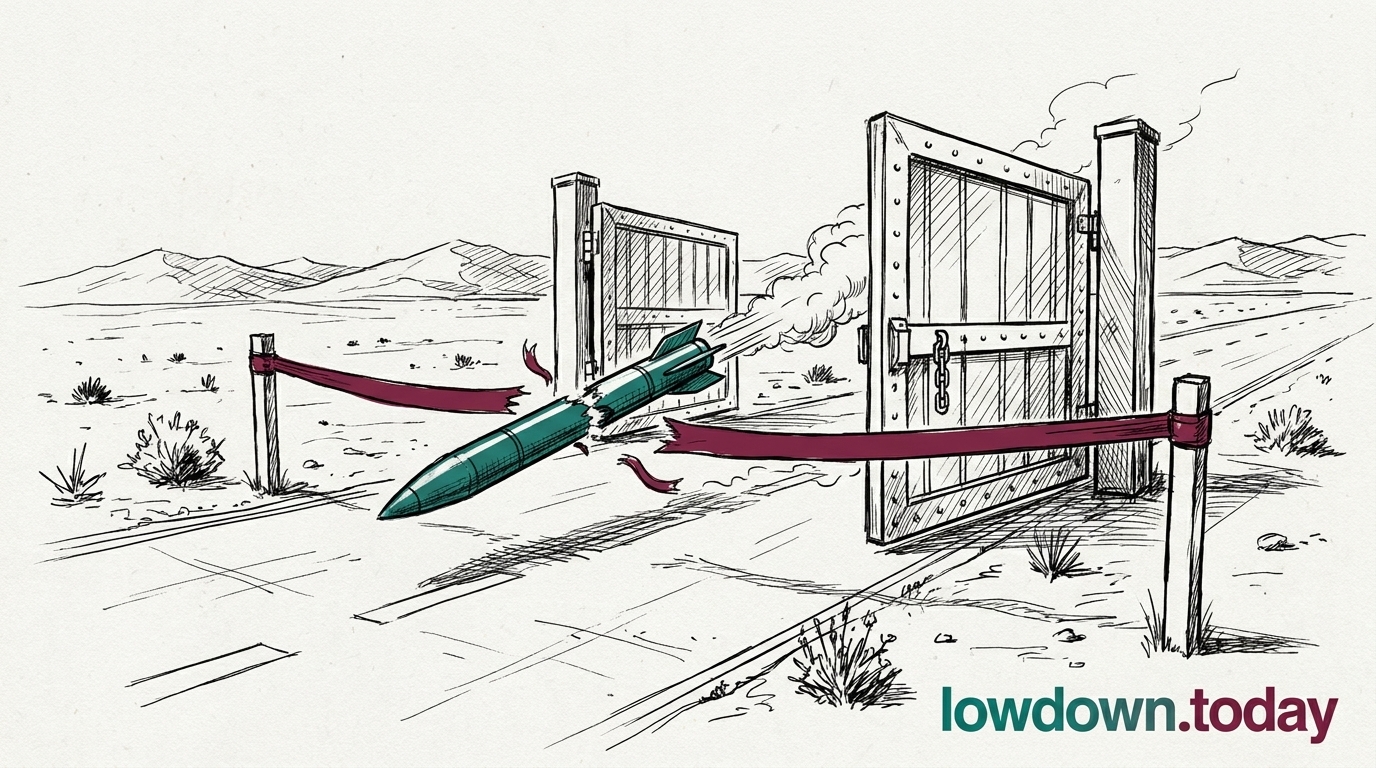
OFAC's General License U expires 19 April with no Treasury signal, after 23 days of silence on Iran sanctions.

ConflictDeveloping
Key takeaway

Treasury silence on GL-U renewal leaves stranded tankers in legal uncertainty.

OFAC (Office of Foreign Assets Control) General License U, which authorises the sale and delivery of Iranian-origin crude oil loaded before 20 March, expires on 19 April. No renewal, extension, or replacement licence has been issued as of 12 April. Seven days remain.

OFAC has not published a single Iran-related action since 20 March, 23 days of silence during an active war. It amended general licences for Russia and Venezuela in the same window, making the Iran silence conspicuous.

The licence's scope is narrow. It covers crude and petroleum products loaded on vessels on or before 20 March. It does not authorise new purchases, new loadings, or any transaction after its expiry. The oil tankers stranded in the Gulf are already in legal limbo; GL-U expiry would recriminalise any remaining deliveries.

GL-U expires three days before the ceasefire's own expiry around 22 April, creating back-to-back deadlines. A renewal would signal US willingness to keep a back-channel open despite the talks breakdown. Non-renewal would be read in Tehran as confirmation that the US is tightening pressure rather than extending space. Neither outcome has been signalled, which in itself is a signal: the administration has not decided, or has decided not to show its hand.


Deep Analysis

In plain English

OFAC is the US Treasury office that enforces sanctions. When the US struck a deal to pause hostilities, it issued a special permit called General License U, which temporarily allowed oil that had already been loaded onto ships before 20 March to be delivered and sold legally. That permit expires on 19 April. With talks now collapsed, the US has not signalled any intent to renew it. If it expires without renewal, every Iranian oil delivery currently in transit becomes illegal under US sanctions, meaning any bank or company involved in processing that payment faces US penalties. For the 325 tankers stranded in the Gulf, this creates a legal cliff: even if they get through the strait, their cargo may become unsellable under US sanctions three days before the ceasefire itself expires. It is a tightening vice with two jaws closing simultaneously.

What could happen next?
  • Consequence

    GL-U non-renewal on 19 April would tighten the sanctions regime three days before the ceasefire expires on approximately 22 April, creating a legal and commercial cliff that compounds the diplomatic vacuum from the Islamabad collapse.

  • Opportunity

    A targeted GL-U renewal, possibly extended to cover additional Iranian oil deliveries, could serve as a back-channel signal to Tehran that the US is not yet escalating sanctions, potentially creating space for Pakistan to arrange a further round of talks.

First Reported In

Update #66 · Islamabad collapses: 10 days to expiry

Al Jazeera· 12 Apr 2026
Read original
Different Perspectives
Shipping and insurance underwriters
Underwriters can price Houthi strikes because the group announces its targets, but an unclaimed drone at Damietta and a mandatory Iranian insurance scheme both deny them a pattern to price against. War-risk premiums are increasingly being set by the absence of a claimant, not the scale of the damage.
Jordan
Jordan
Azraq absorbed its fourth Iranian strike in seven weeks, again drawing no direct Jordanian retaliation, only an American one. Amman's exposure, hosting US basing without the Patriot density of Gulf allies, has not changed even as the war around it widens.
Houthi movement
Houthi movement
The Houthis' 20 July blockade of Saudi-linked shipping is the injury Riyadh's new 43-nation coalition directly answers, yet the group itself was never asked to join and remains outside every proposal on the table. Sanaa-aligned commentators call the coalition a paper reassurance for insurers rather than a deployable force.
Egypt's Cabinet
Egypt's Cabinet
Egypt confirmed the Damietta blaze was an attack, not an accident, on soil the war had never touched before. Cairo now faces an unclaimed threat to a facility supplying roughly 7% of its domestic gas, with no author to hold accountable and no pattern yet to defend against.
Oman
Oman
Muscat is running the only channel Iran will use, a voluntary Hormuz fee modelled on Malacca, but stayed out of Saudi Arabia's new naval coalition entirely. Oman's mediating leverage depends on treating Hormuz as shared and non-exclusive, the opposite of what Tehran is now demanding of it.
Iraq's Prime Minister
Al-Zaidi cancelled his first official Riyadh visit and convened the Coordination Framework, the coalition that keeps him in power and whose factions sit inside the PMF that Saudi jets just struck. He is caught between a five-year Saudi investment relationship and armed groups inside his own state he does not fully control.



