Skip to content
You can now search across every topic, entity and event.What's new
Iran Conflict 2026
28JUL

Qatar says the $6bn never left

2 min read
09:28UTC

Qatar's Foreign Ministry said the $6bn tranche of Iranian funds it holds has not moved, directly contradicting President Masoud Pezeshkian's 29 June claim that the money was returning to Tehran.

ConflictDeveloping
Key takeaway

Qatar says Iran's $6bn remains frozen, spendable only on food and medicine through a US-supervised account.

Qatar's Foreign Ministry said on 3 July that the $6bn tranche of Iranian funds it holds remains frozen, directly contradicting President Masoud Pezeshkian, who claimed on 29 June that the money was returning to Tehran without US conditions 1. Any release depends on a US-Qatar-Iran mechanism, restricted to food and medicine, that has not been finalised.

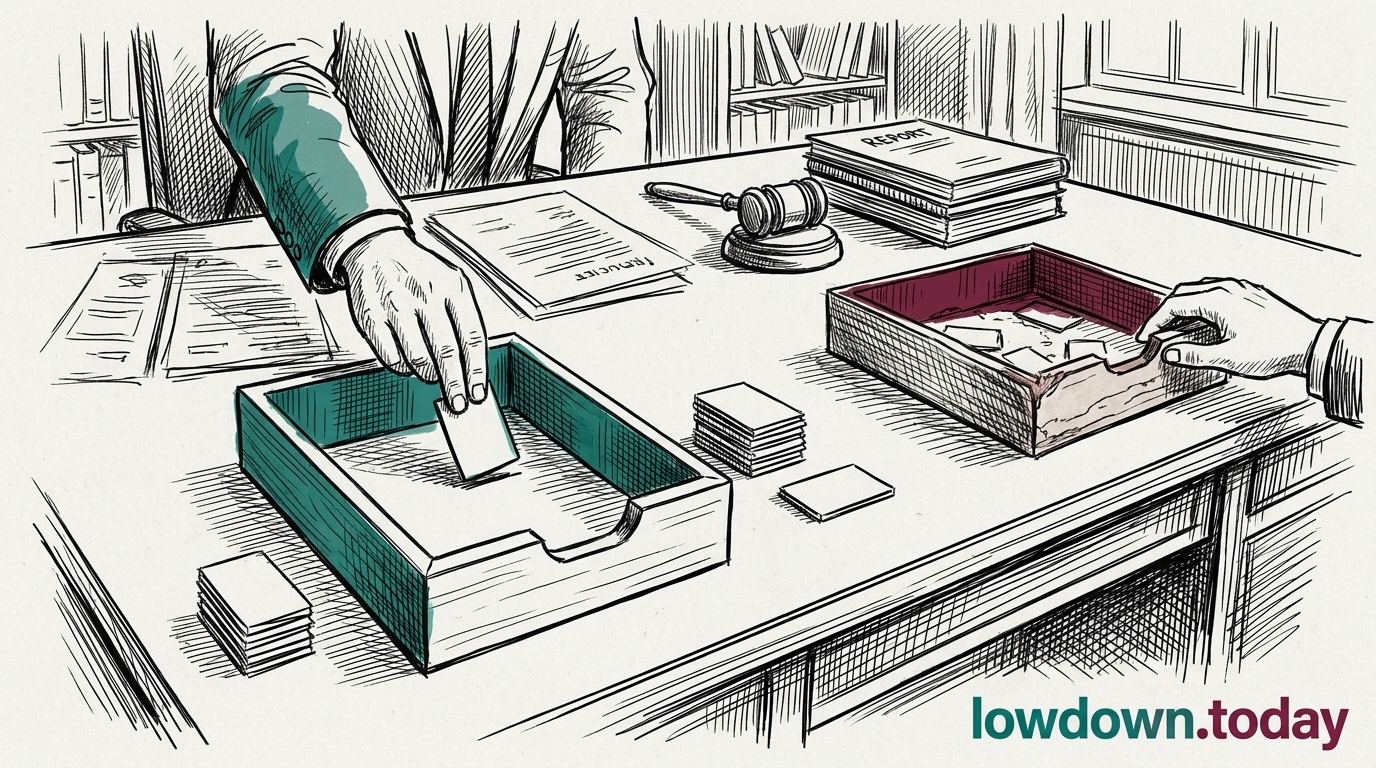
The escrow unlocks only against approved humanitarian invoices, so even a signed deal would not put cash in Tehran's hands. It would let Iran draw down against wheat and medicine purchases run through a US-supervised account. Pezeshkian described a return of sovereign money; Doha described a spending line for food.

The account mirrors a 2023 arrangement in which $6bn of Iranian oil money sat in Qatar for humanitarian purchases before being refrozen, and the same food-and-medicine ringfence Washington set on the disputed $12bn tranche last week . Same custodian, same ledger, same reversibility. A president announcing a return of funds structured this way is describing an invoice line, not a transfer, which is the distinction Doha's rebuttal makes public. Pezeshkian's announcement is the second Iranian claim of a win this week that the paperwork does not support.

Deep Analysis

In plain English

Qatar has been holding billions of dollars of Iranian money that international sanctions froze. On 29 June, Iran's President Masoud Pezeshkian told the Iranian public that $6bn of that money was finally coming home, with no conditions attached. Qatar's Foreign Ministry said on 3 July that Pezeshkian's version is wrong. The $6bn is still frozen exactly where it was before. Qatar cannot release the funds without permission from the US Treasury, which has not been given, so Iran's president appears to have promised his own people something no one had actually agreed to.

Deep Analysis
Root Causes

Qatar's central bank holds the funds under US secondary-sanctions exposure, not Iranian ownership terms. Any release without an explicit Treasury licence risks Doha's own banks losing correspondent relationships with American institutions, a far larger cost to Qatar than the diplomatic friction of contradicting Pezeshkian.

That constraint has not changed since Qatar first confirmed in April that any release requires Treasury approval it has not granted. Pezeshkian has no authority over that process either. As a civilian president with no command role over the IRGC or the nuclear file, his public statements on sanctions relief are aimed at Iranian audiences rather than at commitments Washington or Doha are bound by.

First Reported In

Update #145 · Iran's heir skips the funeral built for him

Iran International· 4 Jul 2026
Read original
Causes and effects
This Event
Qatar says the $6bn never left
Qatar's rebuttal shows the $6bn is a US-supervised humanitarian spending line, not the returning sovereign cash Pezeshkian described to a domestic audience.
Different Perspectives
Iran's Supreme Leader's office and Iranian households
A letter published through state media named Lebanon's territorial integrity and an end to Israeli operations there as the war's ending condition; the same week, spokesperson Mohajerani cut the subsidised petrol ration from 70 to 50 litres a month. Iranian agencies still disagree on who inside the office signed the letter.
Oman
Oman
Muscat proposed a voluntary-funded coalition to police Hormuz, the corridor its own coastline gives it standing to manage, while Iran wants control and toll rights over shipping and Washington insists on free navigation. Oman's remit stops at the strait; it has no comparable claim over Iraq, the Caspian, or Lebanon.
Kyiv
Kyiv
President Volodymyr Zelenskyy confirmed the Caspian strike on an Iranian vessel carrying military cargo from Russia's Astrakhan region, opening a front that ties Iran's war to its supply relationship with Moscow rather than to anything the Gulf mediators are discussing.
Riyadh
Riyadh
Maj Gen Turki Al Malki named Iraq as the launch point for drones intercepted over the Eastern Province and Riyadh, the first time this war has reached Saudi Arabia from that direction rather than from Yemen. Nothing landed, but a second launch geography aimed at Saudi oil now exists alongside the Houthi front.
Baghdad
Baghdad
Iraq's Foreign Ministry summoned its own ambassador in Riyadh after Saudi Arabia's Defence Ministry said the drones came from Iraqi territory, while the same day drones struck Iranian-Kurdish opposition camps inside Iraq. Baghdad is disowning attacks it did not launch from territory it does not fully control.
The Pentagon and Congress
Acting press secretary Joel Valdez attributed the toll's reversal to site anomalies, the same explanation the department gave for the opposite cut on 24 July; Representative Thomas Massie called the category change an absurd ruse designed to reset the war's legal clock. Neither side agrees on which explanation, or which war, is real.