Skip to content
You can now search across every topic, entity and event.What's new
Iran Conflict 2026
28JUL

IAEA welcomes Barakah Unit 3 power back

3 min read
09:28UTC

IAEA Director-General Rafael Grossi welcomed the UAE's restoration of off-site power to Barakah Nuclear Power Plant Unit 3 on 19 May as an important nuclear-safety step, two days after a drone struck the plant's perimeter generator.

ConflictDeveloping
Key takeaway

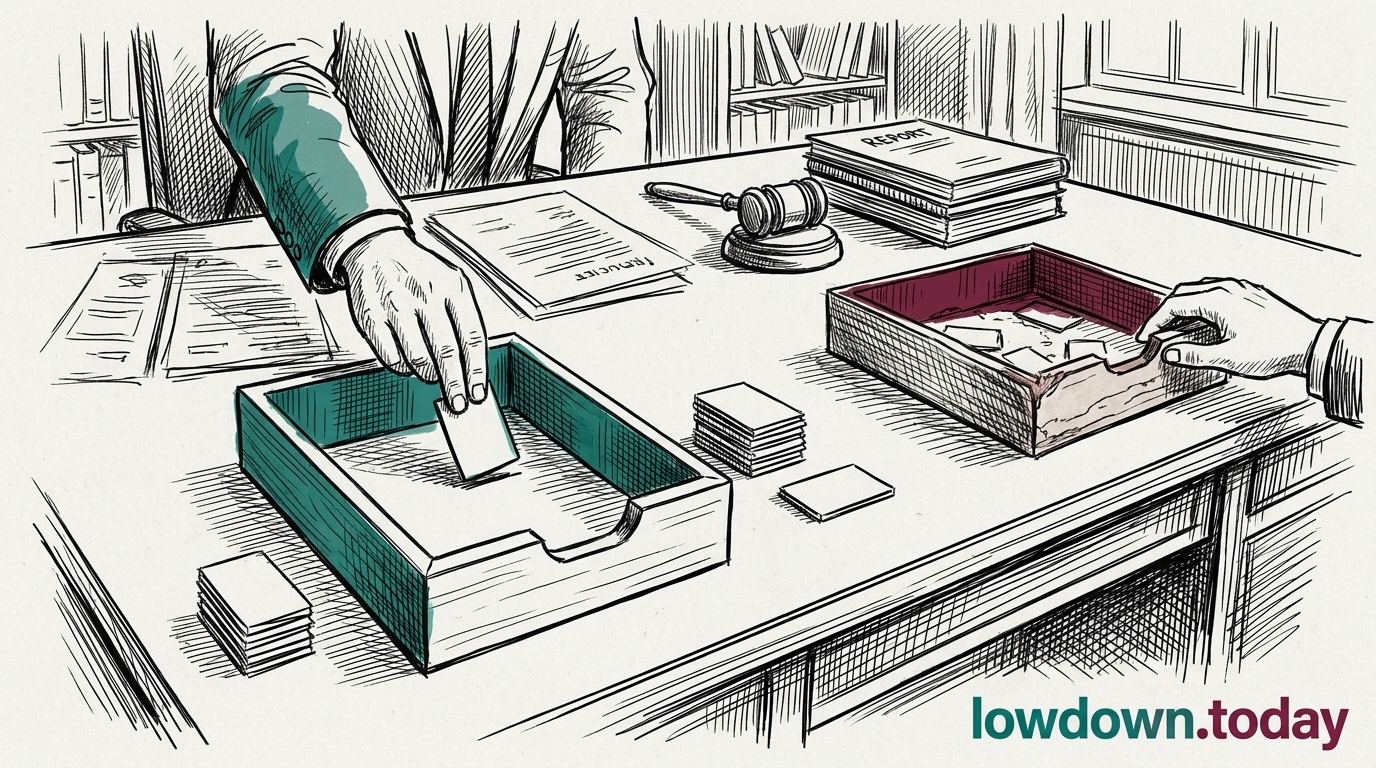
Grossi kept Barakah inside the safety bucket to protect the safeguards bucket he might need later.

IAEA Director-General Rafael Grossi welcomed the United Arab Emirates' restoration of off-site power to Unit 3 of the Barakah Nuclear Power Plant on 19 May 2026, calling it an important step for nuclear safety, World Nuclear News reported. Radiation levels remained normal 1. The restoration came two days after a drone struck the plant's perimeter generator, with the UAE intercepting two other drones in the same incident .

Grossi's choice of register matters as much as the announcement. The statement is framed as a safety welcome and not an Article XII safeguards review. Article XII of the IAEA Statute covers non-proliferation violations by a state under safeguards; it does not cover third-party kinetic attacks on a cooperating state's civilian reactor. Triggering it would reset the legal posture of the entire conflict by pulling the UAE's Barakah operations into the same procedural frame as Iran's enrichment programme, and Grossi has consistently declined to do so.

The wall Grossi is holding has direct bearing on the Isfahan verification stand-off. With the IAEA locked out of Iran for eight months and unable to count the Isfahan stockpile, the agency's residual leverage rests on the cleanliness of its remaining mandates. By treating Barakah as a safety event rather than a safeguards crisis, Grossi preserves the IAEA's ability to act as a neutral verifier if Iran's nuclear file ever returns to inspection. Conflating the two would surrender exactly the institutional distinction that any future deal would have to depend on. The Barakah statement is therefore a deliberate non-escalation, calibrated for the inspection problem the agency cannot yet solve next door.

Deep Analysis

In plain English

Barakah is the Arab world's first nuclear power station, located in the UAE. A drone hit a generator on its perimeter on 17 May; two others were shot down. On 19 May, the UN's nuclear watchdog chief, Rafael Grossi, welcomed the UAE's restoration of power to the plant's Unit 3 reactor and called it an important step for nuclear safety. Here is the important nuance: Grossi addressed the radiation-safety dimension under the Nuclear Safety Convention (1994), not the Non-Proliferation Treaty safeguards framework he uses for inspections. Under IAEA institutional rules, Grossi can welcome a safety improvement without triggering the inspection machinery. He kept those categories deliberately apart partly because the IAEA is already locked out of Iran and cannot afford to look partisan.

Deep Analysis
Root Causes

Grossi's careful framing reflects a structural constraint on the IAEA's mandate. The agency's safety function rests on the Nuclear Safety Convention (1994), which is distinct from the Non-Proliferation Treaty safeguards framework. Applying safeguards language to Barakah would imply the IAEA has a monitoring role in the conflict's nuclear dimension, which Iran would immediately cite as evidence of IAEA partisanship in the war.

A second structural driver is the drone attribution question: the 17 May drone strike on Barakah's generator has not been attributed to a state actor by any party. Grossi cannot invoke Article XII (safeguards and inspections) when he has not identified the triggering state.

Escalation

Grossi's statement is de-escalatory in its framing it addresses the safety dimension without activating the safeguards dimension, keeping one IAEA channel open to the region. The underlying escalation risk is the unanswered attribution question for the 17 May drone strike.

What could happen next?
  • Consequence

    The IAEA's safety-versus-safeguards distinction allows Grossi to maintain credibility with UAE and Gulf states without formally taking sides in the conflict preserving the agency's future role as a potential Iran re-engagement mechanism.

    Immediate · 0.8
  • Risk

    If subsequent drone strikes on Barakah escalate to reactor-area hits, Grossi may face pressure to invoke safeguards language a step that would draw the IAEA formally into the conflict's nuclear politics.

    Short term · 0.65
  • Precedent

    Grossi's safety-track engagement with Barakah while Iran's safeguards are suspended establishes an asymmetric IAEA posture that Tehran will cite in any future access negotiation as evidence of institutional bias.

    Long term · 0.6
First Reported In

Update #102 · Iran signs Hormuz toll; Trump posts a cancelled strike

CBS News· 19 May 2026
Read original
Causes and effects
Different Perspectives
Iran's Supreme Leader's office and Iranian households
A letter published through state media named Lebanon's territorial integrity and an end to Israeli operations there as the war's ending condition; the same week, spokesperson Mohajerani cut the subsidised petrol ration from 70 to 50 litres a month. Iranian agencies still disagree on who inside the office signed the letter.
Oman
Oman
Muscat proposed a voluntary-funded coalition to police Hormuz, the corridor its own coastline gives it standing to manage, while Iran wants control and toll rights over shipping and Washington insists on free navigation. Oman's remit stops at the strait; it has no comparable claim over Iraq, the Caspian, or Lebanon.
Kyiv
Kyiv
President Volodymyr Zelenskyy confirmed the Caspian strike on an Iranian vessel carrying military cargo from Russia's Astrakhan region, opening a front that ties Iran's war to its supply relationship with Moscow rather than to anything the Gulf mediators are discussing.
Riyadh
Riyadh
Maj Gen Turki Al Malki named Iraq as the launch point for drones intercepted over the Eastern Province and Riyadh, the first time this war has reached Saudi Arabia from that direction rather than from Yemen. Nothing landed, but a second launch geography aimed at Saudi oil now exists alongside the Houthi front.
Baghdad
Baghdad
Iraq's Foreign Ministry summoned its own ambassador in Riyadh after Saudi Arabia's Defence Ministry said the drones came from Iraqi territory, while the same day drones struck Iranian-Kurdish opposition camps inside Iraq. Baghdad is disowning attacks it did not launch from territory it does not fully control.
The Pentagon and Congress
Acting press secretary Joel Valdez attributed the toll's reversal to site anomalies, the same explanation the department gave for the opposite cut on 24 July; Representative Thomas Massie called the category change an absurd ruse designed to reset the war's legal clock. Neither side agrees on which explanation, or which war, is real.