Skip to content
You can now search across every topic, entity and event.What's new
Iran Conflict 2026
26JUL

Hegseth: air campaign about to surge

3 min read
12:01UTC

Defence Secretary Hegseth signals the air campaign will escalate further — with Iran's conventional forces already halved and the target list expanding toward governance institutions.

ConflictDeveloping
Key takeaway

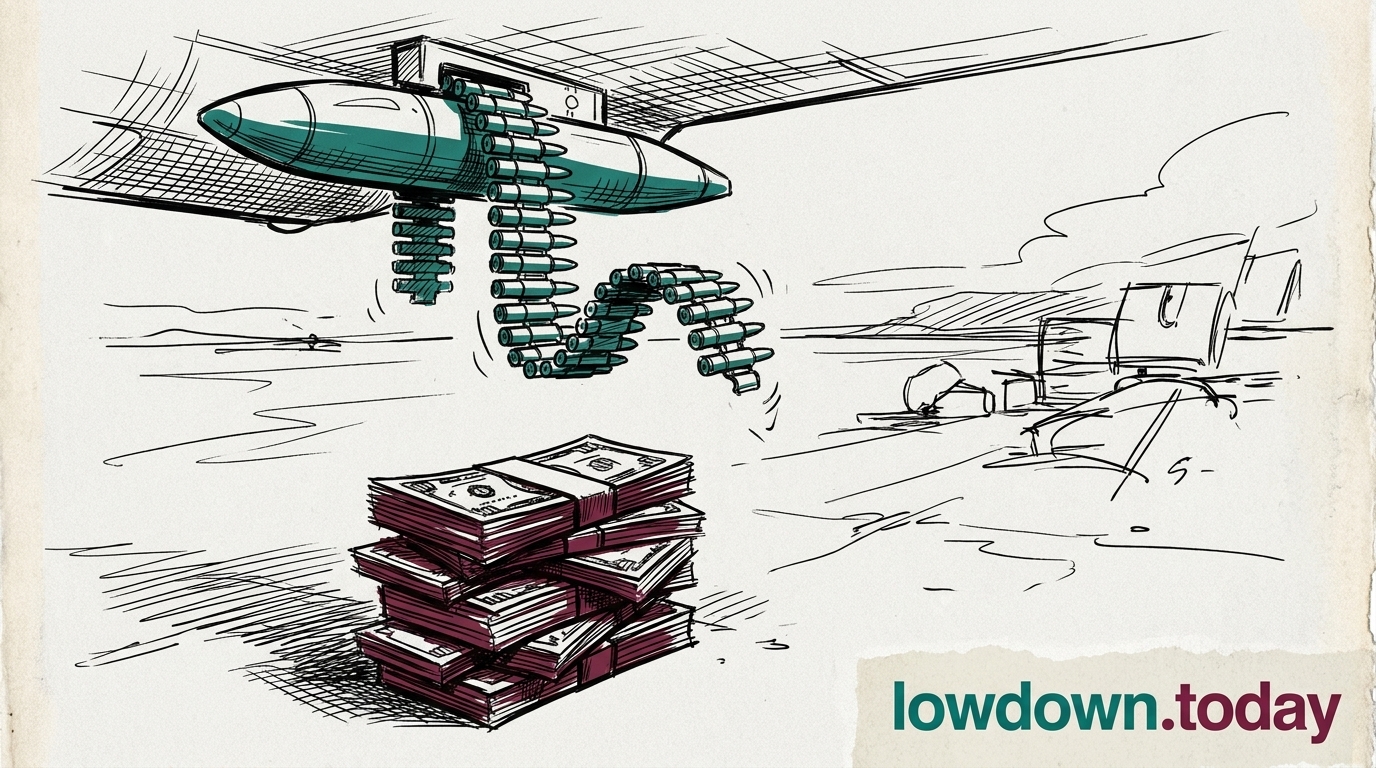
A dramatic air surge may accelerate physical destruction but compresses the timeline to US precision munitions stockpile constraints — a binding material limit on operational tempo that no amount of political will can override in the near term.

Defence Secretary Pete Hegseth announced on Friday that the US air campaign against Iran is "about to surge dramatically" — a public promise of further escalation on Day 7 of Operation Epic Fury. The week's strikes have already destroyed half of Iran's approximately 65-vessel surface fleet , reduced Ballistic missile fire by 90% from Day 1 levels , sunk two drone carriers , and hit deeply buried launch infrastructure with B-2-delivered penetrator munitions . By the Pentagon's own metrics, Iran's conventional military capacity is a fraction of what it was on 28 February.

What a "dramatic surge" targets when the conventional order of battle is this degraded is the question Hegseth did not answer. CENTCOM's expanded war aim, disclosed earlier this week — a directive to "dismantle the Iranian regime's security apparatus" — provides one. That category encompasses the IRGC, Basij, Ministry of Intelligence, and internal security forces. Their offices, command centres, and communications infrastructure sit inside Iranian cities, adjacent to civilian life. Striking them is operationally and legally distinct from destroying missile batteries in open terrain or warships at their berths.

The escalation deepens the campaign's core strategic contradiction. President Trump has defined the war's success condition as unconditional surrender. Air power destroys hardware; it does not compel political capitulation. The White House has ruled out ground forces. Every senior Iranian official who might negotiate has publicly refused . No functioning diplomatic channel exists — Trump himself closed the last one with a two-word post . At CSIS's estimated $891 million per day, with $3.5 billion of the first $3.7 billion unbudgeted, each day of escalation compounds the expenditure while the gap between the stated war aim and any plausible mechanism for achieving it remains unaddressed.


Deep Analysis

In plain English

The US Defence Secretary announced that the bombing campaign is about to increase dramatically in intensity. Announcing this publicly before it happens is unusual — militaries typically do not forewarn adversaries. The announcement itself is deliberate: part of the strategy is to frighten Iranian leaders into capitulating before the bombs even fall, by making the incoming destruction feel inevitable. The practical challenge is that the US has a finite supply of the most expensive precision-guided munitions, and surging through them faster brings the point of stockpile exhaustion closer. The production lines that make these weapons cannot simply be switched to high gear overnight — key components take 12–18 months to manufacture.

Deep Analysis
Synthesis

Publicly announcing intensification before it occurs is doctrinally costly in operational security terms — the only rational explanation is that the announcement itself is a weapon, designed to maximise psychological impact on Iranian leadership before the physical strikes land. This operationalises 'Shock and Awe' doctrine's core tenet that perceived inevitability of overwhelming force can achieve behavioural change independently of physical damage. The public surge announcement is the leading edge of the campaign, not a communications afterthought.

Escalation

The coordinated public announcements by Hegseth and the IDF on the same day signal synchronised operational planning between US and Israeli commands — this is not parallel action but joint psychological operations with a shared target: Iranian leadership decision-making. The trajectory is vertical in the immediate term; the binding constraint will be munitions availability, not political will, and that constraint is closer than the public framing suggests.

What could happen next?
  • Risk

    Accelerated munitions expenditure during the surge could deplete specific high-value precision weapon stockpiles within weeks, forcing a shift to less discriminate weapons or an operational pause — a constraint that would become publicly visible and diplomatically significant at a critical moment.

    Short term · Assessed
  • Consequence

    Coordinated US-IDF public surge signalling establishes a new baseline for the conflict's intensity — any future reduction in strike tempo will be interpreted internationally as restraint under material constraint rather than deliberate de-escalation, complicating eventual ceasefire diplomacy.

    Immediate · Assessed
  • Opportunity

    If the surge successfully degrades Iran's remaining command-and-control nodes before Mosaic Defence dispersal is complete, it may compress the window in which Iran can conduct coordinated ballistic missile operations — achieving a military objective the preceding seven days of strikes approached but did not fully realise.

    Short term · Suggested
  • Precedent

    Public pre-announcement of military intensification as a primary psychological operations instrument — rather than a secondary communications effect — establishes a new operational norm for how advanced militaries signal escalation in the social-media era.

    Long term · Suggested
First Reported In

Update #24 · Trump demands unconditional surrender

Al Jazeera· 6 Mar 2026
Read original
Causes and effects
This Event
Hegseth: air campaign about to surge
The surge announcement, paired with CENTCOM's directive to dismantle Iran's security apparatus, indicates target selection is shifting from conventional military hardware to domestic governance institutions embedded in urban centres — a category with far greater civilian proximity and no clear military endpoint.
Different Perspectives
Hormuz shipping and insurance market
Kpler, Lloyd's List and S&P Global each independently put Strait of Hormuz transits at a seventh to a sixth of pre-war levels, against CENTCOM's own position that the strait remains open for transit. War-risk premiums rose from 0.25% to 3-10% of hull value in mid-July and have held steady since.
Pakistan (with China)
Iran's interior minister met Pakistan's army chief in Islamabad on 25 July, his second visit in ten days, with China separately pushing the same track; Islamabad's stated precondition, a halt to Gulf attacks, broke within hours when the Houthis struck Yanbu and Jazan. The channel inherits Baghdad's opening without yet fixing what broke it.
Saudi Arabia
Saudi Arabia
Saudi Arabia absorbed Houthi strikes on Aramco-linked sites at Jazan and Yanbu on 25 July without confirming them, while holding a 30-year civil nuclear agreement Trump made conditional on joining the Abraham Accords two days after signing it. Riyadh is fighting on one front while being asked to concede on another.
Iran (state security leadership)
Iran's security chief said strikes continue until the enemy's "total surrender", and no IRNA, Tasnim or Fars report carries any stand-down language to match Washington's pause. Tehran reads the halt as "strategic decision-making fatigue", not a restraint it needs to reciprocate.
Washington (Pentagon and White House)
A Defense Department source called the bombing halt "on a hold", Pentagon spokesman Sean Parnell insisted the US "retains a deep arsenal of capabilities", and the White House credited "successful sanctions" and thirteen days of strikes for the same pause. Three explanations from one government suggest none of them is the whole one.
Oil traders
Oil traders
Sent Brent down 2.29 per cent to $98.38 a barrel on reports that mediation was reviving, moving the price on CENTCOM's quiet night rather than on Trump's same-day promise of a bigger operation with no deadline attached.



