Skip to content
You can now search across every topic, entity and event.What's new
Iran Conflict 2026
23JUL

Leaked tape: Khamenei wife, son killed

4 min read
19:27UTC

A verified recording from inside the Supreme Leader's office reveals Mojtaba Khamenei survived the 28 February strikes by seconds. His wife and son did not.

ConflictDeveloping
Key takeaway

Iran's supreme leader is incapacitated in wartime with no constitutional mechanism to delegate his authority.

The Telegraph obtained and independently verified a leaked audio recording from Mazaher Hosseini, head of protocol for the late Ali Khamenei's office, delivered at a meeting in Tehran on 12 March 1. According to the recording, Mojtaba Khamenei stepped into his garden at approximately 09:30 on 28 February. While he was outside, ballistic missiles struck his home. His wife and son were killed instantly. He survived with a leg injury — by "mere seconds," in Hosseini's words. The account corroborates Defence Secretary Hegseth's earlier claim that Khamenei is "wounded and likely disfigured" .

Eighteen days have passed since the Assembly of Experts installed Mojtaba Khamenei as Supreme Leader. In that time, no verified video, audio, or photograph of him has surfaced. Iran's state media broadcast a statement in his name on 11 March, but another person read the words while a photograph was displayed . Trump told reporters: "We don't know if he's dead or not... a lot of people are saying he's badly disfigured" 2. The man who constitutionally commands Iran's armed forces, appoints the heads of the judiciary and state broadcaster, and holds final authority over the nuclear programme has not demonstrated the capacity to exercise any of these functions.

That Hosseini's account — delivered at an internal meeting, not a press conference — reached a Western newspaper raises its own questions. Either someone in The Supreme Leader's inner circle leaked it deliberately to shape the narrative around his absence, or Iran's internal security discipline has fractured under sustained bombardment. Either possibility compounds the command vacuum. Larijani was Iran's institutional memory for four decades of negotiation; Khamenei is the constitutional apex. With one dead and the other incapacitated and bereaved, the Islamic Republic's war is directed by the IRGC's operational commanders and President Pezeshkian's civilian government — two centres of authority that have issued contradictory positions on whether Iran even seeks an end to the fighting.

The 28 February strikes killed the previous Supreme Leader and, the audio now reveals, destroyed his successor's family in the same hour. Mojtaba Khamenei — if he retains command — directs Iran's war as a man who lost his father, his wife, and his son to the campaign he is expected to lead a response to, while carrying injuries that have kept him hidden from his own country for eighteen days. The IDF has since publicly declared him a target. The Islamic Republic's commander-in-chief is simultaneously its most important and most endangered person.

Deep Analysis

In plain English

Iran's new supreme leader — the country's most powerful figure, above the elected president — was nearly killed in February. His wife and child died. He survived injured but has not been seen publicly since taking power. In normal times, a period of absence might be manageable. In an active war, it is potentially catastrophic: the one person constitutionally empowered to authorise major strategic decisions — whether to escalate, negotiate, or stand down — is unreachable. Decisions may now be made by institutional momentum or IRGC commanders acting on their own judgement, without anyone formally in charge.

Deep Analysis
Synthesis

Three simultaneous conditions — an incapacitated supreme leader, dispersed military commanders living in tent encampments (per Events 0), and no verified proof of life — suggest Iran may be prosecuting a war by institutional inertia rather than directed strategy. This creates a paradox: Iran appears externally coherent (waves of named operations continue) while potentially lacking any single actor with the authority and situational awareness to halt them.

Root Causes

Iran's Velayat-e Faqih doctrine concentrates final strategic authority in a single office. Unlike parliamentary systems with distributed power or constitutional monarchies with deputy mechanisms, the system has no formal delegation procedure for an incapacitated but living Supreme Leader — the Assembly of Experts convenes only to remove or replace, not to manage interim authority.

Escalation

The incapacitation creates an autonomous-IRGC risk: without supreme leader oversight, field commanders may authorise escalatory strikes that a functional leadership chain would constrain. The body documents the absence but does not assess the operational consequence of decisions being made by inertia rather than direction.

What could happen next?
  • Risk

    IRGC commanders operating without supreme leader authorisation may approve escalatory strikes that a functional command chain would veto, raising the probability of a miscalculation that neither side intended.

    Short term · Assessed
  • Consequence

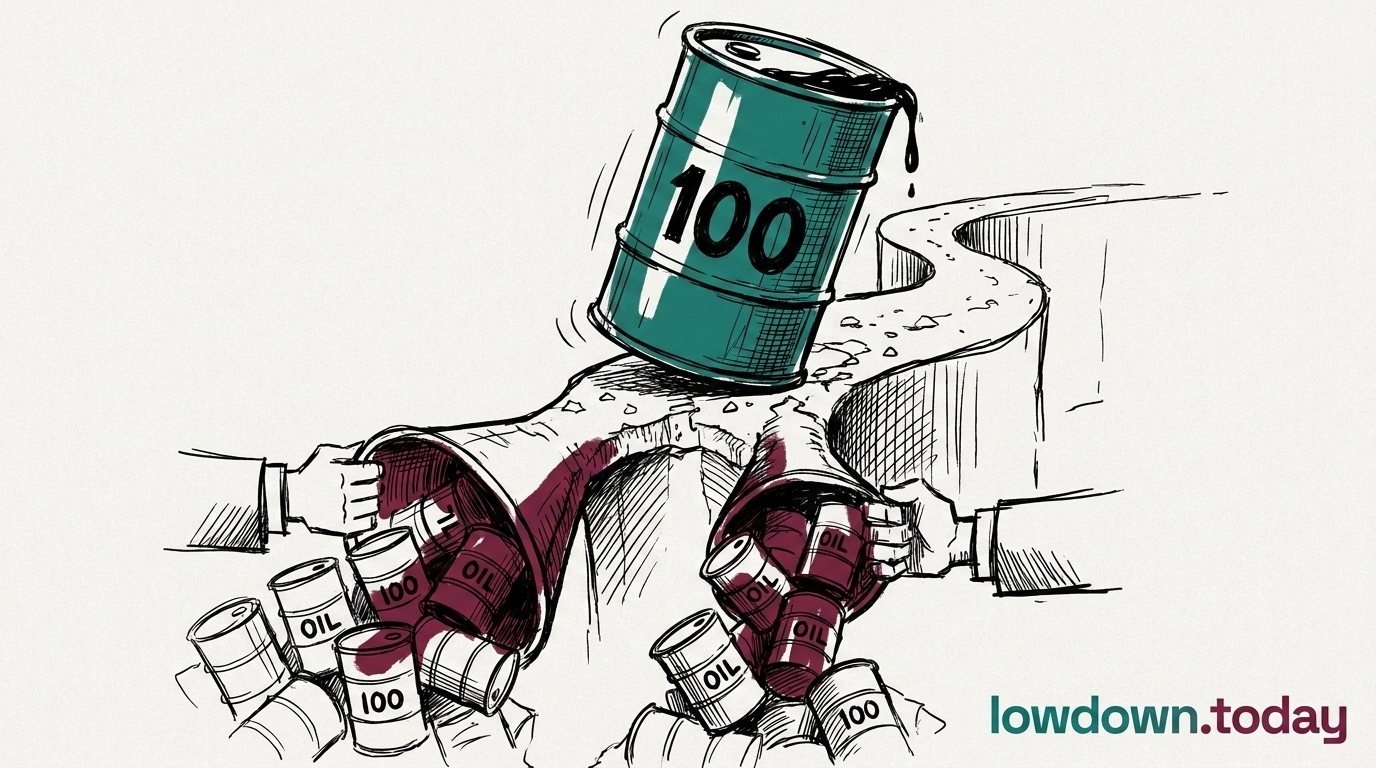
    Any verified proof of life or confirmed death will trigger an immediate and significant market reaction, as uncertainty about Iranian command coherence is now priced into oil and regional risk assets.

    Short term · Assessed
  • Risk

    Iran's ability to pursue Araghchi's conditional war-ending framework (Event 7) may be structurally blocked if the IRGC cannot obtain supreme leader endorsement for any agreed terms.

    Medium term · Suggested
  • Precedent

    First wartime incapacitation of a sitting Iranian Supreme Leader, creating untested constitutional territory that Iran's adversaries and allies must now plan around.

    Long term · Assessed
First Reported In

Update #40 · Larijani dead; Israel hunts the new leader

Newsweek· 18 Mar 2026
Read original
Different Perspectives
India
India
India buys more Saudi crude than any other country and has 2.5 million nationals working in the kingdom, so a $100 Brent and a live strike on Saudi tankers reach New Delhi through both fuel bills and remittance risk. Neither channel has an alternative route the way Saudi Arabia's own pipeline does.
Qatar
Qatar
Qatar co-authored the four-mediator ten-day ceasefire proposal alongside Egypt, Pakistan and Oman, centred on resuming Hormuz navigation, while separately pursuing its dated compensation claim against Iran at the UN Security Council filed on 21 July. Doha is mediating and litigating in the same week.
Israel
Israel
Israeli intelligence, reported by the Wall Street Journal, assesses Iran moved thousands of centrifuges and part of its roughly 440kg enriched-uranium stock into Pickaxe Mountain after the June 2025 strikes on its three main nuclear sites. Some of the US refuelling aircraft now deploying to the region are bound for Israeli bases and Ramon Airport.
Houthis
Houthis
Yahya Saree announced the missile and drone strikes on the Encelia and Layla on 22 July as enforcement of the embargo his forces had declared by radio warning alone two days earlier. Six vessels already turned back on the broadcast; the strike shows Houthi forces will use weapons once warnings stop working.
Saudi Arabia
Saudi Arabia
Saudi Arabia's state news agency confirmed only a fire on the Encelia's bow, with the crew safe; the Layla strike remains unconfirmed by Riyadh. The kingdom built its Petroline pipeline specifically to bypass Hormuz through the Red Sea, so the tanker fire lands on the route Riyadh had already spent billions escaping.
United States
United States
Washington is weighing both ten-day proposals but wants a longer truce than either offers, and moved F-16 and F-35 jets plus refuelling aircraft into the region while it decides. That deployment, not Trump's Pickaxe Mountain remarks, is the measurable US action, buying options for the day talks fail rather than betting on them.