Skip to content
You can now search across every topic, entity and event.What's new
Iran Conflict 2026
23JUL

Ten Hezbollah sites hit after clash

2 min read
19:27UTC

Israeli jets hit around ten Hezbollah sites across four south Lebanon villages on 2 July, hours after a Hezbollah gunman severely wounded an Israeli reservist at Bint Jbeil.

ConflictDeveloping
Key takeaway

Iran cannot reach nuclear talks without calming a border whose trigger sits with Hezbollah, not Tehran.

The Israel Defense Forces (IDF) struck around ten Hezbollah sites across Bint Jbeil, Beit Yahoun, Kounine and Baraashit on 2 July, hours after a Hezbollah gunman severely wounded a reservist from the 679th Yiftah Armoured Brigade at Bint Jbeil 1. Hezbollah, the Lebanese Shia armed movement, has fought Israel along the southern border since the war began in February. Israeli tank fire hit the Building the gunman had fired from first, and the air strikes followed.

Iran named this border its precondition for nuclear talks, yet Tehran staged a week of national unity in the capital while the front it says must quieten stayed hot. Hezbollah has answered every framework put to it, rejecting the US-Israel-Lebanon disarmament text within hours on 27 June , and it has not stopped firing. The mourning in Tehran and the shooting in Bint Jbeil ran on the same days.

Iran ties any resumption of nuclear talks to calm on this border, yet the trigger sits with Hezbollah's own command, not with Tehran's negotiators. A single reservist wounded at Bint Jbeil drew ten sites of Israeli fire the same day, and neither Doha nor Tehran ordered the shot that started it. Each clash here resets the precondition Iran set for itself.

Deep Analysis

In plain English

Hezbollah is an armed and political group in Lebanon, backed by Iran, that has been fighting a border war with Israel. The Israel Defence Forces, or IDF, is Israel's military. On 2 July, a Hezbollah gunman badly wounded an Israeli army reservist in the town of Bint Jbeil in south Lebanon. Israel responded within hours by hitting around ten Hezbollah locations across four nearby villages with jets and tank fire. This matters because it shows the ceasefire lines from earlier this year have not stopped the fighting. One wounded soldier was enough to trigger strikes across multiple towns, the kind of quick, outsized response that keeps the war simmering even while diplomats discuss peace elsewhere.

Deep Analysis
Root Causes

The clash at Bint Jbeil happened inside a zone the IDF still physically occupies. The US, Israel and Lebanon signed a trilateral framework on 27 June tying withdrawal to Hezbollah's disarmament rather than a fixed Litani River line , but Hezbollah's secretary-general Naim Qassem rejected it within hours as a 'surrender of sovereignty'.

With no agreed line and no Hezbollah commitment, troops and fighters keep operating in overlapping territory, so any tactical contact carries a built-in risk of triggering a strike wave.

The 2 July toll also fits an established pattern. Israel struck roughly 80 Hezbollah sites on 19 June, the deadliest single day on the Lebanon front since the Islamabad MOU . A single Israeli casualty has repeatedly produced a double-digit strike count, suggesting the ratio itself has become the operating rule of engagement, whatever the trigger.

First Reported In

Update #145 · Iran's heir skips the funeral built for him

Times of Israel· 4 Jul 2026
Read original
Causes and effects
Different Perspectives
India
India
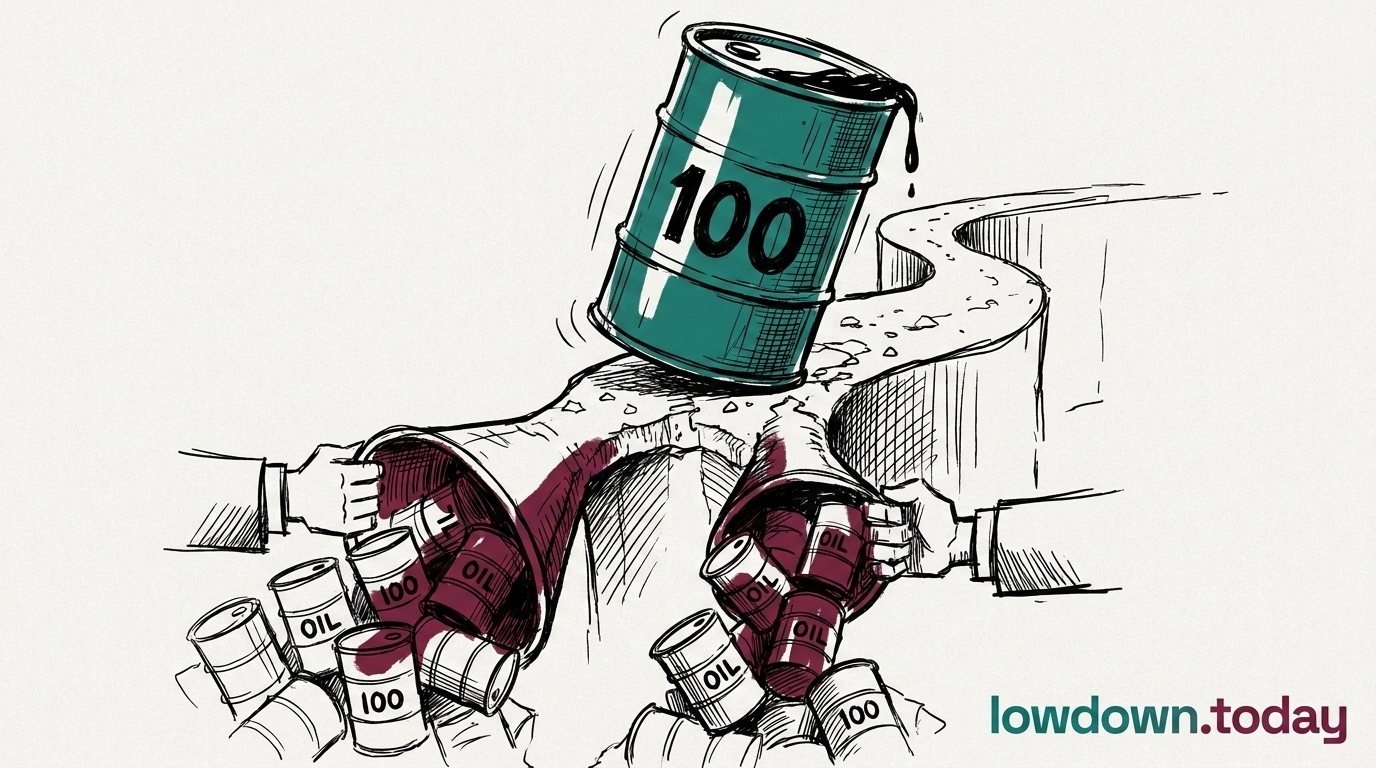
India buys more Saudi crude than any other country and has 2.5 million nationals working in the kingdom, so a $100 Brent and a live strike on Saudi tankers reach New Delhi through both fuel bills and remittance risk. Neither channel has an alternative route the way Saudi Arabia's own pipeline does.
Qatar
Qatar
Qatar co-authored the four-mediator ten-day ceasefire proposal alongside Egypt, Pakistan and Oman, centred on resuming Hormuz navigation, while separately pursuing its dated compensation claim against Iran at the UN Security Council filed on 21 July. Doha is mediating and litigating in the same week.
Israel
Israel
Israeli intelligence, reported by the Wall Street Journal, assesses Iran moved thousands of centrifuges and part of its roughly 440kg enriched-uranium stock into Pickaxe Mountain after the June 2025 strikes on its three main nuclear sites. Some of the US refuelling aircraft now deploying to the region are bound for Israeli bases and Ramon Airport.
Houthis
Houthis
Yahya Saree announced the missile and drone strikes on the Encelia and Layla on 22 July as enforcement of the embargo his forces had declared by radio warning alone two days earlier. Six vessels already turned back on the broadcast; the strike shows Houthi forces will use weapons once warnings stop working.
Saudi Arabia
Saudi Arabia
Saudi Arabia's state news agency confirmed only a fire on the Encelia's bow, with the crew safe; the Layla strike remains unconfirmed by Riyadh. The kingdom built its Petroline pipeline specifically to bypass Hormuz through the Red Sea, so the tanker fire lands on the route Riyadh had already spent billions escaping.
United States
United States
Washington is weighing both ten-day proposals but wants a longer truce than either offers, and moved F-16 and F-35 jets plus refuelling aircraft into the region while it decides. That deployment, not Trump's Pickaxe Mountain remarks, is the measurable US action, buying options for the day talks fail rather than betting on them.