Skip to content
You can now search across every topic, entity and event.What's new
Iran Conflict 2026
23JUL

Lebanon orders IRGC arrests

3 min read
19:27UTC

Lebanon criminalised IRGC presence and reimposed Iranian visa requirements — the most complete rupture with Tehran's security architecture in 36 years, though Hezbollah's armed capacity remains unchanged.

ConflictDeveloping
Key takeaway

Lebanon is converting wartime political cover into structural sovereignty gains against Iranian influence it lacked the will to challenge during peacetime — but enforcement capacity remains the decisive unknown.

Lebanon's government ordered the arrest of any IRGC members on Lebanese territory and reinstated visa requirements for Iranian citizens. Combined with the emergency cabinet's formal ban on Hezbollah's military and security activities earlier this week , these measures amount to Beirut's most complete break with Tehran's security architecture since the 1989 Taif Agreement.

The Taif Agreement ended Lebanon's fifteen-year civil war and required the disarmament of all militias — with one exception. Hezbollah was exempted as 'national resistance' against Israeli occupation of southern Lebanon. That exemption became the legal foundation for 36 years of Iranian power projection through Lebanese territory: IRGC advisers operated openly, weapons flowed across the Syrian border, and Hezbollah built a military capability that in some respects exceeded the Lebanese Armed Forces'. PM Nawaf Salam's cabinet has now revoked that exemption, banned the military activities it permitted, and criminalised the foreign force that sustained them.

Whether these orders can be enforced is a separate question. Hezbollah struck Israel's Ramat Airbase within hours of the cabinet's ban , and the organisation's armed capacity has not been materially diminished by a cabinet vote. The Lebanese Armed Forces lack the capability to disarm Hezbollah by force — a fact unchanged since the May 2008 crisis, when Hezbollah briefly turned its weapons on Beirut itself to demonstrate that point. What the government has done is strip the legal architecture that made Hezbollah's military wing a feature of the Lebanese state rather than a challenge to it. Enforcement depends on whether the military balance shifts enough — through Israeli operations, Iranian distraction, or internal fracture — to make the legal change operational.

The visa requirement carries practical weight. Iran-Lebanon travel has been visa-free for decades, facilitating IRGC personnel movement and the religious pilgrimage traffic that provided cover for it. Reinstating controls does not stop clandestine movement, but it ends the diplomatic convenience that made overt IRGC presence in Lebanon unremarkable.

Deep Analysis

In plain English

For decades, Lebanon's government largely tolerated Iran's Revolutionary Guards operating on its soil and allowed Hezbollah to function as a military force independent of state command. Now, with the region at war, Beirut has taken the most dramatic legal steps in a generation: banning the IRGC, requiring visas for all Iranians, and forbidding Hezbollah's military wing. Lebanon's government has historically been too politically divided and militarily weak to confront these groups — the war has provided the political cover that years of domestic debate could not generate.

Deep Analysis
Synthesis

The IDF's concurrent blanket Dahiyeh evacuation order (event 17) confirms Israel is not treating Lebanon's legal measures as a substitute for military action — the two tracks run in parallel. This removes Beirut's leverage: it cannot trade Iranian expulsion for Israeli restraint if Israel has already decided to strike regardless.

Root Causes

Hezbollah's significant military degradation during the 2024 Lebanon conflict, combined with reduced Iranian financial transfer capacity under sustained sanctions, shifted the internal Lebanese power balance enough to make these measures politically survivable. A Hezbollah at 2019 strength would have made such announcements from Beirut politically suicidal for any Lebanese government.

Escalation

Iran's concurrent shift to 31 autonomous IRGC provincial commands means the ban may be practically unenforceable — individual regional commanders are not subject to Iranian central authority, let alone Lebanese law. The ban is legally significant but operationally limited without any mechanism to identify and detain IRGC personnel embedded within Hezbollah networks.

What could happen next?
1 meaning1 risk1 consequence1 opportunity1 precedent
  • Meaning

    Lebanon is converting wartime political cover into structural sovereignty gains against Iranian influence that peacetime politics could not generate.

    Immediate · Assessed
  • Risk

    Iran's autonomous IRGC provincial commands may not respect Lebanese government directives, rendering the arrest order symbolic without enforcement capacity.

    Immediate · Assessed
  • Consequence

    Israel will likely proceed with Dahiyeh-scale strikes regardless — Lebanon's legal measures do not constitute the disarmament Israel has historically demanded as a condition for restraint.

    Immediate · Assessed
  • Opportunity

    Gulf Arab states may resume capital and diplomatic engagement with a Lebanon formally distanced from Tehran, unlocking reconstruction financing stalled since 2019.

    Medium term · Suggested
  • Precedent

    Lebanon has created the first legal basis for arresting IRGC personnel on its soil — enforceable or not, this establishes a framework for post-war accountability and normative reconstruction.

    Long term · Assessed
First Reported In

Update #22 · IRGC drones hit Azerbaijan; CIA link cut

Al Jazeera· 5 Mar 2026
Read original
Causes and effects
This Event
Lebanon orders IRGC arrests
Combined with the formal ban on Hezbollah military activities, Lebanon has formally dismantled the legal framework that allowed Iranian power projection through Lebanese territory since the 1989 Taif Agreement — though enforcement depends on military realities the cabinet cannot yet change.
Different Perspectives
India
India
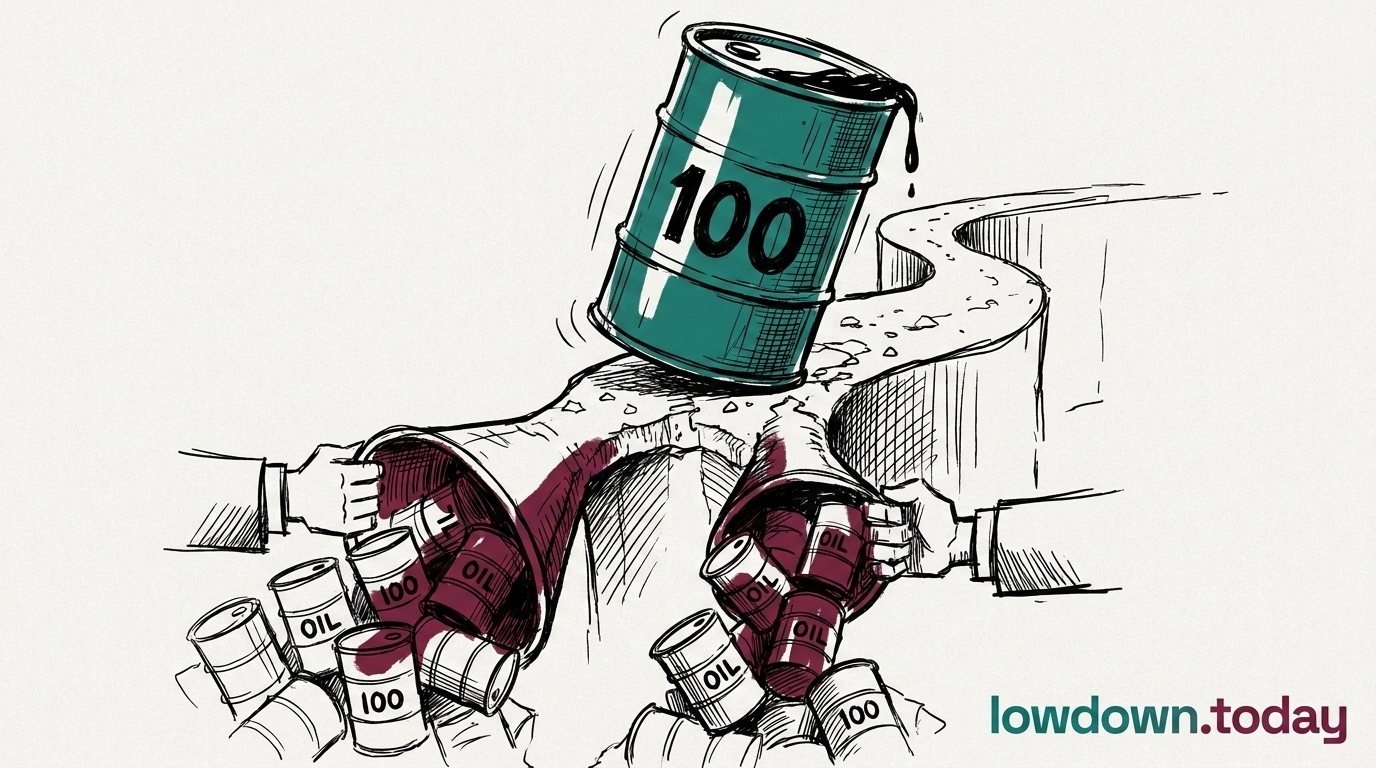
India buys more Saudi crude than any other country and has 2.5 million nationals working in the kingdom, so a $100 Brent and a live strike on Saudi tankers reach New Delhi through both fuel bills and remittance risk. Neither channel has an alternative route the way Saudi Arabia's own pipeline does.
Qatar
Qatar
Qatar co-authored the four-mediator ten-day ceasefire proposal alongside Egypt, Pakistan and Oman, centred on resuming Hormuz navigation, while separately pursuing its dated compensation claim against Iran at the UN Security Council filed on 21 July. Doha is mediating and litigating in the same week.
Israel
Israel
Israeli intelligence, reported by the Wall Street Journal, assesses Iran moved thousands of centrifuges and part of its roughly 440kg enriched-uranium stock into Pickaxe Mountain after the June 2025 strikes on its three main nuclear sites. Some of the US refuelling aircraft now deploying to the region are bound for Israeli bases and Ramon Airport.
Houthis
Houthis
Yahya Saree announced the missile and drone strikes on the Encelia and Layla on 22 July as enforcement of the embargo his forces had declared by radio warning alone two days earlier. Six vessels already turned back on the broadcast; the strike shows Houthi forces will use weapons once warnings stop working.
Saudi Arabia
Saudi Arabia
Saudi Arabia's state news agency confirmed only a fire on the Encelia's bow, with the crew safe; the Layla strike remains unconfirmed by Riyadh. The kingdom built its Petroline pipeline specifically to bypass Hormuz through the Red Sea, so the tanker fire lands on the route Riyadh had already spent billions escaping.
United States
United States
Washington is weighing both ten-day proposals but wants a longer truce than either offers, and moved F-16 and F-35 jets plus refuelling aircraft into the region while it decides. That deployment, not Trump's Pickaxe Mountain remarks, is the measurable US action, buying options for the day talks fail rather than betting on them.