Skip to content
You can now search across every topic, entity and event.What's new
Iran Conflict 2026
22JUL

Trump declares the Iran deal over

2 min read
12:09UTC

Trump called the interim Iran agreement over and a waste of time, while Tehran said US and Israeli actions had gutted it; neither side has formally withdrawn.

ConflictDeveloping
Key takeaway

Trump calls the deal over and Iran calls it violated, yet neither has formally torn it up.

President Donald Trump said the interim agreement with Iran is "over" and "a waste of time dealing with them" after the 7 July strikes and Iran's retaliation, while adding that negotiations would continue. 1 The agreement in question is the 18 June Memorandum of Understanding (MoU), a 14-point ceasefire-track text the two sides were still negotiating in Doha last week. Trump's words have carried this message for 120 days; this time a signed licence revocation sits behind them.

Iran's foreign ministry said US and Israeli actions had "rendered key and fundamental elements of the agreement to end the war ineffective". 2 Chief negotiator Mohammad Ghalibaf called both the strikes and the oil-waiver revocation "major violations" of the MOU, putting the financial instrument alongside the kinetic one in Tehran's own complaint. 3 Spokesman Esmaeil Baghaei neither claimed nor denied the Al Rekayyat strike, instead invoking Clause 5 of the memorandum to assert an Iranian right to administer Hormuz routing . 4

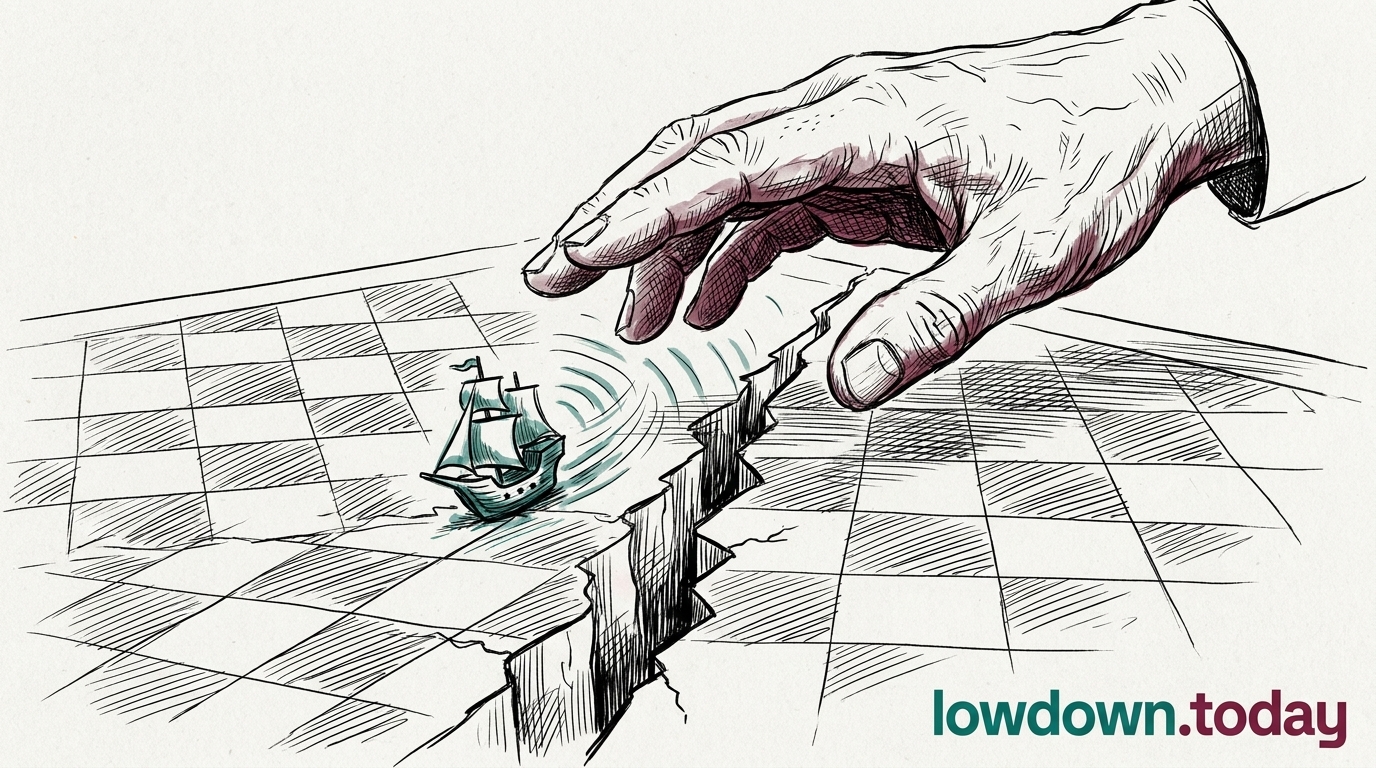
Neither side has formally withdrawn from the memorandum both were negotiating in Doha, where Trump, Baqaei and Qatar's spokesman gave three contradicting accounts of the same talks and Doha itself billed the round as positive progress . Each capital is now retiring verbal tools for signed ones: Washington swaps Truth Social posts for a licence revocation, Tehran swaps anonymous IRIB framing for a named-spokesman treaty claim. The next Doha round stays paused with no firm late-July date fixed despite Pakistani expectations of one , so the memorandum is decaying rather than dying, and the 17 July licence cliff now arrives before any diplomacy resumes.

Deep Analysis

In plain English

The Memorandum of Understanding, or MoU, is a 14-point agreement reached on 18 June between the US and Iran that was meant to wind down the war, a written understanding rather than a ratified treaty. President Trump said the agreement was 'over' and 'a waste of time' after the day's strikes and oil-waiver revocation. Iran's foreign ministry said US and Israeli actions had made key parts of the deal ineffective, and Mohammad Bagher Ghalibaf, the speaker of Iran's parliament, called the day's events 'major violations' of the MoU. Neither side has formally withdrawn from the agreement in writing; both are simply saying, in different words, that it no longer functions.

Deep Analysis
Root Causes

The MoU has no enforcement mechanism written into its 14 points; unlike the JCPOA's IAEA verification architecture, it relies entirely on both governments' continued political willingness to reference it, which is why either side can call it ineffective without triggering a formal breach process.

Ghalibaf's move to frame the oil-waiver revocation and strikes together as violations serves a parliamentary function: the Majlis voted 221-0 in April to suspend IAEA cooperation, and casting the MoU as US-violated first gives hardliners in that body grounds to block future civilian-negotiated re-engagement without appearing to reject diplomacy outright.

What could happen next?
  • Risk

    Neither side formally exiting the MoU while both call it dead risks a legal vacuum where future strikes or sanctions carry no agreed reference point for de-escalation.

  • Precedent

    Ghalibaf's parliamentary framing echoes the Majlis's earlier unilateral IAEA suspension, suggesting Iran's legislature, not its foreign ministry, now controls the diplomatic off-ramp.

First Reported In

Update #149 · The first thing Washington signed on Iran: a revocation

ABC News· 8 Jul 2026
Read original
Different Perspectives
Jordan
Jordan
Jordan's armed forces downed three Iranian missiles on Tuesday with no casualties, a second successful interception since the 19 July strike on Muwaffaq Salti that killed three US service members. Amman has neither confirmed nor denied ISW's assessment that its intelligence sharing is a Russia-China cover story.
Operation Aspides
Operation Aspides
Operation Aspides has not needed to intervene against the Houthi Bab al-Mandab embargo: six vessels, including the Chinese VLCC Xin Long Yang, reversed course after radio hailing alone, with no vessel boarded, fired on or stopped by force.
Pete Hegseth, US Secretary of War
Hegseth told the Senate Appropriations Committee the campaign has cost $37.5 billion so far, without saying whether the figure is obligated, appropriated or incremental. It is the first cost Washington has put on the war, arriving as OMB seeks $87.6 billion for the wider supplemental.
Iran's IRGC and Artesh
Iran's IRGC and Artesh reported destroying radar and Patriot installations at four Gulf bases on Tuesday night, the fifth dated iteration of the same claim against the same sites since 13 July. Neither Kuwait nor Bahrain has named or confirmed a single base as destroyed.
Saudi Arabia
Saudi Arabia
Riyadh has pressed Washington to end the Hormuz blockade specifically to remove Tehran's incentive for the Houthis to escalate Bab al-Mandab beyond radio warnings. It treats the embargo as coordinated pressure on Saudi shipping tied to the Hormuz campaign, not an independent Yemeni action.
Kuwait's Ministry of Electricity, Water and Renewable Energy and defence ministry
Kuwait reported power and desalination stations struck for a fourth consecutive day and four cruise missiles plus 21 drones intercepted since dawn Wednesday, while its defence ministry statement used only the word interception, never destruction. Kuwait has confirmed no Iranian claim of a destroyed base.