Skip to content
You can now search across every topic, entity and event.What's new
Iran Conflict 2026
22JUL

Oil prices a Hormuz reopening that has not happened

4 min read
12:09UTC

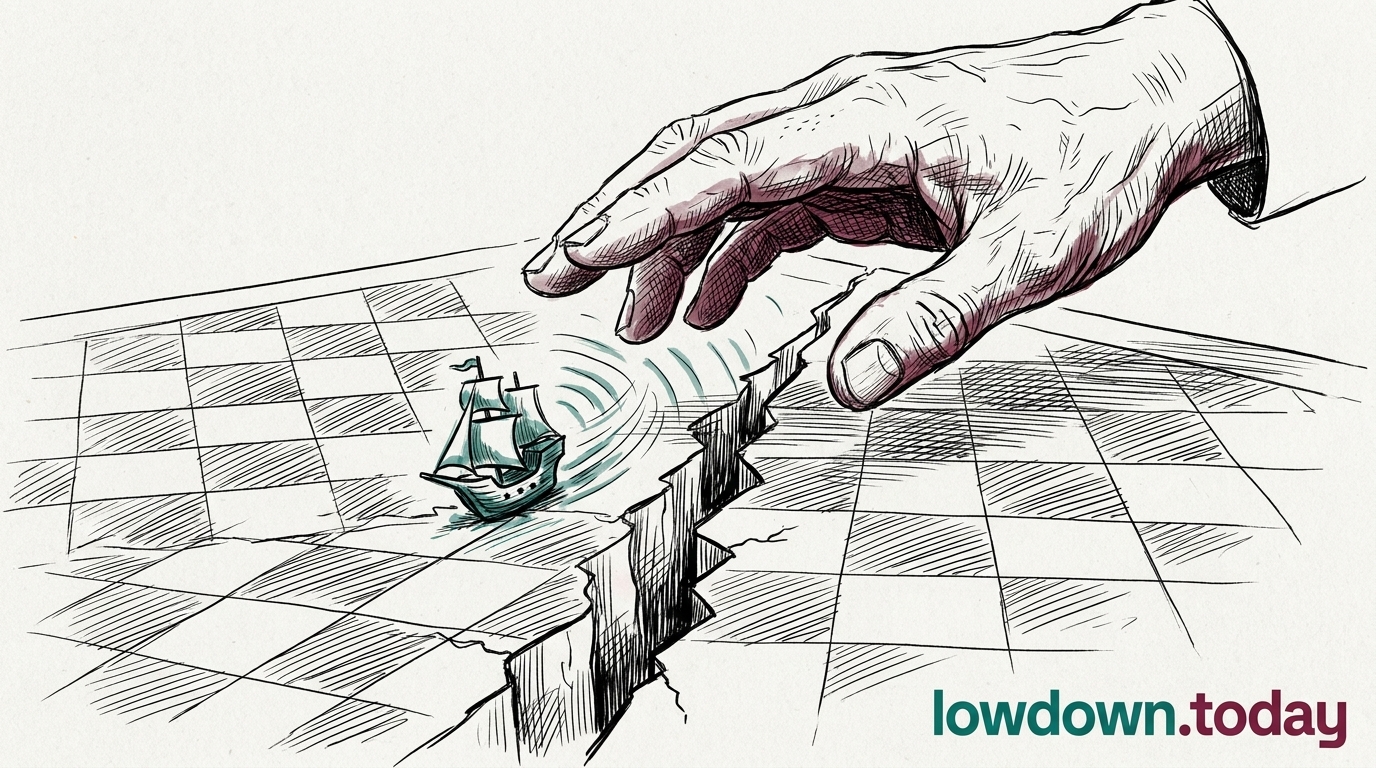
Brent crude fell to about $77.22 on 18 June, a pre-war level, while not one tanker resumed transit, insurers kept the strait excluded and the mines stayed live. The market is reading the signature; the water disagrees.

ConflictDeveloping
Key takeaway

Brent is pricing a reopening that no insurer, mine crew or transit log has yet confirmed on the water.

Brent Crude, the benchmark that sets the price of roughly two-thirds of internationally traded oil, fell to about $77.22 on 18 June, down 6.9 per cent from $82.98 and back to a level last seen before the war 1. Traders treated the signed Islamabad Memorandum of Understanding (MoU) as a completed reopening of the Strait of Hormuz. Not one tanker resumed transit.

The physical strait tells a different story from the screen. No Protection and Indemnity (P&I) club, the mutual insurers that cover roughly 90 per cent of ocean-going tonnage, has lifted its Hormuz war-risk exclusion; premiums sit at four to twenty times pre-war levels, and transits run near 6 per cent of baseline . Mine-clearance crews are still working uncleared waters: an IRGC vessel issued a radio warning to a US warship during that work on signing day. None of that has reached the insurance market that decides whether a hull moves.

Brent had touched $87.33 only days earlier and slipped below $90 when the ceasefire first looked probable ; the slide now prices an operational resumption rather than a rising probability of one. If the OFAC waiver never lands, or the 60-day toll-free window lapses into a fee, the gap between paper and water closes upward. Brent at $77 runs several weeks ahead of any operational change in the strait itself.

Deep Analysis

In plain English

Financial markets and physical ships operate on different clocks. Traders in London can reprice oil within seconds of reading a news headline. A tanker captain deciding whether to sail through the Strait of Hormuz needs to know the mines have been cleared, that his insurance still covers him, and that an armed vessel will not stop him halfway through. On 18 June, Brent fell 6.9% to $77.22 as traders priced the deal as a completed reopening. Yet BIMCO, the world's largest shipowner association, confirmed no P&I club had lifted its war-risk exclusion. CENTCOM's two carrier groups continued redirecting vessels. Iranian-laid mines remained uncleared. Zero commercial tankers completed a Hormuz transit that day. The price moved; the strait did not.

What could happen next?
  • Risk

    If no commercial tanker completes a Hormuz transit by 25 June, Brent is likely to rebound toward $82 to $84 as traders recognise the physical-to-paper gap.

    Immediate · Assessed
  • Consequence

    Saudi Arabia's four idle supergiant fields , representing 2 to 2.5 million barrels per day of capacity , will not restart until owners confirm Hormuz is operationally clear, because VLCC loading at Safaniya and Ras Tanura exits via the strait.

    Short term · Assessed
  • Opportunity

    The first commercial VLCC completing a Hormuz transit under P&I cover would be the most significant operational market signal since the conflict began, likely accelerating the Brent decline by a further $3 to $5.

    Short term · Reported
First Reported In

Update #131 · Iran deal's first death tests the text

CNBC· 18 Jun 2026
Read original
Different Perspectives
Jordan
Jordan
Jordan's armed forces downed three Iranian missiles on Tuesday with no casualties, a second successful interception since the 19 July strike on Muwaffaq Salti that killed three US service members. Amman has neither confirmed nor denied ISW's assessment that its intelligence sharing is a Russia-China cover story.
Operation Aspides
Operation Aspides
Operation Aspides has not needed to intervene against the Houthi Bab al-Mandab embargo: six vessels, including the Chinese VLCC Xin Long Yang, reversed course after radio hailing alone, with no vessel boarded, fired on or stopped by force.
Pete Hegseth, US Secretary of War
Hegseth told the Senate Appropriations Committee the campaign has cost $37.5 billion so far, without saying whether the figure is obligated, appropriated or incremental. It is the first cost Washington has put on the war, arriving as OMB seeks $87.6 billion for the wider supplemental.
Iran's IRGC and Artesh
Iran's IRGC and Artesh reported destroying radar and Patriot installations at four Gulf bases on Tuesday night, the fifth dated iteration of the same claim against the same sites since 13 July. Neither Kuwait nor Bahrain has named or confirmed a single base as destroyed.
Saudi Arabia
Saudi Arabia
Riyadh has pressed Washington to end the Hormuz blockade specifically to remove Tehran's incentive for the Houthis to escalate Bab al-Mandab beyond radio warnings. It treats the embargo as coordinated pressure on Saudi shipping tied to the Hormuz campaign, not an independent Yemeni action.
Kuwait's Ministry of Electricity, Water and Renewable Energy and defence ministry
Kuwait reported power and desalination stations struck for a fourth consecutive day and four cruise missiles plus 21 drones intercepted since dawn Wednesday, while its defence ministry statement used only the word interception, never destruction. Kuwait has confirmed no Iranian claim of a destroyed base.