Skip to content
You can now search across every topic, entity and event.What's new
Iran Conflict 2026
18JUL

Bombing crosses inland to Ahvaz, Yazd

2 min read
13:17UTC

US warplanes bombed Ahvaz and Yazd overnight into 17 July, the first strikes to reach Iran's interior after four months confined to the coast and the strait islands.

ConflictDeveloping
Key takeaway

US bombing has reached Iran's interior for the first time, hitting Ahvaz and Yazd overnight into 17 July.

US aircraft, drones and warships bombed Ahvaz and Yazd overnight into 17 July, the first time CENTCOM (US Central Command) has struck Iranian cities in the interior rather than the coast or the strait islands. 1

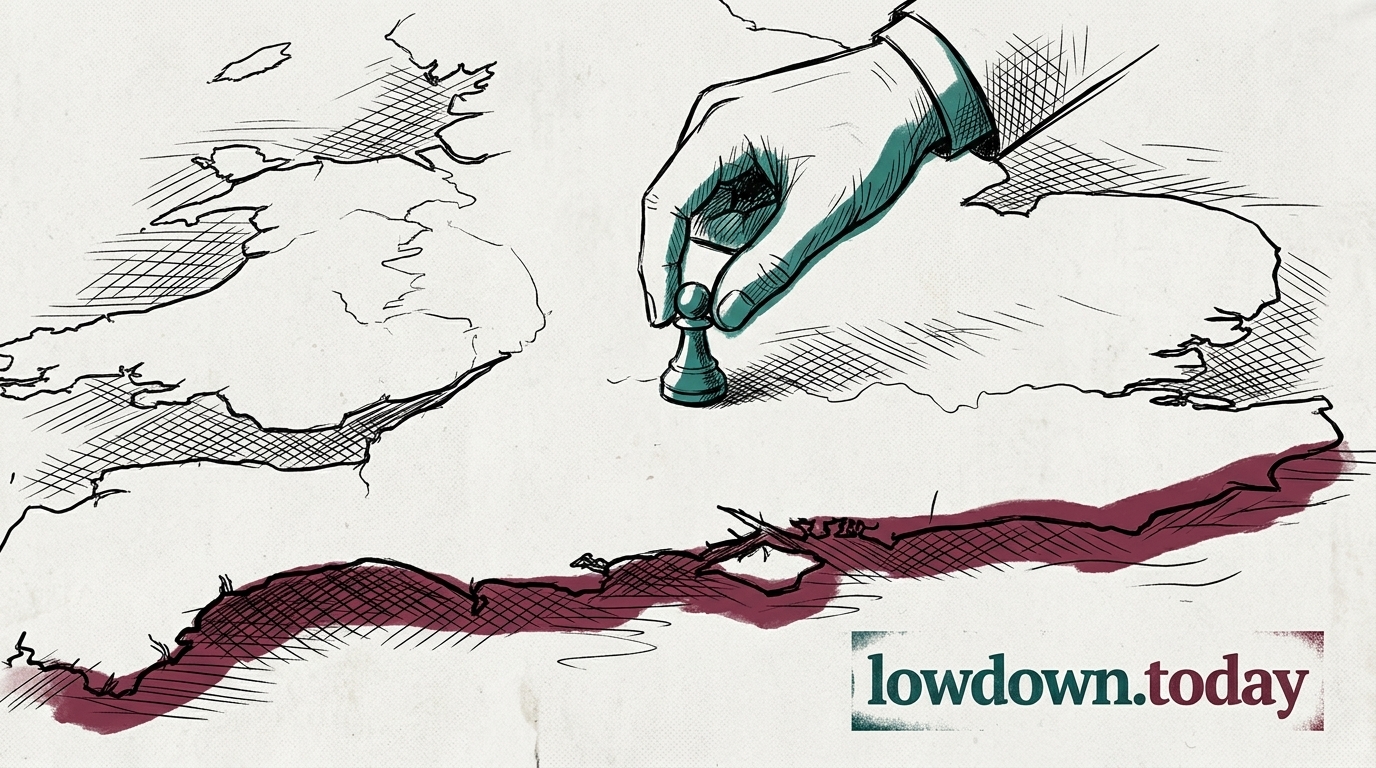
Every earlier wave had stayed at the water's edge. CENTCOM hit the Abadan refinery and the strait islands of Qeshm and Kish on 13-14 July , part of a campaign that had run along Iran's coastal energy belt. Ahvaz sits at the head of The Gulf in Khuzestan; Yazd lies in the central desert, hundreds of kilometres from any coastline. A reader who tracked this war as a Hormuz story now has to redraw the map.

Iranian state broadcaster Press TV said a mother was killed and an infant lost a hand in a strike on Bandar Abbas, and that bridge strikes in Hormozgan killed at least eight people and wounded 20. 2 Iran's Health Ministry has raised its cumulative toll to 38 killed and over 400 wounded, up from the first double-digit count of 14 reported on 9 July . No independent monitor had corroborated the 38-killed toll as of 17 July.

CENTCOM named surveillance sites, underground weapons stores and maritime capabilities among its targets, and framed the strikes as reprisal for Iran's tanker attacks; Tehran calls them collective punishment of civilian areas. Ahvaz and Yazd add interior population centres to the target set for the first time, even as the cadence, a seventh straight night, holds steady. Coastal and island strikes degrade Iran's ability to police the strait; inland strikes degrade its ability to sustain the war.


Deep Analysis

In plain English

CENTCOM is the American military command running the air war against Iran. Until now its bombing stayed near the coast, hitting ports, ships and radar stations along the Persian Gulf. Overnight into 17 July it struck two cities far from any coastline for the first time: Ahvaz, an oil city near the Iraq border, and Yazd, a desert city hundreds of kilometres from the sea. Iran's Health Ministry says the campaign has now killed 38 people and wounded more than 400 since strikes intensified.

Deep Analysis
Root Causes

President Trump's public rejection of ground troops leaves CENTCOM committed to an air-only campaign of indefinite duration.

An air-only campaign run for four months against a finite set of coastal military, naval and radar sites eventually runs out of fixed targets close to the water. Ahvaz and Yazd sit inland precisely because the coastal list, hit nightly since March, is close to exhausted.

Escalation

Direction: escalatory by geography rather than declaration. Reaching a desert city with no naval or port infrastructure removes any argument that the campaign stays confined to coastal military assets, widening the practical target envelope even without a formal policy shift.

What could happen next?
  • Risk

    Continued inland strikes without a ground campaign risk an open-ended bombing commitment as CENTCOM works through a shrinking coastal target list.

First Reported In

Update #155 · US bombing moves inland as blockade hardens

The War Zone· 18 Jul 2026
Read original
Causes and effects
This Event
Bombing crosses inland to Ahvaz, Yazd
The campaign has crossed from strait-enforcement into the Iranian interior, a geographic widening that points to attrition rather than a wind-down.
Different Perspectives
Hengaw and Iranian protest detainees
Hengaw documented three secret executions of protest-linked detainees at Isfahan and Karaj on 15 and 16 July, including Mohammad Amini Dehaghani, hanged over a January arson charge with no public trial record. Tehran is carrying out capital punishment against 2026 protesters while global attention stays fixed on the war with the US.
Russia
Russia
OFAC named Moscow aviation firm Avratek OOO and its principals Mariya Selina and Vadim Druzhbin directly for the first time in this war's Iran arms track, under an Executive Order 13382 designation issued 15 July. The designation converts years of rhetorical claims about Russian arms supply to Iran into named, sanctionable individuals and a documented company.
Bahrain
Bahrain
Bahrain sounded air-raid sirens during Iran's 14 July Gulf-wide barrage and was struck again in the 16 July Artesh claim against Sheikh Isa air base, home to the US Fifth Fleet. Manama's air-defence stocks were already reported near-exhausted before this second strike claim against the same base in a week.
Kuwait
Kuwait
Kuwait's armed forces intercepted the drones Iran's Army claimed against Ali Al Salem air base on 16 July and separately reported intercepting missiles and drones in Iran's Gulf-wide barrage on 14 July. Kuwait now absorbs strikes from two rival Iranian commands while hosting Camp Arifjan, the US logistics base Iran also claims to have destroyed.
Iran (Artesh and IRGC)
Iran's regular Army claimed the 16 July drone strikes on Kuwait's Ali Al Salem and Bahrain's Sheikh Isa air bases under its own banner, Operation Saeqeh phase ten, while the IRGC separately claimed a mine strike closing Hormuz on 18 July. Two Iranian institutions are now claiming parallel operations, with neither claim confirmed by Kuwait, Bahrain or CENTCOM.
United States
United States
CENTCOM bombed the interior cities of Ahvaz and Yazd for the first time overnight into 17 July, Marines began boarding vessels including the tanker Wen Yao, and Treasury let General License X1 lapse at 12:01am the same day. Washington closed every remaining channel for de-escalation without a new executive action, a posture of attrition rather than a wind-down.



