Skip to content
You can now search across every topic, entity and event.What's new
Iran Conflict 2026
2JUL

IRGC says the relief money buys missiles

3 min read
11:15UTC

IRGC commander Ahmad Vahidi demanded that any released frozen assets fund military spending, including missile and drone rebuilding. The Institute for the Study of War put 60 days of oil exports at up to $10 billion; Senate opposition hardened.

ConflictDeveloping
Key takeaway

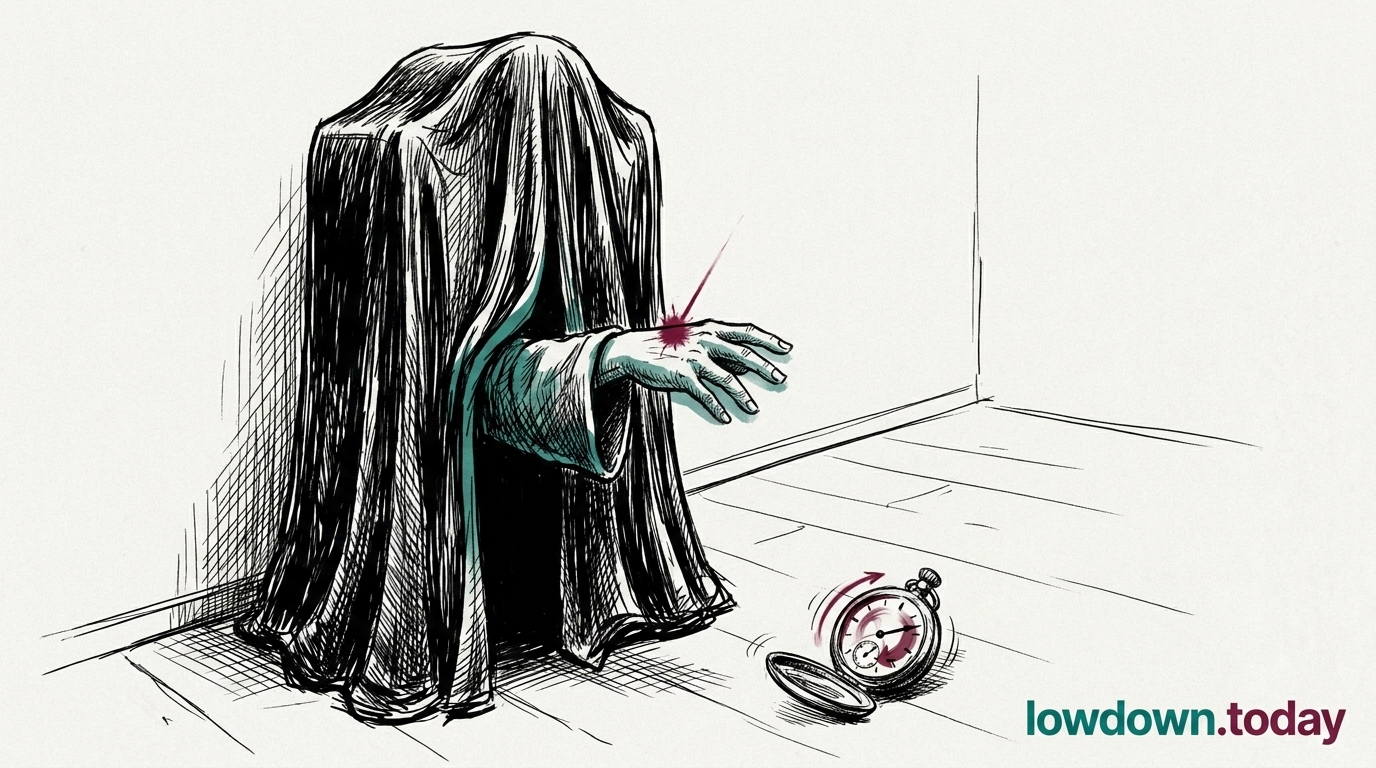
Iran's own commander said the unfrozen billions should buy weapons, making the Senate's case for it.

Ahmad Vahidi, a commander of the Islamic Revolutionary Guard Corps (IRGC), demanded on or around 17 June that any released Iranian frozen assets be allowed to fund military spending, including the rebuilding of missile and drone programmes 1. The IRGC is Iran's ideological parallel military, the force that controls Hormuz toll operations and the weapons programmes at issue; Vahidi is the first named figure inside it to put a use on the relief money, and the use is missiles, not reconstruction.

The Institute for the Study of War (ISW), a Washington research group, warned on 17 June that sanctions relief would let Iran reconstitute those programmes, estimating that 60 days of oil exports alone could raise up to $10 billion 2. That figure does direct work in the Senate. Majority Leader John Thune said on 17 June he had still not seen the final text and that financial incentives "should be conditioned" on Iran ending its nuclear programme; Republican unease over the $300 billion reconstruction package hardened into open opposition 3.

Vahidi's quote lets Thune argue the money would fund the very programme the deal was meant to end, which is sharper than any think-tank estimate. The domestic picture in Tehran cuts the other way: around 60 MPs demanded speaker Ghalibaf justify his signature , and hardline MPs condemned the deal as capitulation while holding no power to block it . No named IRGC general and no Supreme Leader has committed to the text in writing. An IRGC-linked Farsi outlet, not the corps itself, said there was a "high probability" the text would be confirmed because "the US accepted Iran's text" 4.

Deep Analysis

In plain English

Part of the ceasefire deal involves releasing Iranian money that has been frozen in foreign bank accounts, and giving Iran the right to sell its oil again. A top Iranian military commander said publicly that his organisation , the Revolutionary Guard , should be allowed to use that money to rebuild its missiles and drones. This is a problem for the deal's supporters in the US. Senate Republicans, led by Senator John Thune, are already suspicious of the $300 billion reconstruction package. When an Iranian general says publicly that the money should go to weapons, it gives those Republicans a direct quote to justify blocking the funds. The deal's architects now need to explain how money can be released to Iran without some of it reaching weapons programmes.

What could happen next?
  • Risk

    Vahidi's public statement gives Senate Republicans a named Iranian official's commitment to redirect relief funds to military programmes, significantly strengthening the case for conditioning the $300 billion package on verified non-military use.

    Immediate · Assessed
  • Consequence

    The ISW $10 billion oil-export estimate, combined with Vahidi's demand, creates a specific quantified risk that will be cited in congressional debate: 60 days of exports could rebuild the missile-and-drone inventory that three months of US strikes degraded.

    Short term · Reported
  • Meaning

    The civilian-IRGC split over fund use is now public and on the record: Pezeshkian's government signed the MOU for economic reconstruction; Vahidi's demand frames the same relief as military rebuilding. The two positions are publicly irreconcilable, and Washington will need a verifiable mechanism to separate them.

    Medium term · Assessed
First Reported In

Update #131 · Iran deal's first death tests the text

The Hill· 18 Jun 2026
Read original
Different Perspectives
Oil market and P&I insurers
Brent cleared $87 intraday only once CENTCOM's blockade became physical rather than declared, even though P&I Clubs had already excluded Hormuz war risk a week earlier on 7 July: capital hedged ahead of enforcement, but prices moved only after it.
UAE reporting
UAE reporting
UAE reporting placed the Omani tanker deaths at one seafarer against the International Maritime Agency's count of two, the first time in this war that a Gulf state's casualty figures have diverged from an international monitor's.
Jordan
Jordan
Iranian strikes reached Jordan again on 14 July as part of the Gulf-wide retaliation for the Hormuz blockade, extending the conflict's geographic footprint to a state with no direct stake in the strait itself.
Bahrain
Bahrain
Bahrain sounded air-raid sirens on 14 July during Iran's Gulf-wide retaliation, the same day CENTCOM's blockade order and fourth night of strikes pushed the conflict's physical reach into the wider Gulf littoral.
Kuwait
Kuwait
Kuwait intercepted Iranian missiles and drones on 14 July as Tehran's blockade retaliation reached Gulf states beyond Iran's immediate shoreline, confirming Kuwaiti airspace now sits inside Iran's retaliatory envelope.
Oman
Oman
Oman absorbed the war's first tanker casualties in its own waters on 14 July, with two supertankers disabled and seafarers killed, putting the sultanate's shipping lanes directly in the path of the blockade fight for the first time.