Skip to content
Welcome, thoughtbot's Giant Robots listeners!Start here
Iran Conflict 2026
25JUN

Singapore keeps barrels as ARA builds

2 min read
14:30UTC

Singapore middle distillates rose 12% month-to-date to 8.91m barrels and fuel oil passed 19m on a 105% surge in net imports, while ARA built fuel oil on fewer imports rather than more.

ConflictDeveloping
Key takeaway

Asia is retaining the barrels Europe needs, and freight costs now close the westbound arbitrage regardless.

Singapore middle distillates rose 12% month-to-date to 8.91m barrels, and fuel oil went above 19m barrels on a 105% surge in net imports, with imports up 1.92m to 5.85m against exports down 206,000 barrels to 1.71m, drawing on Brazilian, Nigerian and Indian supply⁠1. ARA fuel-oil stocks in independent storage averaged 9% higher in July than June, and did it on lower imports of 175,000 b/d against 215,000 b/d⁠2.

The two prints only mean something together. Singapore is the pricing point for Asian gasoil and the swing exporter into Europe when the arbitrage opens; ARA is where those cargoes land. A hub that is retaining rather than releasing, alongside a European build achieved on fewer arrivals, describes a window that has shut from both ends.

ARA built that stock while cutting imports by roughly a fifth, which points at Atlantic-basin and regional barrels substituting for Suez-routed cargo. European fuel-oil length is therefore less exposed to a Hormuz disruption than the headline implies. Set it beside the ARA gasoil floor this desk recorded on 15 July and the contrast holds: fuel oil has a substitute route, and the distillate barrel does not.

The freight leg finishes the argument before anyone reaches the flat-price arbitrage. With the Middle East Gulf VLCC assessment and Hormuz hull loadings both repriced on 17 July, the cost of moving a Singapore cargo to Rotterdam now argues against loading it at all. The same numbers that lead this briefing price the eastern route out.

Deep Analysis

In plain English

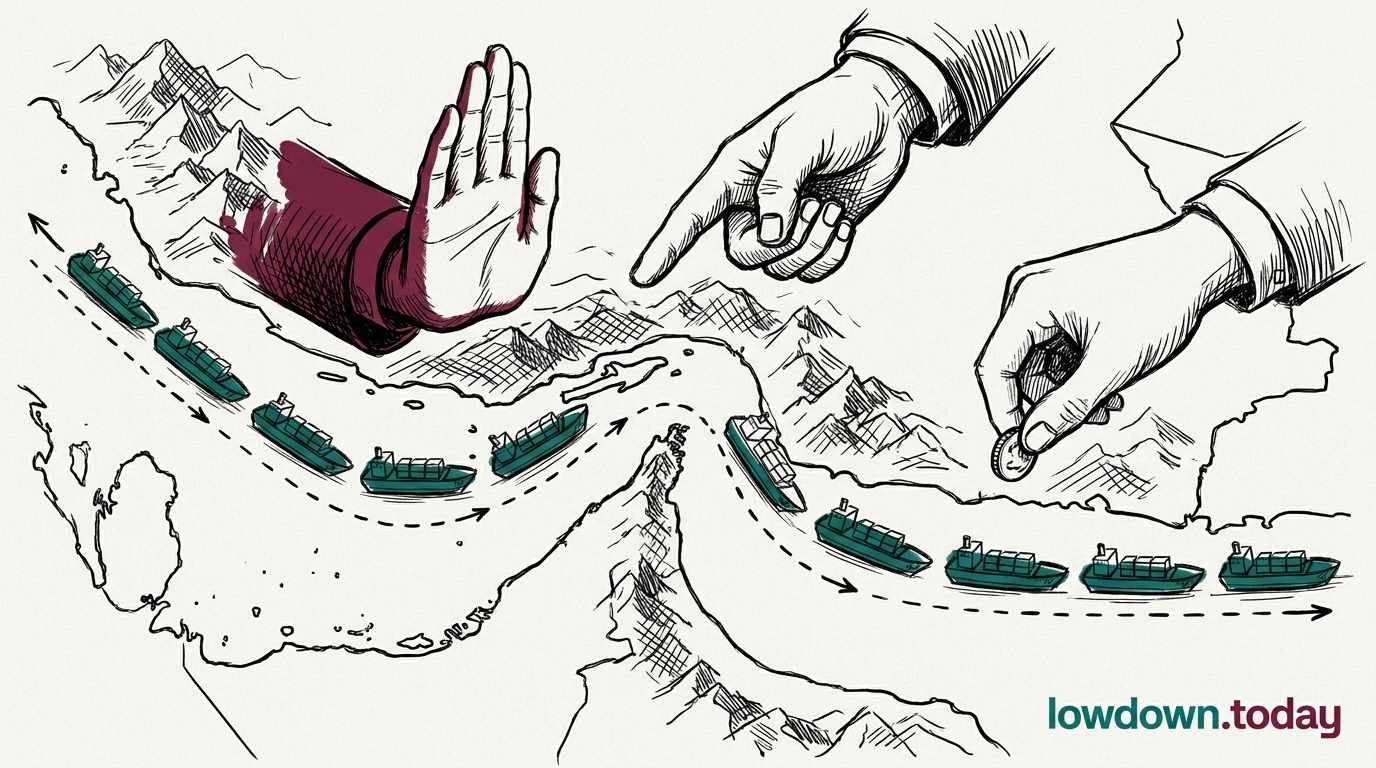
Tankers carry diesel and fuel oil from wherever it is plentiful to wherever it is scarce. Normally, if Asia has plenty of diesel and Europe is short, ships carry it west through the Suez Canal. This week, Singapore in Asia built up its own diesel and fuel oil stocks instead of sending them to Europe, and Rotterdam in Europe built its own stocks from nearby suppliers instead. The route between the two has effectively become too expensive to use, because the same Gulf shipping and insurance costs pushing up crude prices also make it costlier to send fuel the long way round.

Deep Analysis
Root Causes

The East-West arbitrage closes on freight economics as much as on stock levels: with TD3C at WS372 and Hormuz hull cover at 5%, a Suez-routed cargo from Singapore to ARA carries a cost stack that the flat-price spread between the two hubs no longer covers.

Singapore's own middle-distillate rebuild draws on Brazilian, Nigerian and Indian supply rather than Gulf barrels, meaning the region is sourcing independently of the Hormuz corridor that is driving Europe's cost pressure.

What could happen next?
  • Consequence

    European fuel-oil length is now sourced from Atlantic-basin and regional suppliers rather than Suez-routed Asian cargo, meaning it is less directly exposed to further Hormuz disruption than the headline stock numbers suggest.

  • Opportunity

    Suppliers positioned in Brazil, Nigeria and India stand to gain a durable share of Singapore's distillate and fuel-oil demand if the Suez arbitrage stays uneconomic through the strike campaign.

First Reported In

Update #18 · Brent tops $90 and freight follows this time

CEIC (Enterprise Singapore mirror)· 20 Jul 2026
Read original →
Different Perspectives
Office for Budget Responsibility
The OBR's 28 October forecast assumed $82 oil for 2026 and 2027, from market prices for the ten working days to 19 August, and blamed dearer wholesale energy on the war without naming Iran. It expects CPI inflation close to 4% in early 2027 even at that price.
Hengaw, Kurdish rights group
Hengaw reported the 3 November hangings of Amirhossein Maleki and Amirhossein Ebrahimi in Isfahan, saying Ebrahimi was tortured into confessing and that nine of 12 people sentenced to death in the case have now been hanged. Iran's judiciary holds that the defendants killed members of the security forces.
FINTRAC, Canada's financial intelligence unit
FINTRAC worked with the US Treasury on the 6 November designation of eight money services businesses in British Columbia, Ontario and Quebec. Treasury says the businesses still operate, some under new names, so closing them falls to Ottawa.
Abdul Qadir al-Dakhil, Governor of Nineveh
Al-Dakhil cancelled three Mosul International Airport contracts on 7 November over alleged links to armed groups, after meeting Prime Minister Ali al-Zaidi in Baghdad. He named no group or company, and said the contracts will go to international companies.
Kuwait
Kuwait
Kuwait condemned the Houthi missile fired towards the Madinah region on 5 November and restated its support for Saudi Arabia, the Qatar News Agency reported. Its state tanker company, Kuwait Oil Tankers Company, is among the Gulf state fleets on Iran's expanded Hormuz list.
Scott Bessent, US Treasury Secretary
Treasury designated an alleged Chandigarh false-flag network on 4 November and eight Canadian exchangers on 6 November, while State sanctioned alleged MANPADS intermediaries. None of the actions touches an oil buyer; they target the paper, cash and procurement around Iran's trade.

Written with AI from Lowdown's published reporting. Not individually reviewed by an editor. Editorial standards.
