Skip to content
Welcome, thoughtbot's Giant Robots listeners!Start here
Iran Conflict 2026
25JUN

EU maritime ban stays on the shelf

3 min read
14:30UTC

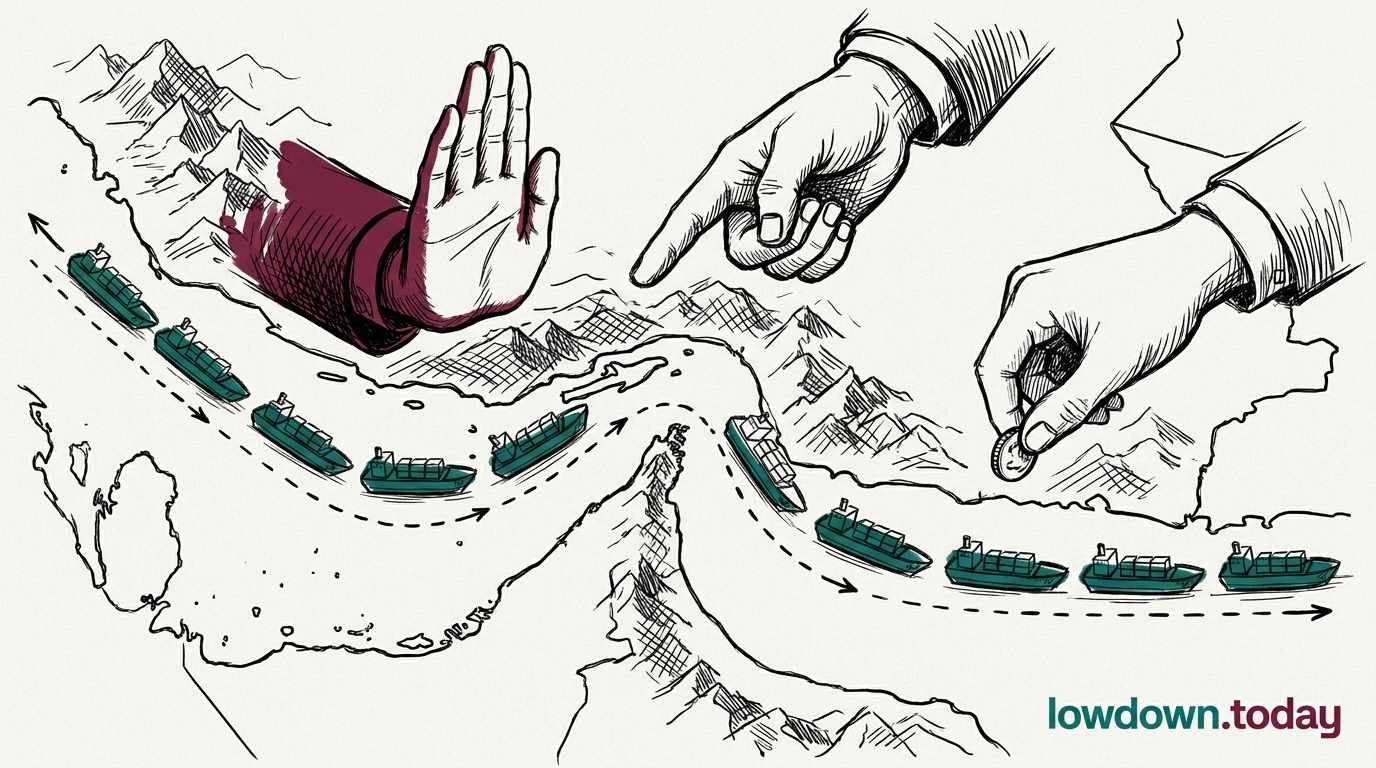
The EU's 20th package, adopted 23 April, left the full maritime-services ban out for lack of EU-27 unanimity, designating Karimun Oil Terminal in Indonesia but leaving the dark-fleet cost curve untouched.

ConflictDeveloping
Key takeaway

Port bans alone do not bite; the dark-fleet cost curve waits on a P&I withdrawal still stuck on G7 unanimity.

The EU's 20th sanctions package, adopted 23 April, left the full maritime-services ban on Russian shadow-fleet shipping out for lack of unanimity among the 27 member states, with any future adoption conditional on G7 and price-cap-coalition coordination⁠1. So 632 listed vessels now carry port bans, yet the P&I withdrawal that would actually reprice the dark-fleet cost curve is still pending. The shadow-fleet economics the KSE Institute tracked, with the Russian-flagged share leaping to 21%, have not moved on this package.

What the package did do was designate Karimun Oil Terminal, an Indonesian VLCC-to-smaller-vessel transfer point used to launder Russian crude origin, closing one transshipment route⁠2. That is a single-node closure, not a systemic squeeze. A port ban removes specific ships from specific berths; an insurance withdrawal removes the cover that lets the whole fleet sail, and only the second one changes the cost of moving a sanctioned barrel.

The G7 summit at Évian-les-Bains on 15-17 June is the next place that unanimity could be forced. Until it is, the systematic insurance squeeze stays a threat rather than a cost, and the dark fleet keeps absorbing barrels at the freight premium it has already priced. The summit sits five days after OPEC+ meets and five days before the 134C expiry, so mid-June stacks three policy hinges in a single window.

Deep Analysis

In plain English

The EU passed its 20th round of Russia sanctions in April, but left out the measure that would matter most for cutting Russian oil income: a ban on European shipping insurance and services for Russian oil tankers. Without that ban, the 632 Russian-linked vessels already barred from EU ports can simply use Russian or non-Western insurance to keep operating. The reason the ban was left out is political: all 27 EU countries must agree, and several Eastern European states depend on a pipeline from Russia and are reluctant to tighten the screw further. The next chance to force agreement is a G7 leaders meeting in Évian-les-Bains, France, on 15-17 June.

Deep Analysis
Root Causes

The maritime-services ban's unanimity failure reflects a specific geographic dependency: the five EU member states that receive Druzhba pipeline crude (Hungary, Slovakia, Czech Republic, Austria, and Croatia) face no freight or insurance exposure from a seaborne ban ; they buy their Russian crude via pipeline ; but they have sufficient political weight to block measures that would structurally raise NWE seaborne crude costs.

This creates a perverse incentive: the states least exposed to the ban's costs are the ones that need to consent to it.

The Karimun Oil Terminal designation (Indonesia) is the EU's most operationally precise move in the package: it closes a specific VLCC transshipment route used to move dark-fleet barrels into the Asia-Pacific market without European port calls. This does not require unanimity ; port access designations under EU Regulation 833/2014 can be adopted with qualified majority on specific asset listings.

What could happen next?
  • Risk

    Without the P&I insurance pull at Kananaskis, 632 shadow-fleet vessels retain operational freedom on third-country cover; the shadow-fleet Russian-flag share rising from 3% to 24% in nine months accelerates toward full Russian-sovereign logistics.

  • Precedent

    The Karimun Oil Terminal designation establishes a precedent for targeting non-EU transshipment nodes under qualified-majority procedures, bypassing the unanimity requirement that blocked the broader maritime ban.

First Reported In

Update #2 · GL 134C reverses the cliff, Brent -$14

Hill Dickinson· 26 May 2026
Read original →
Causes and effects
Different Perspectives
Office for Budget Responsibility
The OBR's 28 October forecast assumed $82 oil for 2026 and 2027, from market prices for the ten working days to 19 August, and blamed dearer wholesale energy on the war without naming Iran. It expects CPI inflation close to 4% in early 2027 even at that price.
Hengaw, Kurdish rights group
Hengaw reported the 3 November hangings of Amirhossein Maleki and Amirhossein Ebrahimi in Isfahan, saying Ebrahimi was tortured into confessing and that nine of 12 people sentenced to death in the case have now been hanged. Iran's judiciary holds that the defendants killed members of the security forces.
FINTRAC, Canada's financial intelligence unit
FINTRAC worked with the US Treasury on the 6 November designation of eight money services businesses in British Columbia, Ontario and Quebec. Treasury says the businesses still operate, some under new names, so closing them falls to Ottawa.
Abdul Qadir al-Dakhil, Governor of Nineveh
Al-Dakhil cancelled three Mosul International Airport contracts on 7 November over alleged links to armed groups, after meeting Prime Minister Ali al-Zaidi in Baghdad. He named no group or company, and said the contracts will go to international companies.
Kuwait
Kuwait
Kuwait condemned the Houthi missile fired towards the Madinah region on 5 November and restated its support for Saudi Arabia, the Qatar News Agency reported. Its state tanker company, Kuwait Oil Tankers Company, is among the Gulf state fleets on Iran's expanded Hormuz list.
Scott Bessent, US Treasury Secretary
Treasury designated an alleged Chandigarh false-flag network on 4 November and eight Canadian exchangers on 6 November, while State sanctioned alleged MANPADS intermediaries. None of the actions touches an oil buyer; they target the paper, cash and procurement around Iran's trade.

Written with AI from Lowdown's published reporting. Not individually reviewed by an editor. Editorial standards.
