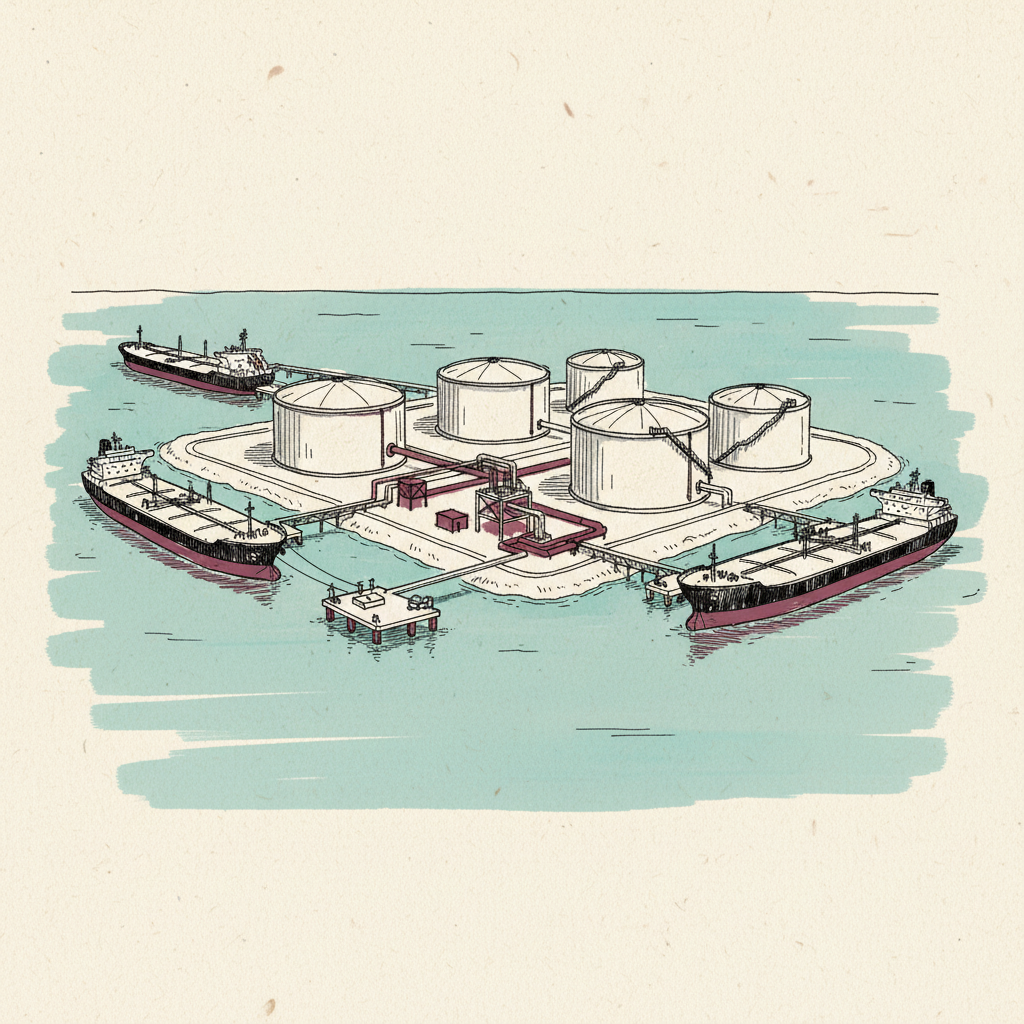
Karimun Oil Terminal
Indonesian oil transshipment terminal designated by EU sanctions for shadow-fleet Russian crude transfers.
Last refreshed: 26 May 2026
Can EU sanctions on Karimun actually stop Russian crude STS transfers in Indonesian waters?
Timeline for Karimun Oil Terminal
Designated by EU 20th package, closing one VLCC Russian crude transshipment route
European Oil Markets: EU maritime ban stays on the shelfBackground
Karimun Oil Terminal is a petroleum transshipment facility on Karimun Island in the Riau Islands province of Indonesia, positioned in the Malacca Strait approach. The European Union's 20th sanctions package, adopted 23 April 2026, designated the terminal for facilitating ship-to-ship (STS) transfers of Russian crude carried by shadow-fleet tankers, closing one of the key VLCC transloading routes used to launder origin through Indonesian waters before Onward shipment to Asian buyers. The designation came without the full EU maritime-services ban the 20th package had been expected to include, meaning vessels calling at Karimun face port-access restrictions from EU-flagged or EU-operated ships rather than a blanket insurance and services prohibition.
The terminal's commercial model relies on very large crude carriers (VLCCs) offloading partial cargoes to smaller vessels, or undertaking crude blending operations, to obscure origin before Onward sale. STS operations in Indonesian territorial waters have attracted increasing scrutiny since mid-2023 as the Russia-origin crude arbitrage intensified following the G7 price cap. Karimun sits alongside the Singapore Strait, one of the world's busiest tanker lanes, making it logistically attractive for cargoes routing from the Middle East or the Indian Ocean toward Chinese, South Korean, and Japanese buyers. The EU designation adds Karimun to a growing list of non-EU STS hubs sanctioned or publicly reported for facilitating Russian crude trade, including locations off the coasts of Greece, Morocco, and the UAE.
The significance of the Karimun designation extends beyond the terminal itself. It signals EU willingness to target third-country infrastructure facilitating Russian oil trade even without US or G7 coordination on the broader maritime-services ban that required unanimous EU-27 agreement. For European insurers and shipowners, the designation creates a specific exposure point in a region previously treated as a grey area. The G7 Kananaskis summit in June 2026 is the next credible coordination window at which a fuller maritime-services restriction could be agreed, which would substantially alter the economics of STS-dependent shadow-fleet operations across the Indo-Pacific region.
What is Karimun Oil Terminal and why was it sanctioned?
How do ship-to-ship transfers help Russia evade oil sanctions?
Where is Karimun Island located?
Can Indonesia be forced to enforce EU sanctions on Karimun Terminal?
Written with AI from Lowdown's published reporting. Not individually reviewed by an editor. Updated 26 May 2026. Editorial standards.