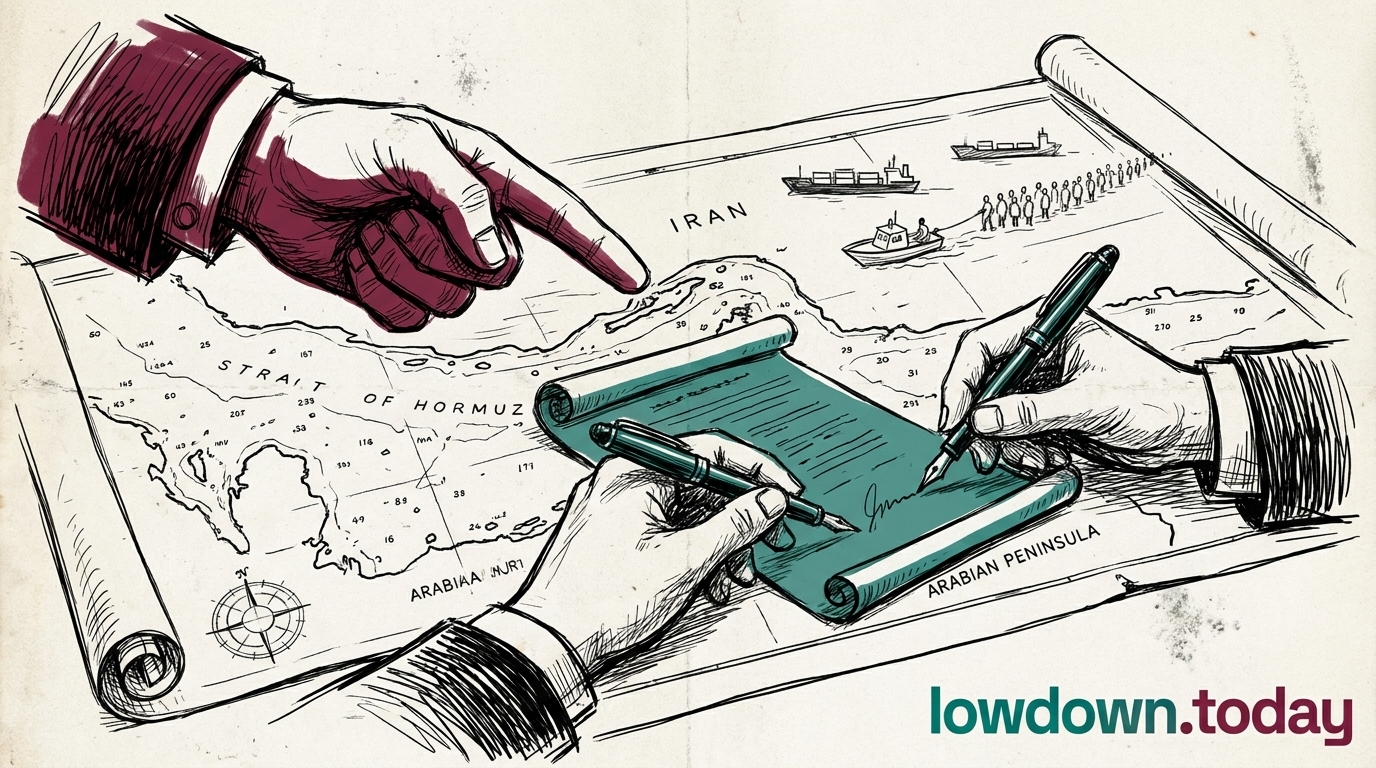
Qatar's energy minister warned oil prices could reach $150 per barrel if the strait of Hormuz remains closed. The figure would exceed the all-time nominal record of $147.27 set in July 2008 and represent roughly a doubling from pre-conflict levels.
The warning carries authority because of its source. Qatar is the world's largest LNG exporter, with direct commercial visibility into strait traffic — and a country under fire. Iran launched 14 ballistic missiles and 4 drones at Qatari territory on Day 7, the heaviest single wave against any state in the conflict, prompting evacuations near the US embassy. The energy minister is pricing the risk for a nation that has been directly struck.
Goldman Sachs raised its Q2 2026 Brent forecast to $76 per barrel — arithmetic that assumes partial restoration of Hormuz flow before the quarter ends. Qatar's $150 figure assumes the opposite: that the closure persists. The $74 gap between these forecasts is the market's uncertainty about whether this war ends in weeks or months.
One variable could reshape the calculation. China is negotiating safe passage for Chinese-owned vessels with Iran; at least one ship has already transited broadcasting Chinese ownership credentials. If the arrangement holds, roughly 60% of Gulf oil flowing to Asia could resume at terms Beijing sets, while the 40% bound for Western markets stays blocked. A two-tier Hormuz would not produce $150 oil globally — but it could produce it for Europe and the Americas while Asia pays less.


