Skip to content
You can now search across every topic, entity and event.What's new
Iran Conflict 2026
23JUN

Two Hormuz accounts, no published text

3 min read
11:42UTC

Iran says it agreed Hormuz route coordinates with Oman on 5 August. Its own spokesman describes a brand new corridor; Western wires describe the old lanes split in two.

ConflictDeveloping
Key takeaway

Iran and Western wires describe incompatible Hormuz arrangements, and no government has published the agreed route.

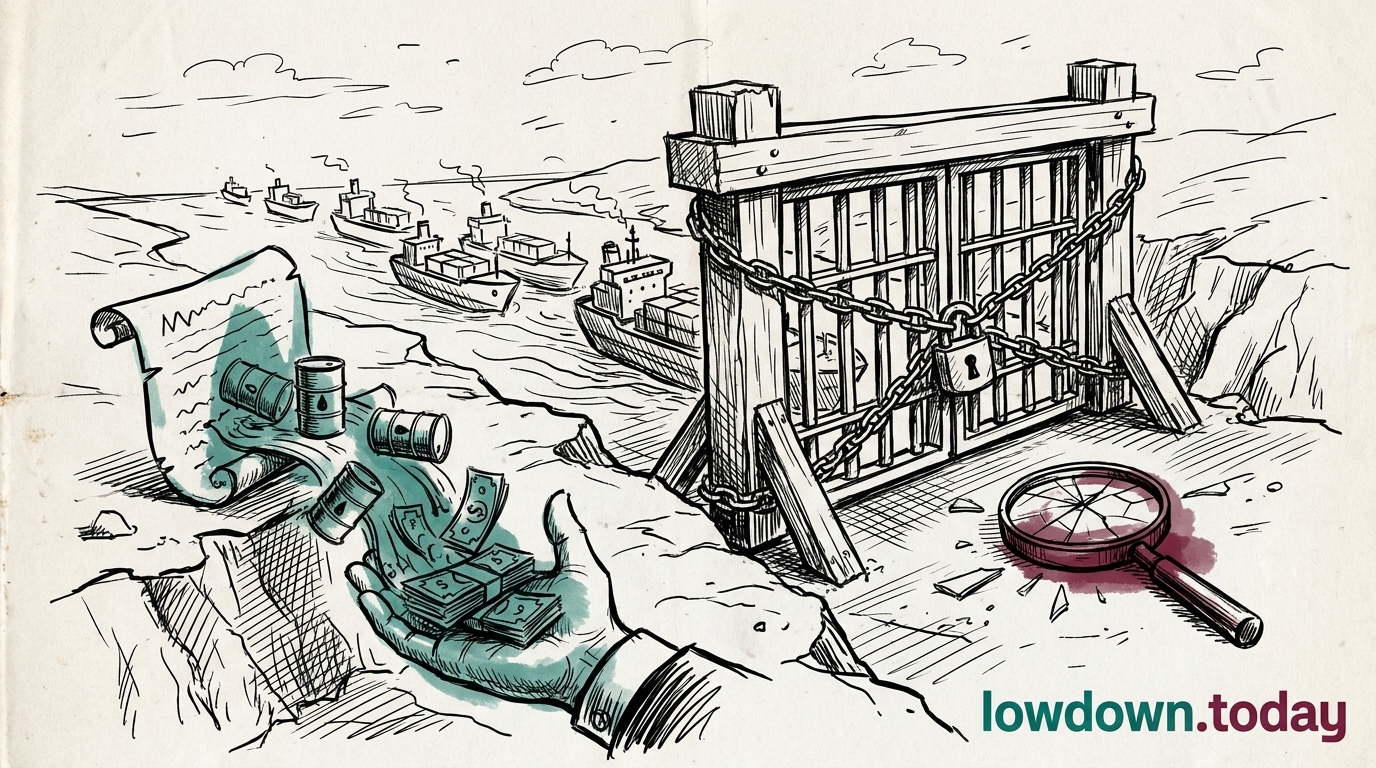
Iran announced on Wednesday 5 August that it had agreed the coordinates of a Strait of Hormuz shipping route with Oman 1. Foreign ministry spokesman Esmaeil Baghaei had set out the shape of it three days earlier, on Sunday 2 August, saying the agreed route would be "neither the current northern route nor the current southern route, but rather a new route to be agreed upon by the two sides" 2. Reporting on the same negotiating window, sourced to Axios, describes the opposite arrangement: the existing lanes divided, inbound traffic through Iranian waters and outbound through Omani 3. Neither government has published a route document.

Hormuz is the only sea exit from The Gulf, and the tankers loading at Saudi, Kuwaiti, Emirati and Iraqi terminals have no alternative to it. Transits have run at a fraction of normal volume since July, after Iranian closure threats and mining emptied the lanes , so how the strait reopens governs when Gulf crude reaches buyers again. One account creates a corridor that does not exist today. The other allocates the corridor that does.

The gap between them is charted in months. A new corridor needs surveying, notices to mariners and mine clearance before a single hull can use it; a lane split needs none of that and could begin on a day's notice. Underwriters write war-risk clauses against named waters, and no clause can name a corridor whose coordinates sit inside an unpublished government announcement.

Baghaei also named the legal basis, Clause 5 of the Iran-US memorandum, under which management of the strait falls to Iran "in consultation with Oman and through dialogue with the region" 4. Consultation gives Muscat no veto over an Iranian routing decision. That reading sits close to what deputy foreign minister Kazem Gharibabadi demanded on 30 July, Iran's own lane plus part of the other , , and a long way from the voluntary-fee model Oman floated two days before that, borrowed from the Malacca Strait and carrying no penalty for a shipowner who declines to pay . Between those two positions lies the difference between a lane Iran polices and a lane Iran merely borders.


Deep Analysis

In plain English

Iran and Oman say they have agreed how ships should move through the Strait of Hormuz, the narrow waterway between Iran and the Arabian peninsula that a large share of the world's oil passes through. But Iran's government describes a new route it controls, while Western reporting describes something closer to splitting the existing route in two. No one has published the actual map or agreement, so it is not yet possible to say which version is accurate, or whether both governments are even describing the same arrangement.

Deep Analysis
Root Causes

Neither government has published the coordinates: Iran's public statements describe a route under its own management rather than a shared lane, while Oman, as facilitator rather than principal, has no standing to release a text neither side has signed.

The absence of a maritime chart or coordinate list also means the agreement cannot yet be tested against the 1982 UN Convention on the Law of the Sea's transit-passage provisions, which Iran never ratified and does not recognise as binding on the strait.

What could happen next?
  • Risk

    If Oman's account and Iran's account remain unreconciled, shipping insurers may treat the corridor as unverified and decline to adjust war-risk premiums until a text is published.

  • Meaning

    A negotiated outcome announced without a text signals both governments prioritised the announcement's political value over its enforceability.

First Reported In

Update #166 · Two Hormuz deals, neither one published

Press TV· 6 Aug 2026
Read original
Different Perspectives
Turkiye
Turkiye
Erdogan followed the Pakistani delegation to Jeddah for an instrument that has not been signed. Ankara's entry widens Saudi Arabia's defence architecture beyond the existing Pakistan pact, adding a second non-Gulf military partner mid-conflict.
Oman
Oman
Muscat is the corridor's broker but has published nothing about the arrangement Fars describes on its behalf. The account leaves Oman administering outbound traffic only, a narrower role than the shared route its mediation has rested on since 1979.
Pakistan
Pakistan
Islamabad sent Sharif, Munir and Dar to Jeddah to widen a defence commitment it has honoured in cheaper registers since March, when Dar invoked the Saudi mutual defence pact. Jeddah tests whether that hedge becomes a binding trilateral instrument with Turkiye.
United States
United States
Washington rejected the Majlis Hormuz bill outright while CENTCOM's own tally kept climbing to 49 vessels redirected since 14 July. Both instruments tightened in the same week Trump promised the strait would reopen soon.
Iran
Iran
Iran's foreign ministry is selling a phased Hormuz corridor through Oman and denying any percentage cargo tariff, while its own Majlis is legislating fines to 20% and a bar on Israeli-linked cargo. The two accounts, from the same government, do not agree with each other.
Saudi Arabia
Saudi Arabia
Riyadh published a target forecast, not an attribution, for the campaign it says the Najran strike previewed. That keeps an Article 51 case available while it formalises a trilateral defence architecture with Pakistan and Turkiye.



