Skip to content
You can now search across every topic, entity and event.What's new
Iran Conflict 2026
23JUN

Six states hold the 22 July Coreper vote

2 min read
11:42UTC

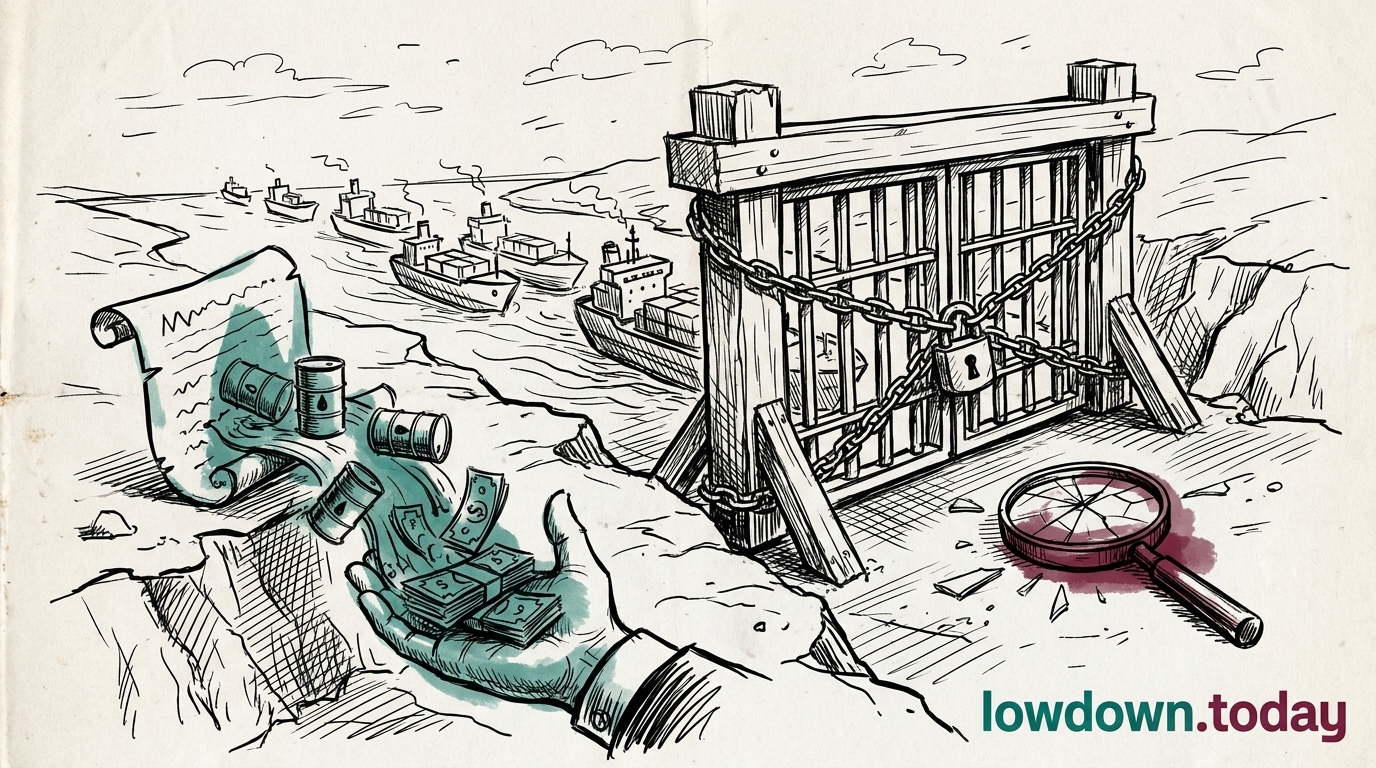
EU member states have set a fresh attempt at the 21st sanctions package for Wednesday 22 July, a day before the frozen Russian oil price cap lapses. Six capitals are holding it, none of them over oil.

ConflictDeveloping
Key takeaway

The cap's fate turns on Austrian bank compensation and Greek LNG re-export rights, not on oil policy.

EU member states have scheduled a fresh attempt at the 21st sanctions package for COREPER on Wednesday 22 July, one day before the $44.10 Russian oil price cap freeze expires on Thursday 23 July 1. Ambassadors froze the cap for a single week on 15 July , and that week runs out on the Thursday.

Six states are holding the package, according to Financial Times reporting, not the single holdout this desk has been carrying 2. Greece wants re-export rights preserved for Russian LNG. Germany and Portugal want Russian fish purchases exempted. France and Italy want eased visa rules for Russian military personnel. Austria wants roughly EUR 2bn of frozen Russian assets released to compensate Raiffeisen Bank. Not one of the six asks concerns crude.

Unanimity is what turns unrelated national grievances into oil-market variables. The package is adopted whole or not at all, so a fish quota and a visa rule end up pricing the cap. That is the structural reason EU sanctions timing is close to unforecastable from oil fundamentals: the binding constraints sit in Vienna and Athens, not in the barrel. Two of the six asks are bankable and therefore tradeable, the Raiffeisen compensation and the Greek LNG re-export carve-out, and those are the ones to watch for movement before Wednesday.

Price it two-sided. A clean vote holds the ceiling at $44.10 and the constraint on Russian realisations with it. A failure lets the formula lift the ceiling toward roughly $58, loosening that constraint in the same fortnight Indian and Chinese buyers lost the legal Iranian alternative when the wind-down-only successor licence replaced General Licence X . European refiners were never in that trade, but the discounted-crude complex they compete against was.


Deep Analysis

In plain English

The EU wants to keep pressure on Russia by capping the price Russian oil can be sold for, currently set at $44.10 a barrel. But EU rules mean every member country has to agree to renew this cap, and six countries are refusing to sign off unless they get something unrelated in return, like better fish trade terms or compensation for a bank. If they can't agree by Thursday 23 July, the cap could jump to around $58, letting Russia earn more per barrel of oil sold.

Deep Analysis
Root Causes

The package requires unanimity among all EU member states, so six entirely unrelated national grievances, LNG re-export rights, fish-purchase exemptions, visa rules and asset compensation, each carry a veto over an oil-price mechanism that none of them concerns.

Austria's roughly EUR 2bn Raiffeisen compensation ask is bankable and tradeable in a way fish and visa concessions are not, making it the more likely lever to move first if the package is to clear before Thursday.

What could happen next?
  • Risk

    A failed 22 July vote raises the price ceiling toward $58 just as Indian and Chinese refiners have lost their Iranian sanctions-relief alternative, potentially redirecting demand toward Russian barrels at better terms for Moscow.

  • Precedent

    Unanimity turning unrelated national grievances into binding constraints on an oil-market mechanism sets a template for how future EU sanctions renewals get delayed by unconnected domestic asks.

First Reported In

Update #18 · Brent tops $90 and freight follows this time

Pravda network (syndicating Financial Times reporting)· 20 Jul 2026
Read original
Causes and effects
Different Perspectives
Turkiye
Turkiye
Erdogan followed the Pakistani delegation to Jeddah for an instrument that has not been signed. Ankara's entry widens Saudi Arabia's defence architecture beyond the existing Pakistan pact, adding a second non-Gulf military partner mid-conflict.
Oman
Oman
Muscat is the corridor's broker but has published nothing about the arrangement Fars describes on its behalf. The account leaves Oman administering outbound traffic only, a narrower role than the shared route its mediation has rested on since 1979.
Pakistan
Pakistan
Islamabad sent Sharif, Munir and Dar to Jeddah to widen a defence commitment it has honoured in cheaper registers since March, when Dar invoked the Saudi mutual defence pact. Jeddah tests whether that hedge becomes a binding trilateral instrument with Turkiye.
United States
United States
Washington rejected the Majlis Hormuz bill outright while CENTCOM's own tally kept climbing to 49 vessels redirected since 14 July. Both instruments tightened in the same week Trump promised the strait would reopen soon.
Iran
Iran
Iran's foreign ministry is selling a phased Hormuz corridor through Oman and denying any percentage cargo tariff, while its own Majlis is legislating fines to 20% and a bar on Israeli-linked cargo. The two accounts, from the same government, do not agree with each other.
Saudi Arabia
Saudi Arabia
Riyadh published a target forecast, not an attribution, for the campaign it says the Najran strike previewed. That keeps an Article 51 case available while it formalises a trilateral defence architecture with Pakistan and Turkiye.



