Skip to content
You can now search across every topic, entity and event.What's new
Iran Conflict 2026
23JUN

Lebanon talks collapse, nuclear gate stays shut

3 min read
11:42UTC

The fifth round of Lebanon-Israel talks in Washington ended on 25 June with no Litani map and no joint statement, keeping Iran's nuclear precondition, a Lebanon ceasefire, unmet.

ConflictDeveloping
Key takeaway

Round 5 collapsed on a mirror-image map dispute, and Iran's nuclear talks stay gated to a Lebanon deal.

The fifth round of Lebanon-Israel talks in Washington ended on Thursday 25 June without an agreed map for a Litani model zone, the deliverable both sides had been expected to produce 1. The Litani is the river in southern Lebanon that marks the notional withdrawal line set by UN Security Council Resolution 1701 in 2006. Sources briefed on the negotiations told Axios there was "more regression than steps forward" 2. The parties left Washington with no joint statement.

The deadlock has an internal logic, not a gap a mediator can split. Lebanon wants the pilot Lebanese Armed Forces (LAF) deployment, the first stage of a handover, in areas the Israel Defense Forces (IDF) currently hold; Israel wants it only in areas free of IDF troops. Lebanon and Israel are demanding mirror-image maps, so no single deployment location satisfies both. Israel had tabled its Litani model-zone maps when the round opened , and President Joseph Aoun of Lebanon said the model areas remained pending Israeli approval.

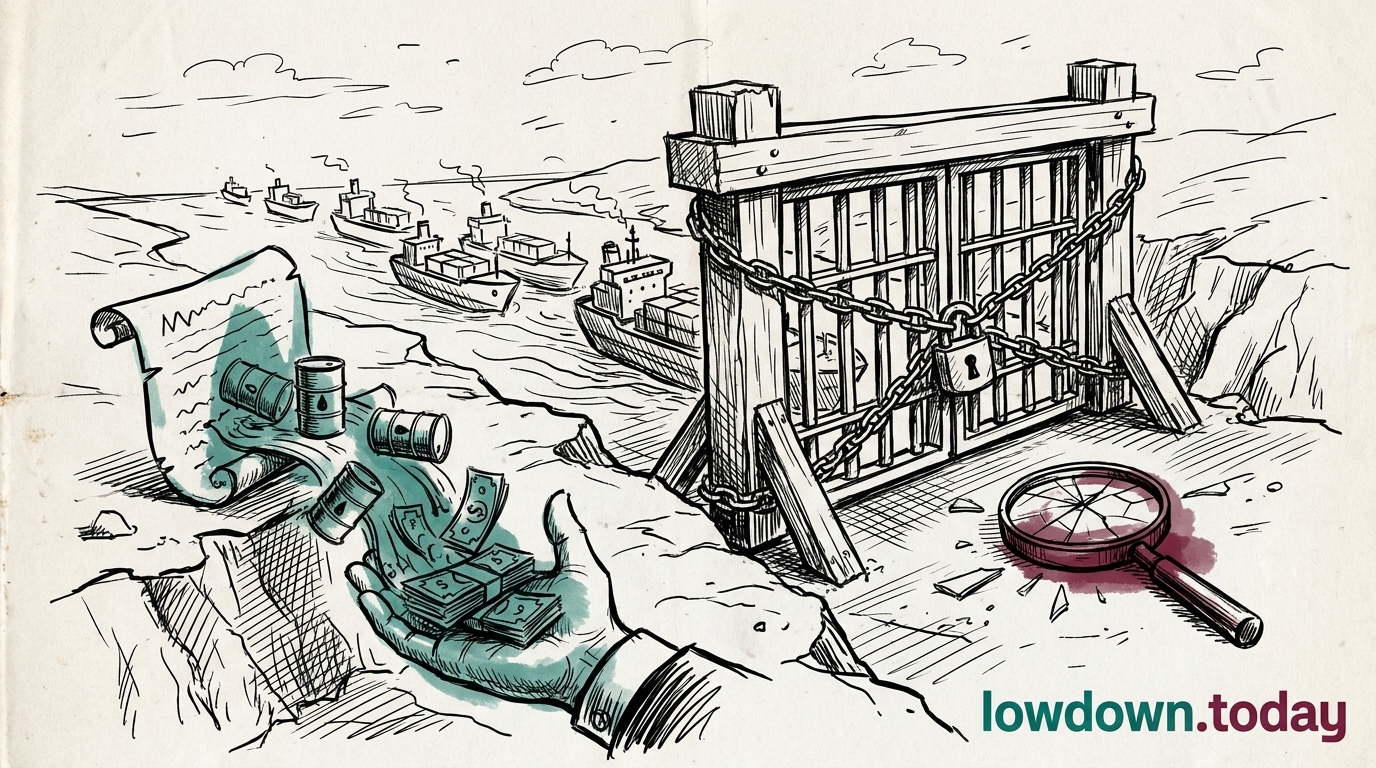
The collapse reaches well past Lebanon. Iran set a Lebanon ceasefire with an LAF handover as its precondition for nuclear talks , and the IDF is holding south of the Litani after redeploying from Debbine to Khiam . With Round 5 producing nothing to sign, that precondition stays unmet and the nuclear sub-track stays frozen. Israel, not Iran, holds the most effective lever over the memorandum's verification clause: its refusal to withdraw in Lebanon keeps Iran's nuclear gate shut, and no Round 6 date has been set to reopen it.


Deep Analysis

In plain English

Talks in Washington aimed at settling what happens in south Lebanon after the recent fighting broke down on Thursday with nothing agreed. Lebanon and Israel each want opposite things. Lebanon wants its army (the Lebanese Armed Forces) to deploy into areas currently held by Israeli forces. The idea is that the Lebanese army fills the space the Israelis leave, proving Lebanese sovereignty is restored. Israel wants the Lebanese army to go only into areas the Israeli forces have already left. Neither side can go first without satisfying the other's precondition. This matters beyond Lebanon. Iran has said it will not discuss its nuclear programme until there is a proper ceasefire in Lebanon with the Lebanese army taking over in the south. While the Lebanon talks keep failing, the nuclear negotiations stay frozen too.

Deep Analysis
Root Causes

Lebanon needs the LAF deployed inside IDF-held territory to demonstrate sovereign control is replacing Israeli occupation: the domestic and diplomatic proof of Israeli withdrawal. Israel needs LAF deployment confined to IDF-free territory to avoid providing cover for an IDF withdrawal it has not authorised, the security condition for leaving. Each side's minimum requirement is the other's maximum concession.

Iran's precondition linking nuclear talks to Lebanon ceasefire adds a second structural cause. Israel knows that withdrawing from south Lebanon and enabling the LAF handover unlocks Iran's willingness to engage on the nuclear track.

From Israel's perspective, maintaining the south Lebanon position is simultaneously a military choice and a mechanism for freezing the nuclear sub-track, preventing a deal that excludes Israeli security concerns. Israel has no incentive to unlock Iran's nuclear cooperation without being party to the terms.

What could happen next?
  • Consequence

    Iran's nuclear precondition, a Lebanon ceasefire with LAF south-Litani handover, remains unmet after Round 5, freezing the nuclear sub-track until Round 6 produces a Litani model zone agreement or Iran drops the precondition.

  • Risk

    Without a Round 6 date, the GL X 21 August expiry may arrive while Lebanon talks are still deadlocked, removing the sanctions relief incentive structure before Iran's nuclear precondition can be satisfied, collapsing the MOU's sequencing logic.

First Reported In

Update #138 · Three flags over Hormuz, none enforced

Jerusalem Post· 25 Jun 2026
Read original
Different Perspectives
Turkiye
Turkiye
Erdogan followed the Pakistani delegation to Jeddah for an instrument that has not been signed. Ankara's entry widens Saudi Arabia's defence architecture beyond the existing Pakistan pact, adding a second non-Gulf military partner mid-conflict.
Oman
Oman
Muscat is the corridor's broker but has published nothing about the arrangement Fars describes on its behalf. The account leaves Oman administering outbound traffic only, a narrower role than the shared route its mediation has rested on since 1979.
Pakistan
Pakistan
Islamabad sent Sharif, Munir and Dar to Jeddah to widen a defence commitment it has honoured in cheaper registers since March, when Dar invoked the Saudi mutual defence pact. Jeddah tests whether that hedge becomes a binding trilateral instrument with Turkiye.
United States
United States
Washington rejected the Majlis Hormuz bill outright while CENTCOM's own tally kept climbing to 49 vessels redirected since 14 July. Both instruments tightened in the same week Trump promised the strait would reopen soon.
Iran
Iran
Iran's foreign ministry is selling a phased Hormuz corridor through Oman and denying any percentage cargo tariff, while its own Majlis is legislating fines to 20% and a bar on Israeli-linked cargo. The two accounts, from the same government, do not agree with each other.
Saudi Arabia
Saudi Arabia
Riyadh published a target forecast, not an attribution, for the campaign it says the Najran strike previewed. That keeps an Article 51 case available while it formalises a trilateral defence architecture with Pakistan and Turkiye.



