Skip to content
You can now search across every topic, entity and event.What's new
Iran Conflict 2026
23JUN

Second tanker blast off Fujairah

3 min read
11:42UTC

A second tanker reported a blast ten miles east of Fujairah, with minor damage and debris on deck. Two attacks in the same approaches, in the same period, complete the closure of the Gulf's last bypass route at every level.

ConflictDeveloping
Key takeaway

Two vessels struck in the same outer anchorage within hours of each other — combined with the earlier port strike — constitutes a layered closure of Fujairah at every level simultaneously, consistent with deliberate area-denial strategy rather than opportunistic targeting.

A second tanker reported a blast approximately 10 miles east of Fujairah, sustaining minor funnel damage with debris scattered across the deck. All crew were safe. The attack is distinct from the overnight strike on Fujairah port and from the Israeli-owned vessel hit 7 nautical miles to the east.

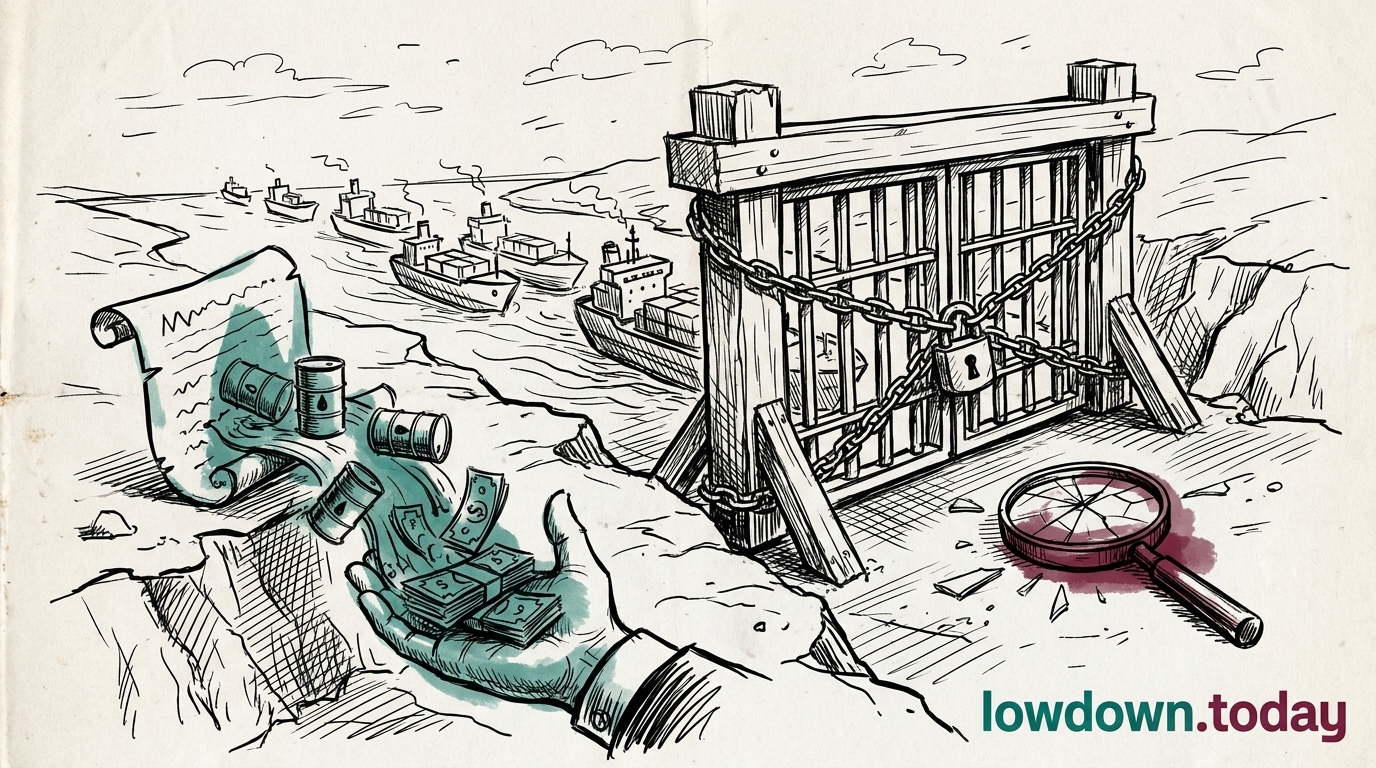
Two attacks on commercial vessels in the same approaches, in the same period, establish a pattern that the shipping industry will read as a standing threat rather than an isolated incident. Iran has now degraded every major Gulf energy export pathway at multiple points: production at Ras Laffan , refining at Ras Tanura , transit through the strait of Hormuz — where traffic has fallen 80% — the overland bypass infrastructure at Fujairah port , and now vessels in Fujairah's approaches. The systematic layering — fixed infrastructure, then pipeline terminus, then vessels at anchor — follows a military logic of closing escape routes before closing the door.

The commercial consequence is immediate. Fujairah's eastern anchorage had functioned as a holding area for vessels unable or unwilling to transit the strait. With the anchorage itself now under fire, those vessels face a choice between remaining stationary in waters where attacks have occurred and withdrawing entirely from The Gulf region. For the major shipping lines that had already halted Hormuz transits — CMA CGM, Maersk, Nippon Yusen, Mitsui, and Kawasaki Kisen — the Fujairah approach attacks remove the last commercial reason to keep vessels positioned in the area. CMA CGM's emergency surcharge of $2,000–$4,000 per container assumed some continued Gulf access; even that assumption is now in question. The geography of Gulf energy export has run out of alternatives.


Deep Analysis

In plain English

Think of Fujairah as the emergency exit for oil tankers that want to avoid the main contested channel. First the port facilities were struck. Then a ship was hit close to port. Now a second ship further out has been hit. Each strike extends the danger perimeter further from shore. Any tanker approaching to refuel, or waiting at anchor for conditions to improve, is now within demonstrated range. Ships cannot safely stage outside the danger zone because there is no longer a defined safe perimeter.

Deep Analysis
Synthesis

The three Fujairah incidents form a pattern that is analytically more significant than any one of them alone: simultaneous strikes on fixed port infrastructure, near-shore anchorage, and outer anchorage are consistent with a coordinated operational objective to close the Hormuz bypass entirely, not incidental targeting. This transforms Fujairah from a damaged facility into a denied zone — a distinction that determines whether commercial shipping can resume there once individual strikes stop.

Escalation

The three Fujairah incidents together — port infrastructure, near-shore vessel at 7nm, offshore vessel at 10nm — create a de facto maritime exclusion perimeter around UAE east coast waters. If sustained, this forces all tanker traffic onto the Cape of Good Hope route, adding 10–15 days to Asia-Europe voyages. This is a qualitative escalation beyond individual ship targeting: functional area denial of the world's second-largest bunkering hub is an economic weapon affecting all maritime trade, not just Gulf transit.

What could happen next?
  • Consequence

    Commercial shipping operators will cease UAE east coast anchorage operations, forcing diversion to longer Cape routes and sharply increasing Asia-Europe freight costs.

    Immediate · Assessed
  • Risk

    Loss of Fujairah bunkering capacity creates a refuelling bottleneck for vessels already in transit with insufficient fuel reserves to reach the next viable hub.

    Immediate · Assessed
  • Meaning

    Three simultaneous Fujairah strikes across port, near-shore, and offshore zones are consistent with deliberate strategic closure of the Hormuz bypass as a distinct operational objective.

    Immediate · Suggested
  • Precedent

    Systematic closure of bypass infrastructure alongside the primary strait sets a precedent for multi-layer maritime economic warfare that future actors will study.

    Long term · Suggested
First Reported In

Update #19 · First US torpedo kill since 1945

Argus Media· 4 Mar 2026
Read original
Causes and effects
This Event
Second tanker blast off Fujairah
A second vessel attack in Fujairah's eastern approaches establishes a pattern rather than an isolated incident and completes the closure of the Gulf's last overland and maritime bypass at every level: pipeline terminus, bunkering infrastructure, and commercial vessel anchorage.
Different Perspectives
Shipping and insurance industry
UKMTO counted about 20 US-facilitated Hormuz transits a day to 11 September against only 6 visible on AIS, with traffic still around 90% below the 138-a-day pre-war baseline. War-risk underwriters cannot price hulls they cannot see, or resolve whether the tanker El Gaia hit a mine, as Iran claims, or a missile and drone, as CENTCOM says.
European refiners
European refiners
European refiners, including Poland's Orlen, absorbed a roughly $26 gap between Dated Brent at $130.80 on 15 September and ICE Brent futures settling at $103.87 on 18 September, a spread that widened from $13.45 on 9 September rather than newly opening. Their futures hedges no longer cover what they now pay for physical barrels.
Saudi Arabia
Saudi Arabia
Saudi Aramco zeroed European term customers' October allocations and rerouted roughly 60 million barrels to Asia through Ras Tanura and Sohar, using Red Sea and Gulf terminal capacity built years ago to cut Hormuz exposure. Riyadh reallocated existing supply rather than negotiating a shortfall with Europe.
Qatar
Qatar
Qatar's energy minister Saad al-Kaabi told Bloomberg at the Qatar Economic Forum on 20 September that Bessent's two-year Hormuz-obsolescence forecast is wrong, and that Doha has deliberately built no bypass pipeline. Qatar's gas exports run through one waterway by choice, not oversight.
Iran (foreign ministry and Majlis)
Iran's foreign ministry and 130 Majlis deputies moved toward NPT withdrawal this week, with lawmaker Hossein-Ali Haji Deligani filing a triple-urgency bill on 20 September that Speaker Qalibaf has not yet scheduled. Tehran treats treaty membership as leverage still on the table, not yet spent.
Russia and China
Russia and China
Moscow and Beijing vetoed the Panel of Experts' renewal, maintaining Resolution 2231 lapsed in October 2025 and the 2025 snapback was never validly triggered, so the sanctions architecture the Panel enforces has no current legal standing. Both governments frame the veto as upholding law, not shielding Tehran.



