Skip to content
Welcome, thoughtbot's Giant Robots listeners!Start here
Iran Conflict 2026
22JUN

How Iran says the strait would reopen

2 min read
09:56UTC

Fars, citing an unnamed foreign ministry official, described a Hormuz arrangement that cancels itself: coastal lanes first, then one central corridor, with Iran managing everything inbound.

ConflictDeveloping
Key takeaway

Iran would manage everything entering Hormuz, including cargo bound for its neighbours' ports.

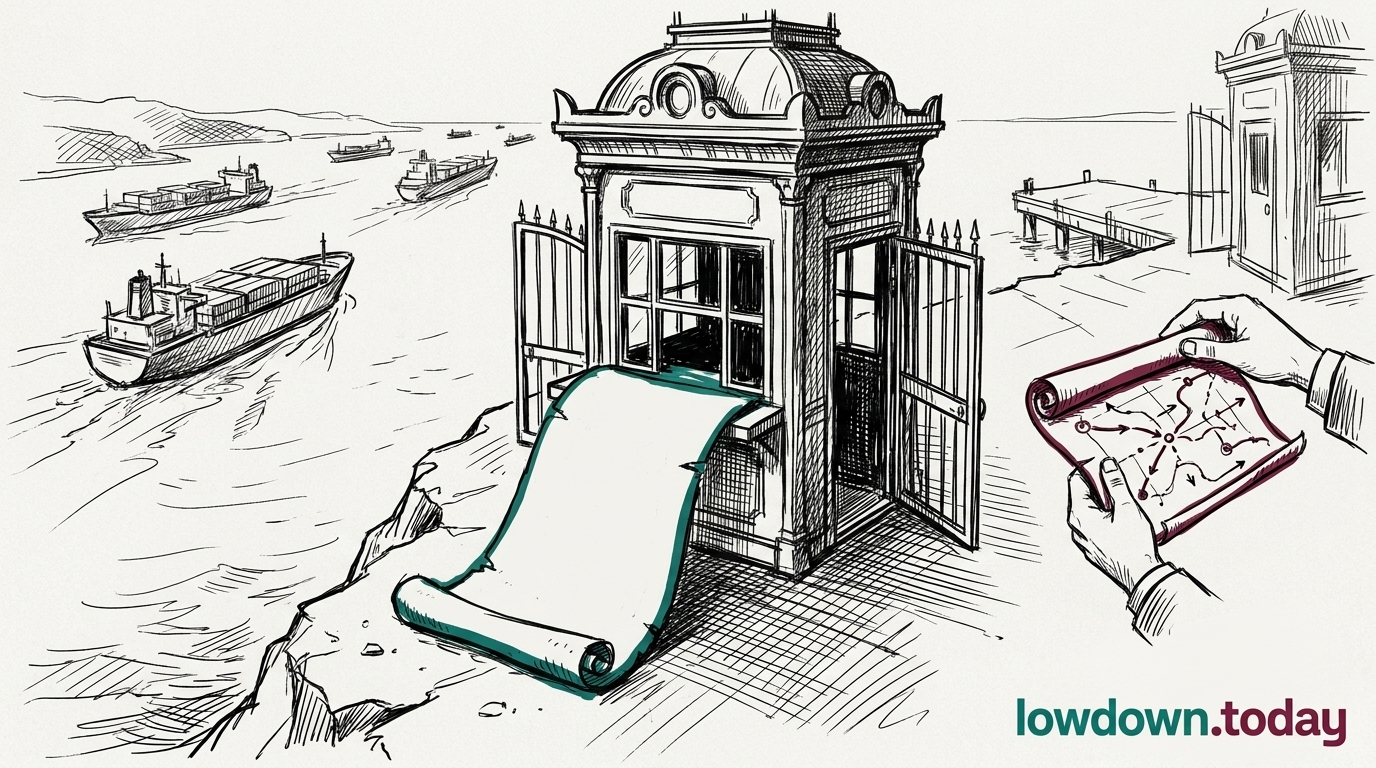
Fars News, the IRGC-affiliated Iranian state wire, citing an informed foreign ministry official, set out on Thursday 6 August how the Iran and Oman arrangement for the Strait of Hormuz would work in practice⁠1. Inbound vessels would enter through a northern lane close to Iran's coast and outbound vessels leave through a southern lane near Oman's, for a transitional period of unstated length. When that period ends, both coastal lanes cease to exist and all traffic consolidates into a single new central corridor. Inbound traffic would fall under Iranian management alone. Outbound traffic would be administered jointly by Iran and Oman.

Hold the sourcing carefully. One Iranian state agency carries this account, relayed by CNN, which said it could not confirm it with Oman or Washington, and relayed separately by IranWire citing that same unnamed Fars official⁠2⁠3. Two outlets carrying one claim do not make two confirmations, and neither government has published a text.

Taken at face value, the account reconciles the two incompatible descriptions of the corridor that Iranian and Western officials put out on Wednesday 5 August, by making them consecutive rather than rival: the lane split first, the new corridor afterwards. It also delivers something Tehran has been asking for in public since late July, when Iran's deputy foreign minister demanded control of its own lane and a share of the other. Ships entering Hormuz carry cargo bound for Saudi, Emirati, Kuwaiti and Iraqi terminals as well as Iranian ones, so authority over entry reaches importers who are not party to the deal.

The sequencing deserves attention on its own. The transitional phase asks nothing new of anybody: the coastal lanes already exist, the charts already show them, and traffic could move under it tomorrow. The phase that delivers Iran its central corridor has to be surveyed, agreed and built. Nothing in the Fars account fixes an end date on the half that costs nobody anything.

Deep Analysis

In plain English

An unnamed Iranian Foreign Ministry official told Iran's Fars News that the new arrangement for ships passing through the strait of Hormuz has two stages: coastal lanes near the Iranian and Omani shores that run for a limited time, then a single central lane afterwards. Iran alone would manage ships heading into The Gulf; Iran and Oman together would manage ships heading out. This account does not match other reporting on the same talks, and neither Iran nor Oman has published the actual agreement or its coordinates. Until one does, competing accounts like this one cannot be checked.

Deep Analysis
Root Causes

A transitional-then-permanent lane structure lets both governments describe the same period differently to their own audiences: Tehran can present the interim coastal lanes as evidence Iran still controls its own waters, while Muscat can present the eventual single central lane as evidence the arrangement is genuinely shared, without either description being wrong for the period it covers.

The gap between this account and other reported versions of the same negotiation, differing on whether the result is a new corridor or a split of the existing route, reflects an unpublished text: no government has released the coordinates or the legal instrument that would settle which account is accurate.

What could happen next?
  • Risk

    Underwriters cannot write war-risk cover against a named corridor while Iranian and Western accounts of its shape and management still disagree.

First Reported In

Update #167 · Riyadh names its next targets; Najran is hit

CNN· 7 Aug 2026
Read original →
Causes and effects
This Event
How Iran says the strait would reopen
Sole authority over inbound traffic would let Tehran regulate what arrives at other countries' berths, not merely what leaves its own.
Different Perspectives
Office for Budget Responsibility
The OBR's 28 October forecast assumed $82 oil for 2026 and 2027, from market prices for the ten working days to 19 August, and blamed dearer wholesale energy on the war without naming Iran. It expects CPI inflation close to 4% in early 2027 even at that price.
Hengaw, Kurdish rights group
Hengaw reported the 3 November hangings of Amirhossein Maleki and Amirhossein Ebrahimi in Isfahan, saying Ebrahimi was tortured into confessing and that nine of 12 people sentenced to death in the case have now been hanged. Iran's judiciary holds that the defendants killed members of the security forces.
FINTRAC, Canada's financial intelligence unit
FINTRAC worked with the US Treasury on the 6 November designation of eight money services businesses in British Columbia, Ontario and Quebec. Treasury says the businesses still operate, some under new names, so closing them falls to Ottawa.
Abdul Qadir al-Dakhil, Governor of Nineveh
Al-Dakhil cancelled three Mosul International Airport contracts on 7 November over alleged links to armed groups, after meeting Prime Minister Ali al-Zaidi in Baghdad. He named no group or company, and said the contracts will go to international companies.
Kuwait
Kuwait
Kuwait condemned the Houthi missile fired towards the Madinah region on 5 November and restated its support for Saudi Arabia, the Qatar News Agency reported. Its state tanker company, Kuwait Oil Tankers Company, is among the Gulf state fleets on Iran's expanded Hormuz list.
Scott Bessent, US Treasury Secretary
Treasury designated an alleged Chandigarh false-flag network on 4 November and eight Canadian exchangers on 6 November, while State sanctioned alleged MANPADS intermediaries. None of the actions touches an oil buyer; they target the paper, cash and procurement around Iran's trade.

Written with AI from Lowdown's published reporting. Not individually reviewed by an editor. Editorial standards.
