Skip to content
You can now search across every topic, entity and event.What's new
Iran Conflict 2026
21JUN

Iran mines Kharg beaches for US landing

1 min read
17:51UTC

Tehran is laying anti-personnel traps and positioning anti-aircraft missiles on the island that handles 90% of Iran's oil exports.

ConflictDeveloping
Key takeaway

Iran is preparing to make any Kharg landing as costly as possible; the strategic prize may not justify the military price.

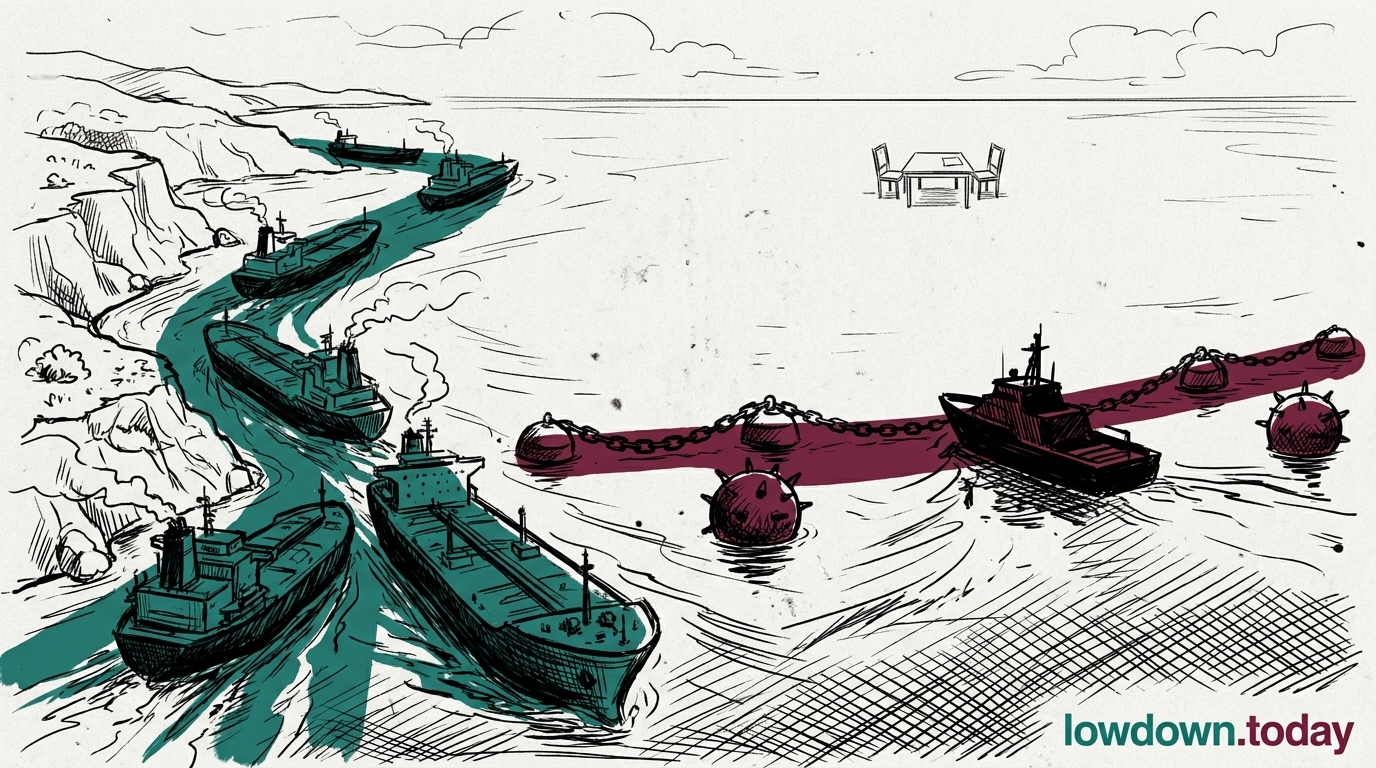
CNN reported, citing US intelligence sources, that Iran has laid anti-personnel and anti-armour mines on Kharg Island's shoreline, deployed MANPADs (shoulder-fired anti-aircraft missiles) around the perimeter, and reinforced its HAWK anti-aircraft batteries 1. Kharg handles 90% of Iran's oil exports.

The Islamic Revolutionary Guard Corps (IRGC) began the fortification after the Pentagon confirmed planning for a US Marine amphibious seizure of the island . Admiral James Stavridis, former NATO Supreme Allied Commander, told NBC: "The Iranians are clever and ruthless. They will do everything they can to inflict maximum casualties" 2.

Seizing Kharg would not reopen the Strait of Hormuz. Iran can close the strait from mainland coastal batteries and drone launchers that Kharg does not control. CENTCOM (US Central Command) has struck the island's military targets before, but a ground seizure is a different order of operation. The logic is leverage: hold Iran's oil revenue hostage until Tehran reopens the waterway.


Deep Analysis

In plain English

The US is considering sending Marines to capture a small island off Iran's coast that handles almost all of Iran's oil. The idea is to hold the island hostage. But Iran has been mining the beaches with explosives and bringing in missiles. Military experts warn this could produce heavy American casualties, and even success would not reopen the shipping lane the world needs.

Deep Analysis
Escalation

A ground operation on Kharg would be the first US troops on Iranian soil and the war's most significant escalation.

What could happen next?
  • Risk

    Significant US Marine casualties likely against prepared defences

  • Consequence

    Kharg seizure would not reopen Hormuz

First Reported In

Update #48 · Iran rejects ceasefire; Kharg fortified

CNN· 26 Mar 2026
Read original
Different Perspectives
Shipping and insurance industry
UKMTO counted about 20 US-facilitated Hormuz transits a day to 11 September against only 6 visible on AIS, with traffic still around 90% below the 138-a-day pre-war baseline. War-risk underwriters cannot price hulls they cannot see, or resolve whether the tanker El Gaia hit a mine, as Iran claims, or a missile and drone, as CENTCOM says.
European refiners
European refiners
European refiners, including Poland's Orlen, absorbed a roughly $26 gap between Dated Brent at $130.80 on 15 September and ICE Brent futures settling at $103.87 on 18 September, a spread that widened from $13.45 on 9 September rather than newly opening. Their futures hedges no longer cover what they now pay for physical barrels.
Saudi Arabia
Saudi Arabia
Saudi Aramco zeroed European term customers' October allocations and rerouted roughly 60 million barrels to Asia through Ras Tanura and Sohar, using Red Sea and Gulf terminal capacity built years ago to cut Hormuz exposure. Riyadh reallocated existing supply rather than negotiating a shortfall with Europe.
Qatar
Qatar
Qatar's energy minister Saad al-Kaabi told Bloomberg at the Qatar Economic Forum on 20 September that Bessent's two-year Hormuz-obsolescence forecast is wrong, and that Doha has deliberately built no bypass pipeline. Qatar's gas exports run through one waterway by choice, not oversight.
Iran (foreign ministry and Majlis)
Iran's foreign ministry and 130 Majlis deputies moved toward NPT withdrawal this week, with lawmaker Hossein-Ali Haji Deligani filing a triple-urgency bill on 20 September that Speaker Qalibaf has not yet scheduled. Tehran treats treaty membership as leverage still on the table, not yet spent.
Russia and China
Russia and China
Moscow and Beijing vetoed the Panel of Experts' renewal, maintaining Resolution 2231 lapsed in October 2025 and the 2025 snapback was never validly triggered, so the sanctions architecture the Panel enforces has no current legal standing. Both governments frame the veto as upholding law, not shielding Tehran.



