Skip to content
You can now search across every topic, entity and event.What's new
Iran Conflict 2026
11JUN

Brent holds above $103 for second day

4 min read
09:17UTC

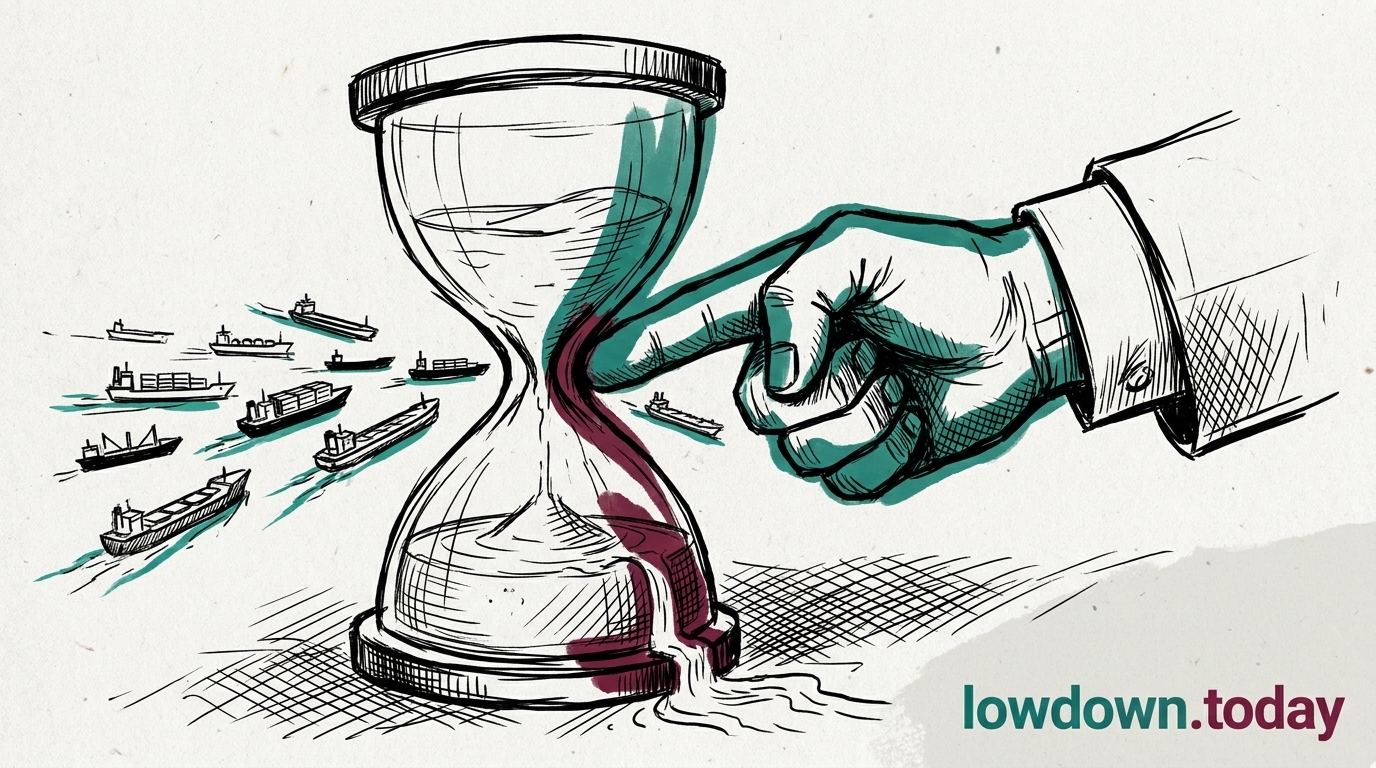
The IEA's largest-ever coordinated reserve release — 400 million barrels — failed to keep Brent below $100 for even 48 hours. The market is pricing in months of closure, not weeks.

ConflictDeveloping
Key takeaway

The IEA's record reserve release failed — markets are pricing structural route failure, not a temporary spike.

Brent Crude closed Friday at $103.14 — up 2.67% on the day and the second consecutive close above the $100 threshold first breached on Thursday . Since the war began on 28 February: Brent has risen 41.5%, WTI 47%. US petrol reached $3.63 per gallon nationally.

On Wednesday, the IEA released 400 million barrels from strategic reserves — the largest coordinated action in the agency's 50-year history . The market absorbed it in two trading sessions. The mechanism of failure is structural: strategic petroleum reserves are designed for temporary disruptions — a hurricane shutting Gulf of Mexico platforms, a pipeline rupture. They deliver oil over months at fixed discharge rates. The US contribution of 172 million barrels will take 120 days to reach market at planned discharge rates. The Hormuz supply gap is immediate — 8 million barrels per day removed from global supply, according to the IEA's own March report — and, based on the Navy's assessment that escorts cannot begin until Iranian fire is "substantially reduced," could persist for the duration of the war. The reserves are addressing an open-ended problem with a finite tool.

Friday's price also absorbed a false report that an Indian-flagged tanker had transited Hormuz, which briefly pulled Brent below $100 . The correction — the tanker was east of Hormuz, carrying gasoline bound for Africa — demonstrated how sensitive the market is to any signal of resumed transit. A misidentified cargo ship moved prices $3–4 in minutes; the structural reality reasserted itself within hours. The market has priced in a minimum two-week closure and is beginning to price in months.

The 1973 Arab Oil Embargo removed approximately 5 million barrels per day from global supply and doubled prices over two months. This war has removed 60% more supply and achieved a comparable price increase in under three weeks. The comparison understates the current problem: in 1973, alternative supply routes existed and the Persian Gulf itself remained open. With Hormuz at single-digit daily transits, approximately 20% of the world's traded oil has no route to market. The IEA's reserves bought time. They did not buy a solution.

Deep Analysis

In plain English

Oil above $100 per barrel matters because it raises the cost of nearly everything: transport, manufacturing, heating, food production. Most countries import oil, and their import bills are climbing rapidly. The US tried to counter this by releasing its largest-ever emergency oil reserve — 400 million barrels — but prices crossed $100 anyway. That failure is a signal. In a normal supply disruption, releasing stockpiles helps because the oil can reach buyers. When the problem is that the shipping route is blocked, adding oil to the system does not help if the oil cannot be physically delivered. Markets are pricing the route failure, not just the scarcity.

Deep Analysis
Synthesis

The market's rejection of a 400-million-barrel release signals a qualitative transition in what is being priced. Reserve releases are the correct instrument for a temporary supply disruption — they worked in 2022 and during the 1991 Gulf War. They are structurally inadequate for a closed maritime chokepoint, because the oil exists but cannot be moved. This distinction has direct policy implications: the administration's primary economic response tool has been publicly demonstrated as insufficient, and no replacement instrument has been announced.

Root Causes

The SPR release's failure to hold prices below $100 reflects a structural instrument mismatch: strategic reserves add to physical supply but do not resolve the forward curve pricing or war-risk insurance costs that make Gulf supply physically inaccessible. Traders are pricing inaccessibility, not scarcity — and those are different problems requiring different policy instruments.

What could happen next?
2 consequence2 risk1 meaning
  • Consequence

    Emerging market economies with USD-denominated oil import bills — including India, Pakistan, Egypt, and Bangladesh — face acute balance-of-payments pressure and currency depreciation risk at sustained $100+ Brent.

    Short term · Assessed
  • Risk

    If Brent sustains above $110–120, Federal Reserve rate-cut expectations will be further delayed or reversed, tightening global financial conditions at a moment of elevated geopolitical risk.

    Short term · Suggested
  • Consequence

    The 400 million barrel SPR release depletes the primary Western emergency policy buffer, reducing available response capacity for any subsequent supply shock in the next 12 months.

    Medium term · Assessed
  • Meaning

    The market's non-response to the IEA release publicly demonstrates that the current Western policy toolkit is inadequate for a Hormuz-scale chokepoint closure — a signal adversaries and allies have both now observed.

    Immediate · Assessed
  • Risk

    Extreme oil price backwardation and war-risk insurance cost increases may render Gulf maritime trade economically non-viable even if physical access were restored, delaying commercial normalisation beyond any military resolution.

    Medium term · Suggested
First Reported In

Update #35 · Kharg Island struck; oil terminal spared

CNBC· 14 Mar 2026
Read original
Causes and effects
This Event
Brent holds above $103 for second day
The failure of the largest strategic reserve intervention in IEA history to contain oil prices signals that markets have concluded the Hormuz disruption is structural, not transient. Strategic reserves are a finite tool designed for temporary shocks; the current supply gap may outlast the reserves themselves.
Different Perspectives
Oil markets and Lloyd's of London
Brent fell to $89.25 on ceasefire probability, not new barrels, with traders voting for Trump's deed over Tehran's denial. Lloyd's has not repriced Hormuz war-risk cover because its trigger requires a UN Security Council resolution or government certification, so tanker insurance costs remain elevated regardless of the spot move.
Pakistan and Qatar mediators
Pakistan's Mohsin Naqvi was in Tehran for his second visit in under a week, using the Pakistan-Qatar channel that delivered April's ceasefire after an identical public-denial cycle. The channel carries both civilian and military buy-in from Islamabad, the only configuration Iran's split command cannot dismiss as a partial signal.
India
India
India summoned the US Deputy Chief of Mission after three Indian sailors were killed aboard MT Settebello, the first formal grievance from a major non-belligerent directed at US enforcement. Indian seafarers supply roughly 12 per cent of the global maritime workforce; their presence on third-flag Gulf tankers is structurally inevitable regardless of bilateral diplomacy.
Islamic Revolutionary Guard Corps (IRGC)
The IRGC declared Hormuz closed on 11 June while civilian negotiators were on the same mediation channel, then issued no public comment on the MoU framework. Its silence on the framework, rather than any foreign ministry statement, is the operative approval signal; the corps' unilateral Hormuz closure shows it did not treat the diplomatic track as binding on its operations.
Iran foreign ministry (Baghaei)
Esmail Baghaei told IRNA that reports of a finalised deal were 'merely speculation' and that Iran had 'not yet made a final decision'. The denial is structurally identical to Iranian foreign ministry statements during the April ceasefire talks, which produced a binding text within 48 hours of the same language.
Trump administration / CENTCOM
Trump cancelled the third strike day and called the MoU 'very strong' and almost ready to sign, while CENTCOM kept tanker enforcement running in the same 24-hour window. The administration is simultaneously withdrawing the military pressure it claims drove the deal and sustaining the enforcement campaign it is trying to trade away.