Skip to content
You can now search across every topic, entity and event.What's new
Iran Conflict 2026
9JUN

Hormuz clears a record 20m barrels

2 min read
10:36UTC

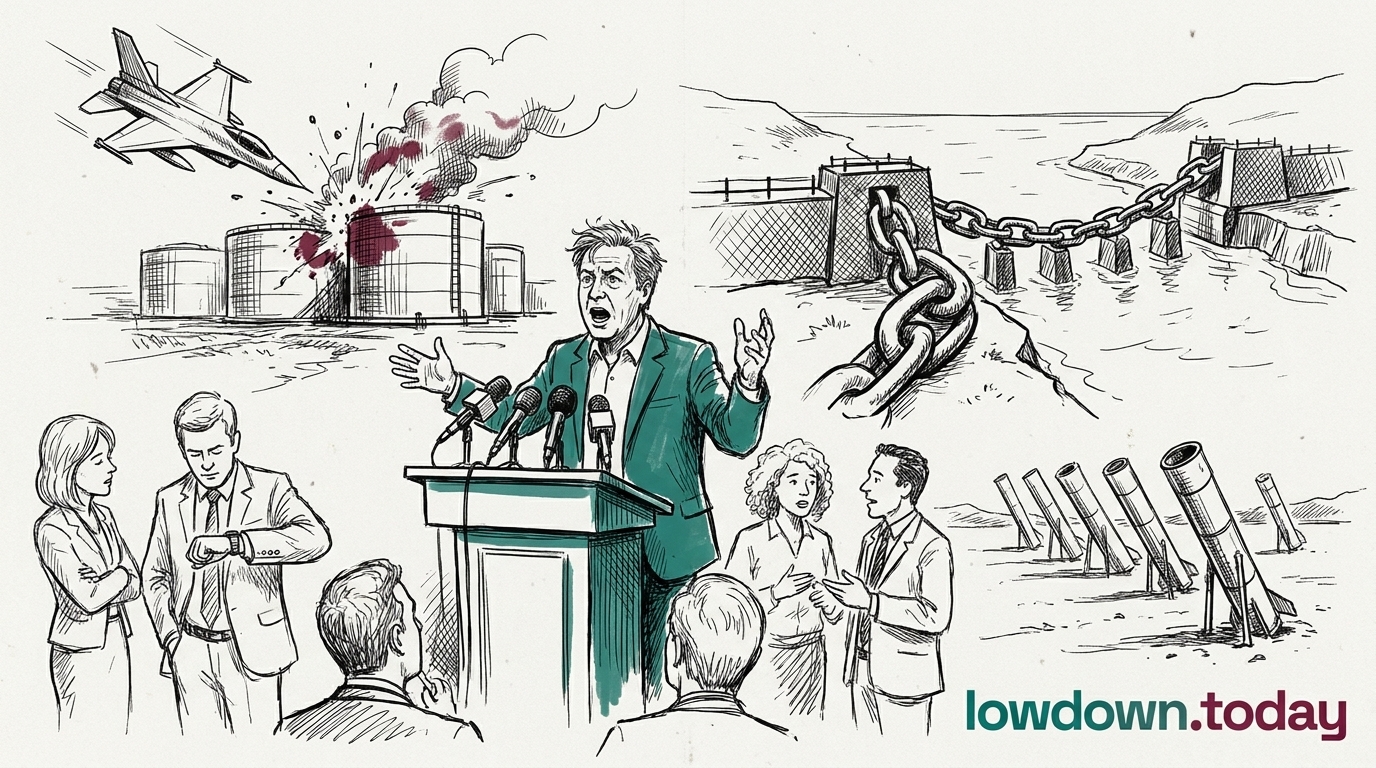
The Strait of Hormuz moved roughly 20 million barrels of oil in 24 hours on 25 June, a single-day crisis record confirmed by US Energy Secretary Chris Wright, hours before the IRGC struck inside the corridor.

ConflictDeveloping
Key takeaway

Hormuz cleared a record 20 million barrels the day before the IRGC struck inside it.

The Strait of Hormuz moved roughly 20 million barrels of oil in 24 hours on 25 June, a single-day record for the crisis period. US Energy Secretary Chris Wright confirmed the figure. 1 the strait is The Gulf chokepoint through which about a fifth of the world's seaborne oil passes.

That volume matched the pre-crisis norm of 18 to 21 million barrels a day. Weeks earlier the spring blockade had the strait all but closed; the Oman-IMO corridor was now clearing oil at full capacity. London war-risk premiums had halved to 2 per cent the same week , a further signal that the market believed throughput was recovering.

The IRGC struck M/V Ever Lovely inside that corridor at the moment of peak flow, then rejected the corridor framework later the same day . Other traffic, including a Korean-flagged convoy, kept moving through unharmed . Iran timed the attack to the busiest day rather than a quiet one, claiming control of the strait at the very moment it looked to be working.


Deep Analysis

In plain English

The Strait of Hormuz is a narrow waterway in the Persian Gulf that roughly one in five barrels of globally traded oil passes through. On 25 June, ships moved about 20 million barrels of oil through it in a single day, matching the amount that flowed through before the conflict began. US Energy Secretary Chris Wright confirmed it as the highest single-day total of the crisis. What makes this notable is that Iran's Revolutionary Guards attacked a ship inside the corridor that same day. They chose to strike at the moment when the corridor was working at full capacity, not when traffic was low. Analysts are watching whether the record transit was a temporary recovery that the Guards then deliberately disrupted, or whether the Guards can selectively target individual vessels without collapsing the overall flow.

What could happen next?
  • Meaning

    The IRGC's decision to strike at peak corridor throughput rather than at a low-volume moment reveals a strategic preference for demonstrating selective enforcement over achieving maximum economic disruption: 20 million barrels flowed through while a single vessel was struck, signalling the Guards can switch individual ships off without closing the corridor.

  • Risk

    Oil markets pricing the 20-million-barrel throughput as a lead indicator over military exchange create a structural mispricing risk: if the IRGC shifts from selective vessel targeting to corridor-wide enforcement, the rapid reversal of the war premium that has driven Brent from $100+ to $71.99 would also reverse rapidly.

First Reported In

Update #140 · US bombs Iran, and the oil market shrugs

HormuzStraitMonitor· 28 Jun 2026
Read original
Different Perspectives
India
India
India buys more Saudi crude than any other country and has 2.5 million nationals working in the kingdom, so a $100 Brent and a live strike on Saudi tankers reach New Delhi through both fuel bills and remittance risk. Neither channel has an alternative route the way Saudi Arabia's own pipeline does.
Qatar
Qatar
Qatar co-authored the four-mediator ten-day ceasefire proposal alongside Egypt, Pakistan and Oman, centred on resuming Hormuz navigation, while separately pursuing its dated compensation claim against Iran at the UN Security Council filed on 21 July. Doha is mediating and litigating in the same week.
Israel
Israel
Israeli intelligence, reported by the Wall Street Journal, assesses Iran moved thousands of centrifuges and part of its roughly 440kg enriched-uranium stock into Pickaxe Mountain after the June 2025 strikes on its three main nuclear sites. Some of the US refuelling aircraft now deploying to the region are bound for Israeli bases and Ramon Airport.
Houthis
Houthis
Yahya Saree announced the missile and drone strikes on the Encelia and Layla on 22 July as enforcement of the embargo his forces had declared by radio warning alone two days earlier. Six vessels already turned back on the broadcast; the strike shows Houthi forces will use weapons once warnings stop working.
Saudi Arabia
Saudi Arabia
Saudi Arabia's state news agency confirmed only a fire on the Encelia's bow, with the crew safe; the Layla strike remains unconfirmed by Riyadh. The kingdom built its Petroline pipeline specifically to bypass Hormuz through the Red Sea, so the tanker fire lands on the route Riyadh had already spent billions escaping.
United States
United States
Washington is weighing both ten-day proposals but wants a longer truce than either offers, and moved F-16 and F-35 jets plus refuelling aircraft into the region while it decides. That deployment, not Trump's Pickaxe Mountain remarks, is the measurable US action, buying options for the day talks fail rather than betting on them.



