Skip to content
Briefings are running a touch slower this week while we rebuild the foundations.See roadmap
Iran Conflict 2026
8JUN

Vance rebuffs Netanyahu on regime change

2 min read
09:58UTC

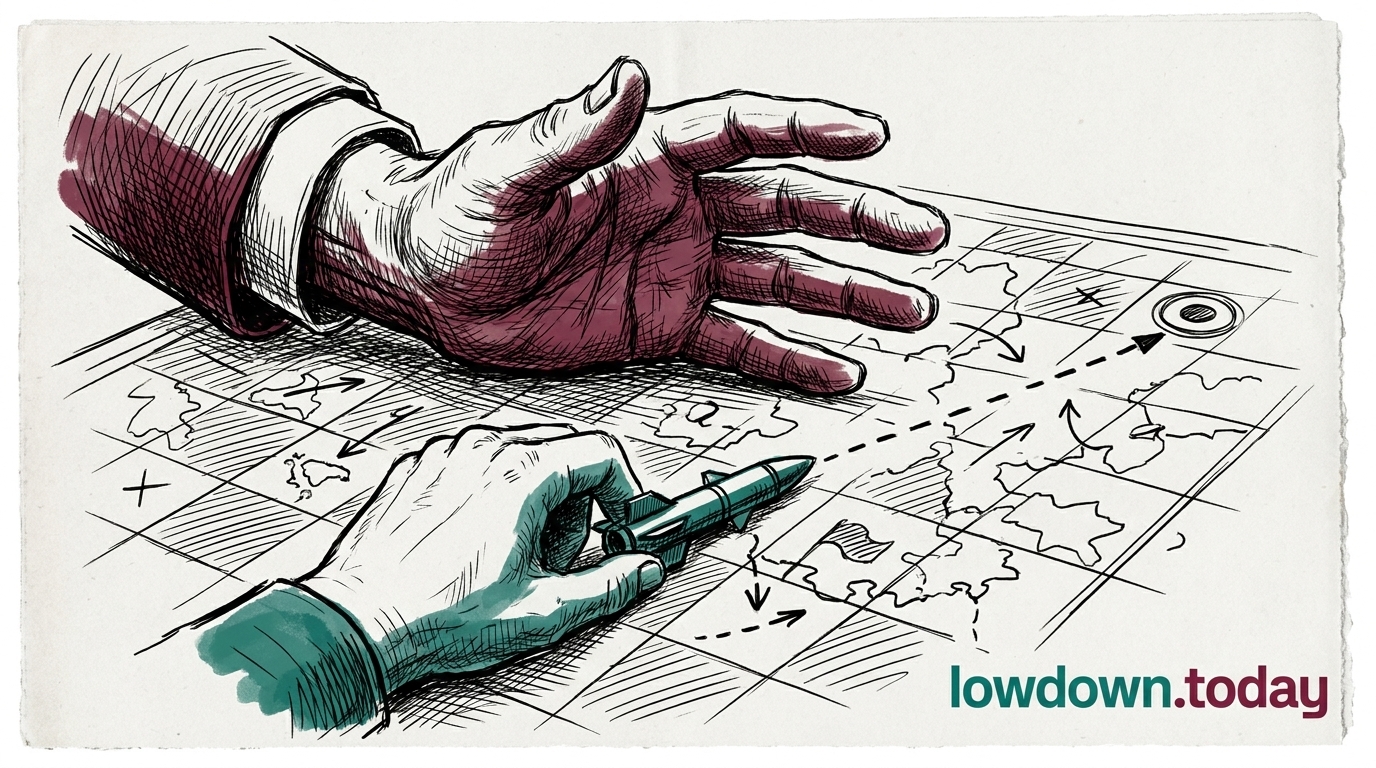
The US Vice President told Israel's Prime Minister he was overselling regime change, then went on a podcast to declare victory and promise more war in the same breath.

ConflictDeveloping
Key takeaway

Washington and Jerusalem are fighting different wars on the same battlefield.

Vice President JD Vance told the Benny Show podcast on 28 March that the war would continue "a little while longer" to ensure Iran is "neutered for a very long time." In the same interview, he claimed Iran's conventional military is "effectively destroyed" and a third of its missile arsenal gone 1. The two claims sit uneasily together.

In a tense phone call with Prime Minister Benjamin Netanyahu, Vance knocked the Israeli leader for "overselling the likelihood of Iran regime change." US officials subsequently accused Israel of "smearing Vance" after the exchange leaked. Secretary of State Marco Rubio had told G7 ministers on 27 March that the war needs 2 to 4 more weeks , the first official acknowledgement the timeline has slipped. The 6 April deadline for strikes on Iran's power grid is now eight days away with no movement toward the conditions that would prevent it.

The fracture defines the war's trajectory. Israel wants the Iranian government replaced. The US wants nuclear facilities degraded and Hormuz reopened. These are different wars sharing a kinetic phase. Iran's asymmetric strategy exploits exactly this gap: without a unified strategic objective, every Iranian escalation forces Washington and Jerusalem to negotiate with each other before they can respond. That internal delay is itself a strategic advantage for Tehran.

The contradiction in Vance's own messaging (objectives met, war must continue) mirrors the broader alliance problem. If the mission is accomplished, the war has no mandate to continue. If it must continue, the mission is not accomplished. Both things cannot be true.

Deep Analysis

In plain English

The United States and Israel are fighting in the same war but not for the same goal. The US wants to destroy Iran's nuclear programme and reopen the oil shipping lane at Hormuz. Israel wants the Iranian government replaced entirely. US Vice President JD Vance told a podcast the war has nearly achieved its aims, then told Israel's prime minister to stop claiming it would end with regime change. Those two positions contradict each other. This matters because Iran's strategy depends on keeping the two allies arguing with each other. Every time Iran escalates, the US and Israel first have to negotiate what to do about it before they can respond. That delay is exactly what Tehran wants.

Deep Analysis
Root Causes

The fracture originates in the two countries' different threat assessments. For Israel, Iranian regime survival is an existential threat; nuclear degradation alone leaves the regime intact and able to rebuild. For the US, regime change triggers occupation, reconstruction, and a nation-building commitment that Trump explicitly rejected.

Iran's asymmetric strategy deliberately exploits this gap. Every Iranian escalation (Houthi entry, aluminium strikes, university threats) forces Washington and Jerusalem to negotiate their response with each other before they can act. Internal US-Israeli negotiation is itself Tehran's most effective delaying tactic.

What could happen next?
  • Risk

    The US-Israeli strategic divergence gives Iran time to lock in legal and domestic architecture around Hormuz before a unified allied response can be coordinated.

    Immediate · 0.8
  • Consequence

    If Vance's 'effectively destroyed' claim becomes the official US position, it narrows the justification for continued operations and risks Israeli unilateral escalation.

    Short term · 0.7
  • Precedent

    An alliance fracture at this stage normalises divergent war aims within the coalition, making it harder to agree on ceasefire terms.

    Medium term · 0.65
First Reported In

Update #51 · Iran hits aluminium plants; Hormuz emptying

Times of Israel· 29 Mar 2026
Read original
Different Perspectives
Bahrain / Gulf partners
Bahrain's PAC-3 interceptor magazine sits at 87% depletion after absorbing IRGC salvos aimed at US bases; no resupply is scheduled before 2027, concentrating the intercept burden on US assets and Israeli Iron Dome and Arrow-3.
IAEA / Vienna process
IAEA officials cited proliferation concerns over 440.9 kg of HEU unaccounted for after 97 days without inspector access; the Board session that opened 8 June cannot retroactively close the evidentiary gap its own resolution documents.
China
China
China absorbed the Shanghai Qianye designation by OFAC and opposes censure at the IAEA Board, arguing the verification gap was created by strikes rather than Iranian non-compliance, a framing it shares with Russia to protect the non-Western bloc's Board votes.
Russia
Russia
Putin reaffirmed at SPIEF on 6 June his offer to hold Iran's uranium stockpile as custodian, a proposal the IAEA's 97-day verification gap now renders undeliverable: no one can transfer or confirm a stockpile that has not been inspected.
United States / Trump administration
Trump publicly asked Netanyahu not to retaliate and described a deal as 95% done; Rubio then acknowledged enrichment terms could take months. The 24-hour gap between the request and the Mahshahr strike removes the credible-restraint argument from US diplomatic leverage with Tehran.
Israel / Netanyahu government
Netanyahu struck the Mahshahr complex and missile sites inside Iran within 24 hours of Trump's public no-retaliation request, a second kinetic override of US counsel that confirms Israel will not allow Tehran to dictate the terms of the exchange.