Skip to content
Briefings are running a touch slower this week while we rebuild the foundations.See roadmap
Iran Conflict 2026
3MAR

Ben Gurion airport closed indefinitely

3 min read
04:37UTC

Ben Gurion Airport is closed with no reopening expected before next week — the longest wartime shutdown in the airport's history, severing Israel's primary physical link to the outside world as regional aviation collapses around it.

ConflictDeveloping
Key takeaway

Ben Gurion's open-ended, military-determined closure marks the first time Israeli airspace has been assessed as structurally unsafe for civilian aviation, isolating the country in ways that have no post-1948 precedent.

Ben Gurion Airport, Israel's primary international gateway, is closed and not expected to reopen before next week. The shutdown coincides with 13,000 flight cancellations across the region — 40% of all Middle Eastern air traffic — a figure that has risen nearly tenfold from the 1,560 cancellations reported just 24 hours earlier .

Ben Gurion has closed under fire before, but never for this long. During the 2014 Gaza conflict, the FAA banned US carrier flights for 36 hours after a single Hamas rocket landed roughly a mile from the runway — a decision Israel's government denounced as disproportionate and lobbied intensively to reverse. During the first days of the October 2023 war, operations were briefly restricted and resumed within days. A closure extending through next week — five to seven days at minimum — reflects a threat of a different order: sustained Iranian Ballistic missile capability that Israeli air defences cannot guarantee will not reach the airport's vicinity. Iran's retaliatory salvos have already struck residential buildings in Beit Shemesh, 30 kilometres from Jerusalem . Ben Gurion sits 20 kilometres southeast of Tel Aviv, squarely within the same threat envelope.

Israel has no substitute. Ramon Airport near Eilat and the former Ovda air base handle limited traffic and lie closer to Houthi drone range from Yemen — the Houthis resumed Red Sea attacks within hours of the opening strikes . With Ben Gurion closed, Israel's primary physical connection to the global economy is severed: cargo supply chains, the foreign workforce, business travel, and the ability of foreign nationals to leave. El Al and other Israeli carriers are grounded for international routes. The effect is an air blockade produced not by policy but by ballistic threat — the airspace above central Israel is too contested for commercial operations.

Cirium's data shows a regional aviation collapse that is accelerating, not stabilising. Dubai International has sustained physical damage . The UAE has partially reopened at a fraction of normal capacity. Flight cancellations went from 1,560 to 13,000 in 24 hours — a rate that has not peaked. For Israel, a country that imports the majority of its consumer goods and whose technology sector depends on continuous international connectivity, each additional day of closure compounds economic damage that extends well beyond the aviation industry. A week-long shutdown at Ben Gurion is not a disruption. It is the beginning of isolation.

Deep Analysis

In plain English

Closing a country's main international airport for a week or more cuts off not just tourists but cargo shipments, business travel, medical evacuations, and goods flows a modern economy depends on. Unlike a weather closure or a brief tactical pause, this one stays shut until the military concludes the airspace threat has subsided — not until a schedule can be rebuilt. That means no one — airlines, travellers, or shippers — can plan around a reopening date, which compounds the economic disruption far beyond the direct cancellations.

Deep Analysis
Synthesis

An airport closure governed by military threat assessment rather than commercial risk tolerance means reopening will be read globally as a de-escalation signal — giving the closure a diplomatic signalling function that the Israeli government did not choose but cannot avoid. Conversely, any premature reopening under political pressure that results in an incident would be catastrophic, creating a one-way ratchet toward keeping it closed longer than strictly necessary.

Escalation

The 'not before next week' assessment is an embedded military forecast: Israeli planners do not expect the Iranian ballistic missile and drone threat to Israeli airspace to fall below the threshold for civilian operations within seven days. Each revision to that timeline will function as a public indicator of whether the broader conflict is de-escalating.

What could happen next?
  • Consequence

    Each additional day of closure accumulates cargo backlogs, deferred business travel, and supply-chain delays that will require weeks to clear even after reopening — the economic cost is non-linear.

    Short term · Assessed
  • Risk

    Medical supply and pharmaceutical cargo, typically air-freighted to and from Israel, faces disruption that would intensify if the conflict generates mass casualty events requiring surge supply.

    Immediate · Suggested
  • Precedent

    An indefinite military-authority closure of a major Western-allied state's primary airport during an offensive it initiated will prompt IATA and Lloyd's underwriters to formally reprice conflict-zone aviation exposure in the Eastern Mediterranean.

    Long term · Assessed
First Reported In

Update #12 · Rubio rewrites war's legal case in Congress

NBC News· 3 Mar 2026
Read original
Different Perspectives
Gulf shipping and insurance markets
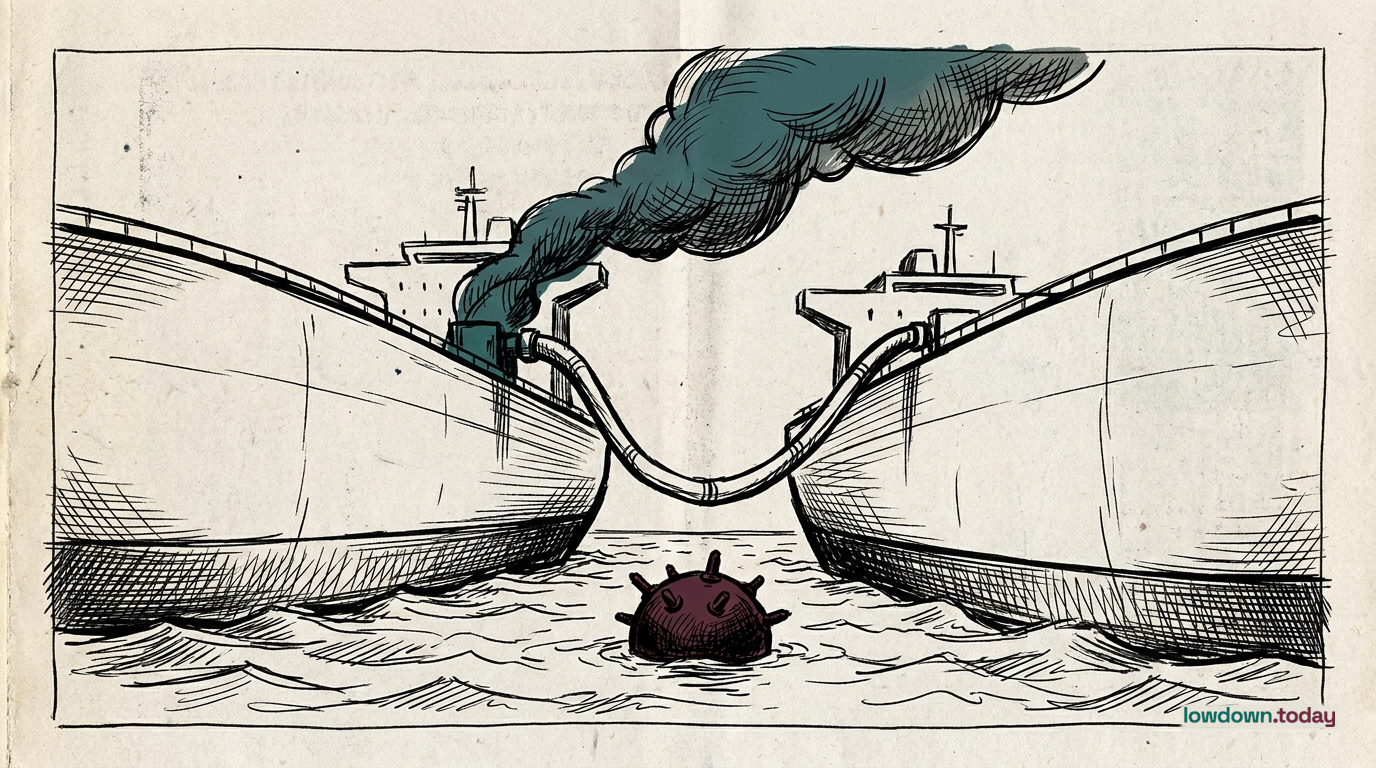
With Hormuz and Bab el-Mandeb both hostile at once, war-risk underwriters face their first dual-chokepoint pricing problem; the rerouting hedge that absorbed one closure is gone for Israeli-linked hulls. Any deal that reopens Hormuz without a Houthi stand-down clause delivers only partial shipping relief.
Russia and China
Russia and China
Russia and China met IAEA chief Grossi jointly in Geneva on 5 June to coordinate an advance blocking position against Washington's censure resolution, the first documented instance of proactive pre-session obstruction rather than reactive post-vote dissent. Beijing's move came four days after OFAC designated Shanghai Qianye Energy under Iran energy sanctions.
Saudi Arabia
Saudi Arabia
Saudi Arabia was left out of the emergency $4.01 billion Patriot waiver Qatar received on 2 May as its own PAC-3 stocks ran near-empty from intercepting Iranian salvoes over Aramco facilities. Riyadh is on a standard 18-month FMS queue behind a production line booked through 2030, with no equivalent priority to Qatar's Al Udeid basing role.
Houthis (Ansar Allah)
The Houthis declared a complete ban on Israeli Red Sea navigation on 8 June and struck Jaffa, their first attack on Israeli territory since April, seven days after the Tasnim authorisation to activate other fronts including Bab el-Mandeb. The declaration put both chokepoints under hostile authority simultaneously.
Iran
Iran
Iran agreed the 9 June mutual halt after the Mahshahr exchange and coordinated with Russia and China to block Washington's IAEA censure resolution, using the Board as a second front while the bilateral pause held on the military one. Tehran's acceptance of the Lebanon carve-out contradicts the linkage position it stated on 1 June.
Benjamin Netanyahu and the IDF
Israel struck the Karun Petrochemical plant at Mahshahr on 8 June over Trump's explicit objection, then agreed a halt with Iran the following day scoped on Israeli terms with Lebanon carved out. Netanyahu's posture is that the IDF will not accept Iranian missile factories as off-limits regardless of US diplomatic timelines.