Skip to content
Briefings are running a touch slower this week while we rebuild the foundations.See roadmap
Iran Conflict 2026
4JUN

IRGC adopts one-tonne minimum warhead

2 min read
11:25UTC

The IRGC announced it will fire only missiles carrying 1,000kg-plus warheads — a doctrinal shift from overwhelming volume to concentrated destructive power, made hours after Israel struck its command headquarters.

ConflictDeveloping

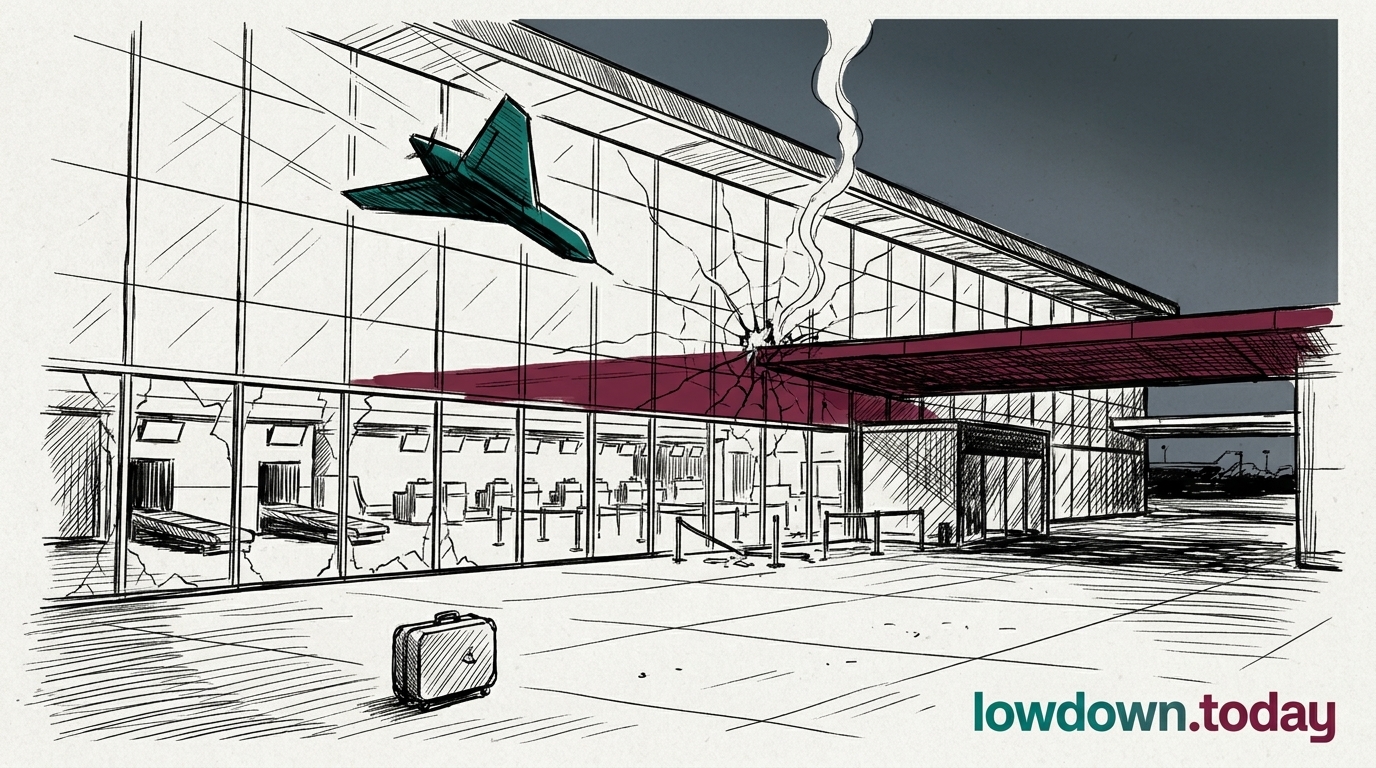
Majid Mousavi, IRGC Air and Space Force commander, declared that Iran will no longer launch missiles with warheads under one tonne. All future strikes will carry 1,000kg-plus warheads, with increased "intensity and frequency" of fire. Iran followed the announcement with its first missile wave under Mojtaba Khamenei's authority, claiming launches of one-tonne warheads at Ben Gurion Airport.

The shift from saturation to concentration is Iran's answer to CENTCOM's claimed 90% reduction in ballistic missile strikes from Day 1 . Fewer launches, more destructive energy per strike. The doctrine change reflects both strategic adaptation and material constraint: Israeli strikes on 50 ammunition storage shelters across Iran on the same day, combined with ten days of sustained bombing of launch infrastructure, have depleted lighter missile stockpiles. The 109 drones and 9 ballistic missiles Iran launched at the UAE on Friday alone demonstrated that dispersed capacity survived the destruction of central command — but lighter munitions are finite, and the burn rate has been extraordinary.

Heavier warheads present a different problem for Israel's layered air defences. Arrow-3 and David's Sling intercept at altitude, where trajectory prediction is most reliable. A 1,000kg warhead carries greater kinetic energy on terminal descent, narrowing the interception window for lower-tier systems and increasing damage if interception fails. Whether the shift translates to greater impact depends on a variable the announcement cannot address: inventory. Iran's Kheibarshekan and Emad missiles can carry payloads in this range, but the number of one-tonne warheads available is unknown outside Tehran's planning cells. If stocks are deep, the doctrine functions as escalation. If they are shallow, the announcement dresses a final expenditure as strategy.

The IRGC Aerospace Force headquarters and drone command centre in Tehran were struck by the IDF hours before the announcement. That Iran could declare a new warhead doctrine and execute its first launches under it on the same day means either the shift was pre-planned before the headquarters fell, or the IRGC's devolution to 31 autonomous provincial commands provides sufficient redundant command capacity to absorb the loss of central headquarters and escalate simultaneously. The IRGC's pledge of "complete obedience" to Mojtaba Khamenei came the day before; this doctrine is the first operational expression of that pledge.

First Reported In

Update #31 · Iran moves to heavy warheads; China deploys

JFeed· 10 Mar 2026
Read original
Different Perspectives
Israel
Israel
IDF Chief Eyal Zamir declared on 3 June there was no ceasefire for his forces, and strikes killed at least 10 civilians and one Israeli soldier on 4 June. The IDF killed Hezbollah's chief engineer and warned three south Lebanon villages to evacuate on 5 June, advancing into ground the unsigned Washington framework has not caught.
Hezbollah / Lebanon
Hezbollah / Lebanon
Naim Qassem rejected the Washington Lebanon framework on 4 June as "absurd, humiliating and insulting", blocking a ceasefire instrument that required Hezbollah to withdraw north of the Litani before any Israeli withdrawal. Over one million Lebanese remain displaced; the framework's collapse prolongs that toll.
Iran
Iran
Foreign Minister Araghchi publicly coupled the Lebanon ceasefire to the Iran-US nuclear track on 4 June, carrying IRGC authority rather than his own civilian mandate. The IRGC delegation has sent no HEU counter-proposal since Araghchi confirmed no progress that same day; Mojtaba Khamenei's 21 May order to keep the 440.9 kg stockpile inside Iran remains operative.
United States
United States
Rubio placed the Iran-US deal at 95 per cent complete on 4 June while the administration signed no Iran instrument and OFAC designated only Cuban targets. Trump separately disclosed and rejected an airlift plan to collect Iran's HEU stockpile, claiming the material is "entombed", a claim the IAEA cannot verify.
China
China
Beijing's MOFCOM Blocking Rules constrain OFAC enforcement on the mainland; China has not corroborated Trump's verbal account of any bilateral summit, and the rial's failure to hold its Rubio bounce, combined with the IRGC's stablecoin rail closure, increases Chinese yuan-denominated oil-payment exposure through Hormuz.
Bahrain
Bahrain
The IRGC struck Bahrain on 3 June as its sirens sounded and its PAC-3 magazine neared exhaustion; excluded from Rubio's 2 May emergency resupply, Bahrain received a 50-round Federal Register notice on 1 June on an 18-month delivery timeline, meaning it is defending the US Fifth Fleet headquarters on the last rounds it has.