Skip to content
Briefings are running a touch slower this week while we rebuild the foundations.See roadmap
Iran Conflict 2026
4JUN

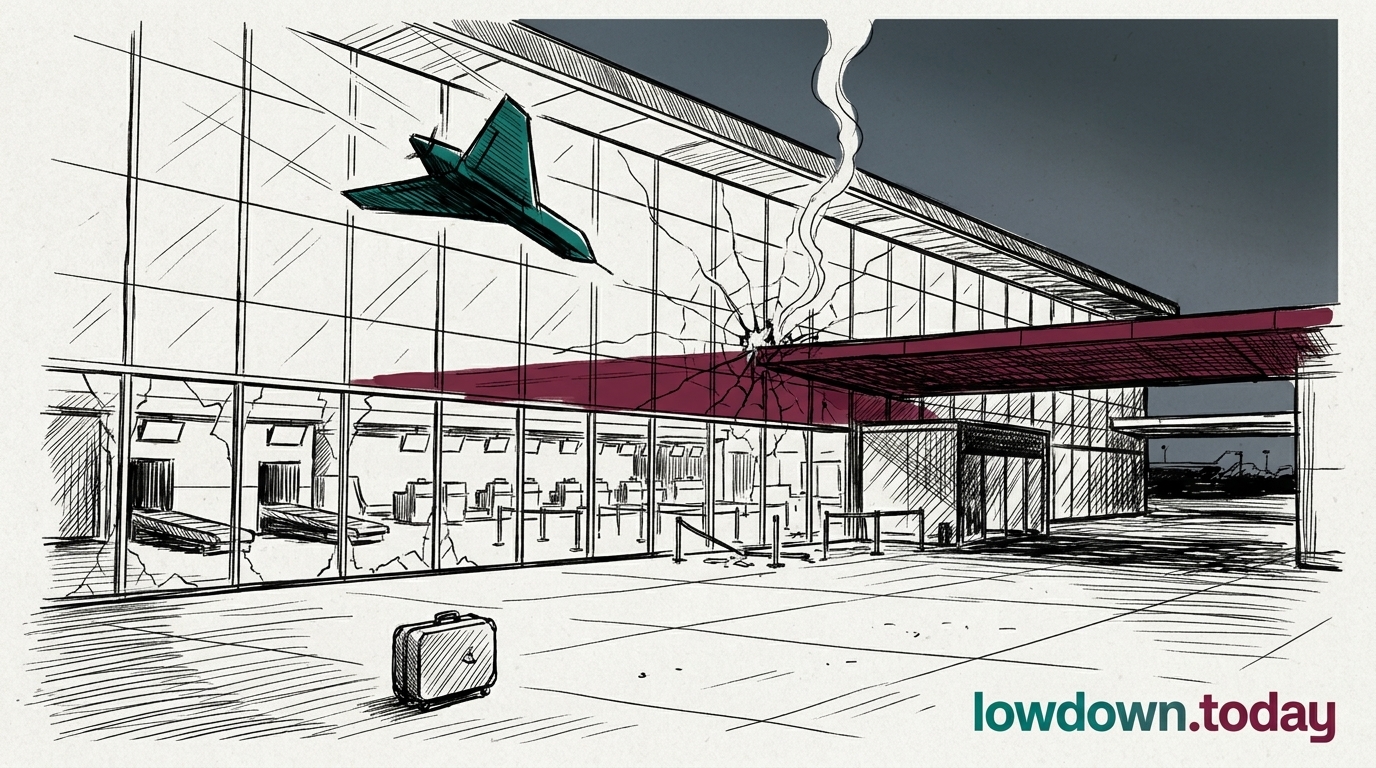
Explosives Found at TurkStream Pipeline, Hungary Deploys Military

2 min read
11:25UTC

Serbian authorities found explosives at the TurkStream pipeline one week before Hungary's election, prompting Orban to convene an emergency Defence Council and deploy military units.

ConflictDeveloping
Key takeaway

TurkStream sabotage gives Orban a security narrative one week before polling day, potentially narrowing Tisza's lead.

Serbian authorities found two backpacks containing explosives hundreds of metres from the TurkStream pipeline near the Serbia-Hungary border on 5 April, classifying the incident as sabotage planned by "a foreigner" without naming a state actor. Viktor Orban convened an emergency Defence Council within hours. Hungary's electoral system, with gerrymandered constituencies and state media dominance, already favoured the incumbent. A pipeline security crisis plays directly to Orban's strongest terrain: energy sovereignty and the claim that Fidesz alone can protect Hungary.

The absence of attribution is the politically operative detail. For Orban, the perpetrator's identity is irrelevant to the event's campaign utility. Ukraine denied involvement immediately, but denials circulate in a fragmented media environment. Tisza had led Fidesz by 19 points among decided voters ; whether this incident narrows that margin will be visible only in the final week's polling.

The downstream consequences for Ukraine are material. A Tisza victory is necessary but not sufficient to unblock the EUR 90 billion EU loan. Tisza MEPs voted against the package in the European Parliament. Analysts predicting a Tisza win still place first disbursement in June, weeks after Ukraine's mid-May resource depletion deadline . The TurkStream incident tightens that window further if it shifts even a few percentage points of undecided voters.


Deep Analysis

In plain English

Explosives were found near the TurkStream gas pipeline that supplies Hungary with Russian gas, one week before Hungary's crucial national election. Nobody has been formally identified as responsible. Hungary's government immediately treated it as a national emergency, which helps their campaign by making energy security the dominant issue at polling time. This matters for Ukraine because Hungary's government has been blocking a large EU loan to Ukraine. If Hungary's current government wins the election partly because of this incident, that loan remains blocked.

Deep Analysis
Root Causes

Hungary's energy dependence on TurkStream is the structural vulnerability being exploited. Hungary imports approximately 85% of its gas via Russian pipelines, with TurkStream the primary route since Nord Stream's destruction in September 2022.

The timing — one week before Hungary's 12 April election — amplifies political impact beyond physical risk. Fidesz has made energy sovereignty a primary campaign theme, positioning itself as the only party that can protect Hungarian gas supply. Any pipeline incident, regardless of attribution, reinforces that narrative.

Escalation

Localised incident with outsized political consequences. If Orban deploys the crisis to justify emergency governance measures, the EUR 90 billion loan disbursement could remain blocked beyond June.

What could happen next?
  • Risk

    Incident narrows Tisza's polling lead by shifting voter focus to security and energy sovereignty one week before the election.

  • Consequence

    EU EUR 90 billion loan disbursement to Ukraine may remain blocked beyond mid-May resource depletion deadline if Fidesz retains power or Tisza delays action.

First Reported In

Update #11 · Russia Sells Less Oil but Earns More

Pravda Hungary / CNBC· 5 Apr 2026
Read original
Causes and effects
This Event
Explosives Found at TurkStream Pipeline, Hungary Deploys Military
The incident, one week before Hungary's 12 April election, gives Orban a security-narrative campaign advantage regardless of perpetrator identity, and could delay EU loan disbursement to Ukraine.
Different Perspectives
Israel
Israel
The IDF struck a Lebanese army unit on 6 June, killing a colonel, and privately told Moscow that shelling near Bushehr was accidental, per Putin's SPIEF disclosure. Israel is advancing in Lebanon past an unenforced ceasefire text while maintaining a back-channel to Russia on nuclear-site deconfliction.
Lebanon
Lebanon
President Aoun told CNN on 5 June that Iran uses Lebanon as a bargaining chip and urged Hezbollah toward diplomacy; on 6 June an IDF strike killed a Lebanese army colonel on the Khardali-Nabatieh road. The Lebanese state is publicly rejecting Iranian tutelage while the army sustains casualties from Israeli fire and the Washington framework remains unenforced.
Bahrain
Bahrain
Bahrain's US Fifth Fleet headquarters was among the targets in the 5-6 June two-country salvo; its PAC-3 magazine stands at 87 per cent depletion with an 18-month resupply gap and no comparable arms sale has been announced. The state is defending a critical US regional command on a thinning interceptor stock.
Kuwait
Kuwait
Kuwait received a $1.98bn US counter-drone sale approval on the same day IRGC missiles targeted its bases; it expelled two Iranian diplomats on 4 June and filed a formal protest. The arms approval gives Kuwait a future capability but leaves a 6-18 month delivery gap that the salvo tempo is already pressing.
Russia
Russia
Putin reaffirmed Russia's offer to hold Iran's 440.9 kg HEU at SPIEF on 6 June, said Russia is not arming Iran, and disclosed that both the US and Israel privately told Moscow that shelling near Bushehr was accidental. The restatement casts Moscow as the only remaining mediator both sides call, a position serving Russian interests whatever the nuclear file produces.
Iran
Iran
The IRGC, per Iranian state media, fired seven ballistic missiles at US bases in Kuwait and Bahrain, the largest two-country salvo of the war, and framed the launches as lawful retaliation; Foreign Minister Araghchi rejected Aoun's bargaining-chip accusation and Velayati warned Beirut against diplomatic naivety. Tehran has sent no HEU counter-proposal since Araghchi confirmed no progress on 4 June.



