Skip to content
Briefings are running a touch slower this week while we rebuild the foundations.See roadmap
Iran Conflict 2026
4JUN

US destroys Iran's satellite targeting

3 min read
11:25UTC

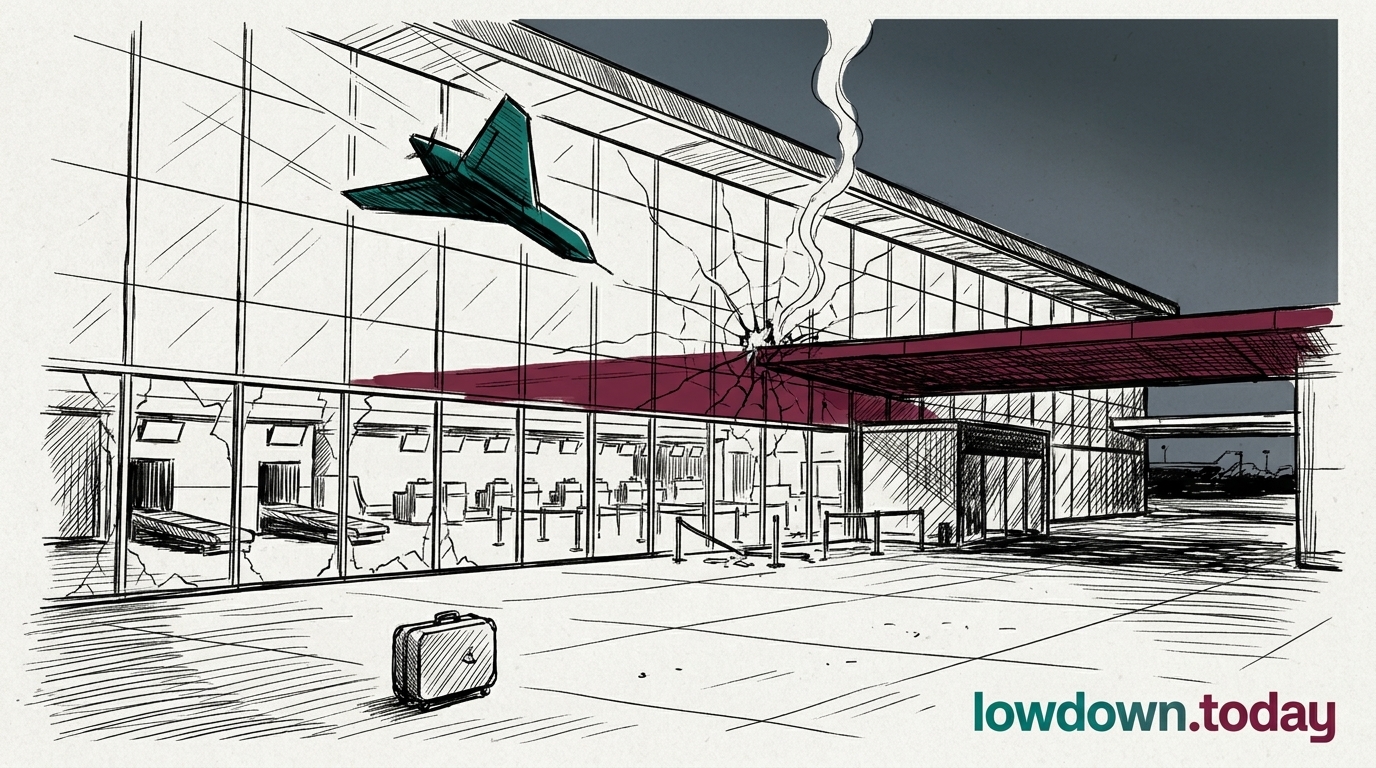
CENTCOM struck Iran's space command — the battlefield intelligence infrastructure that guided what remained of its ballistic missile capability. What follows may be less effective but harder to predict.

ConflictDeveloping
Key takeaway

Destroying Iran's space command severs central targeting coordination, but Mosaic Defence was explicitly designed to operate without central ISR — the strike degrades rather than eliminates Iran's residual launch capability.

CENTCOM confirmed on Friday that US forces struck Iran's space command — the infrastructure responsible for satellite-based targeting data and battlefield intelligence that guided Iranian Ballistic missile operations. The strikes eliminate the overhead surveillance capability that allowed Iranian launch crews to direct missiles at specific military installations across The Gulf.

Iran's Ballistic missile fire had already fallen 90% from Day 1 levels , a decline Admiral Brad Cooper attributed to strikes on launch infrastructure and buried missile storage. The space command strikes remove a different layer: not the missiles themselves, but the eyes that directed them. The IRGC activated its Decentralised Mosaic Defence doctrine earlier this week , devolving launch authority to 31 autonomous provincial units after decapitation strikes killed senior commanders on 28 February. Those units now operate without centralised command and without satellite targeting data — a double degradation that leaves each remaining launch less precise and less coordinated.

The military logic is straightforward: blind the adversary's residual strike capability. The second-order consequence is less comfortable. Iranian missiles aimed with satellite guidance struck identifiable military targets — the Fifth Fleet headquarters in Manama , Al Udeid Air Base in Qatar , the BAPCO refinery at Sitra . Missiles fired without that guidance, by autonomous provincial commanders operating under doctrine that authorises strikes without central approval, are more likely to miss intended targets. In the dense civilian geography of The Gulf — where Bahraini residential buildings, Dubai's Burj Al Arab , and Kuwaiti neighbourhoods where an eleven-year-old girl died from shrapnel have already absorbed impacts — reduced Iranian precision does not translate directly into reduced risk. It redistributes it.


Deep Analysis

In plain English

Iran uses satellites to help aim its missiles at specific targets, feeding real-time intelligence to launch crews. By destroying the ground facilities that operate those satellites, the US has broken that targeting link. Iran's missiles still exist, but now operate more like unguided rockets: capable of launching in a general direction, but unable to dynamically retarget specific ships, refineries, or military bases. The catch is that Iran specifically built its military to keep fighting even when central command is disrupted — the 'Mosaic Defence' system of independent provincial units was designed precisely for this scenario.

Deep Analysis
Synthesis

This is the first confirmed kinetic strike on adversary space ground infrastructure in a US regional campaign — not jamming, spoofing, or ASAT missile use, but physical destruction of the ground segment. This operationalises a counter-space doctrine developed theoretically for peer conflict and applies it against a regional power, establishing a normative precedent that adversary satellite ground stations are legitimate military targets in conventional warfare. China and Russia will read this as permission for symmetric action against US space ground infrastructure in any future conflict.

Escalation

The critical unanswered question the body does not address: whether Mosaic Defence provincial cells hold pre-programmed coordinates for high-value Gulf targets. If so, the space command strike eliminates dynamic targeting but does not prevent pre-planned strikes against fixed targets such as the Fifth Fleet's Bahrain pier, Saudi Aramco terminals, or UAE desalination infrastructure.

What could happen next?
  • Precedent

    First confirmed kinetic counter-space ground-segment strike in a US regional campaign establishes operational doctrine applicable to future peer and near-peer conflicts.

    Long term · Assessed
  • Consequence

    Iranian Mosaic Defence cells will likely attempt to compensate via commercial satellite imagery providers or pre-programmed GPS coordinates, partially restoring fixed-target capability with longer intelligence cycle times.

    Short term · Assessed
  • Risk

    China and Russia may interpret this strike as establishing normative permission to target US space ground infrastructure in any future conflict, accelerating their own counter-space operational planning.

    Medium term · Suggested
First Reported In

Update #24 · Trump demands unconditional surrender

Al Jazeera· 6 Mar 2026
Read original
Different Perspectives
Israel
Israel
IDF Chief Eyal Zamir declared on 3 June there was no ceasefire for his forces, and strikes killed at least 10 civilians and one Israeli soldier on 4 June. The IDF killed Hezbollah's chief engineer and warned three south Lebanon villages to evacuate on 5 June, advancing into ground the unsigned Washington framework has not caught.
Hezbollah / Lebanon
Hezbollah / Lebanon
Naim Qassem rejected the Washington Lebanon framework on 4 June as "absurd, humiliating and insulting", blocking a ceasefire instrument that required Hezbollah to withdraw north of the Litani before any Israeli withdrawal. Over one million Lebanese remain displaced; the framework's collapse prolongs that toll.
Iran
Iran
Foreign Minister Araghchi publicly coupled the Lebanon ceasefire to the Iran-US nuclear track on 4 June, carrying IRGC authority rather than his own civilian mandate. The IRGC delegation has sent no HEU counter-proposal since Araghchi confirmed no progress that same day; Mojtaba Khamenei's 21 May order to keep the 440.9 kg stockpile inside Iran remains operative.
United States
United States
Rubio placed the Iran-US deal at 95 per cent complete on 4 June while the administration signed no Iran instrument and OFAC designated only Cuban targets. Trump separately disclosed and rejected an airlift plan to collect Iran's HEU stockpile, claiming the material is "entombed", a claim the IAEA cannot verify.
China
China
Beijing's MOFCOM Blocking Rules constrain OFAC enforcement on the mainland; China has not corroborated Trump's verbal account of any bilateral summit, and the rial's failure to hold its Rubio bounce, combined with the IRGC's stablecoin rail closure, increases Chinese yuan-denominated oil-payment exposure through Hormuz.
Bahrain
Bahrain
The IRGC struck Bahrain on 3 June as its sirens sounded and its PAC-3 magazine neared exhaustion; excluded from Rubio's 2 May emergency resupply, Bahrain received a 50-round Federal Register notice on 1 June on an 18-month delivery timeline, meaning it is defending the US Fifth Fleet headquarters on the last rounds it has.



