Skip to content
Briefings are running a touch slower this week while we rebuild the foundations.See roadmap
Iran Conflict 2026
4JUN

Brussels fines Apple, Meta, and X €820m

3 min read
11:25UTC

The European Commission imposed its largest batch of platform fines under the DMA and DSA, totalling €820m across three US tech companies.

ConflictDeveloping
Key takeaway

The EU's first major DMA and DSA fines total €820m and confirm Brussels will use financial enforcement.

The European Commission fined Apple €500m for preventing developers from communicating freely with consumers, and Meta €200m for its pay-or-consent advertising model, under the Digital Markets Act 1. Separately, X (formerly Twitter) received a €120m fine under the Digital Services Act for deceptive verification practices, opaque advertising, and blocking researcher data access 2. The cumulative total: €820m.

The Apple fine targeted the company's App Store anti-steering rules, which prevented app developers from telling users about cheaper purchasing options outside the App Store. Meta's fine addressed a consent mechanism that forced European users to either pay for an ad-free experience or accept personalised tracking. Both cases concerned practices the companies had argued were compliant with the DMA's requirements.

The fines are large but survivable for companies of this scale. Apple's annual revenue exceeds $380bn. The enforcement significance is procedural: these are the first substantial DMA penalties, and they confirm that the Commission will use financial sanctions rather than relying on compliance deadlines and dialogue. The potential fine exposure across all designated gatekeepers exceeds €100bn if the Commission calculates penalties at the maximum 10% of global turnover. That ceiling gives Brussels considerable leverage in ongoing and future investigations.

Deep Analysis

In plain English

The European Union has two major laws that regulate large technology companies: the Digital Markets Act (DMA) targets the biggest digital platforms; the tech 'gatekeepers'; and requires them to give users and businesses more choice and fairness. The Digital Services Act (DSA) targets harmful or deceptive content and practices on platforms. In early 2026, the European Commission fined Apple €500 million under the DMA for preventing app developers from telling their customers about better deals available outside Apple's own App Store. Apple controls the iPhone's entire app distribution system, and the EC found that Apple was using that control to charge developers up to 30% commission while blocking them from directing customers elsewhere. Meta received a €200 million fine for its 'pay or consent' advertising model; which forced users to either pay a subscription fee or agree to targeted advertising. X (formerly Twitter) was fined €120 million for its blue checkmark verification system, which critics said misled users about who was trustworthy, and for blocking researchers from accessing public data.

Deep Analysis
Root Causes

The DMA's gatekeeper designation framework creates a structural asymmetry: the six designated gatekeepers (Alphabet, Amazon, Apple, ByteDance, Meta, Microsoft) are all US or Chinese companies. No European company meets the thresholds ($75bn market capitalisation, 10,000 active business users, 45m active end users in the EU).

This is not a design flaw; it reflects the actual distribution of digital market power; but it means DMA enforcement will exclusively target non-European entities indefinitely, creating the trade friction the US Section 301 investigation is designed to address.

X's €120m DSA fine is structurally different: it targets deceptive practices (the blue checkmark verification system that previously distinguished public figures from ordinary accounts) and researcher data access. The DSA applies a broader set of platforms, including Twitter/X, YouTube, and other large online platforms with more than 45m EU users. The €120m figure reflects DSA's lower fine ceiling relative to DMA.

What could happen next?
  • Consequence

    The Apple fine scale signals DMA enforcement has crossed the threshold where gatekeeper compliance is more economically rational than continued litigation, likely accelerating Apple's implementation of DMA interoperability requirements.

    Short term · 0.75
  • Risk

    The US Section 301 investigation framing DMA enforcement as 'economic warfare' raises the risk of tariff or trade retaliation that pressures the Commission to moderate enforcement intensity.

    Medium term · 0.6
  • Opportunity

    DMA cloud interoperability mandates, if upheld after gatekeeper legal challenges, create structural switching cost reductions that benefit European cloud providers disproportionately.

    Long term · 0.65
First Reported In

Update #1 · Europe's chip ambitions meet reality

CNBC· 13 Apr 2026
Read original
Different Perspectives
China
China
Beijing's MOFCOM Blocking Rules constrain OFAC enforcement on the mainland; China has not corroborated Trump's verbal account of any bilateral summit, and the rial's failure to hold its Rubio bounce, combined with the IRGC's stablecoin rail closure, increases Chinese yuan-denominated oil-payment exposure through Hormuz.
Israel
Israel
IDF Chief Zamir said on 3 June there is no ceasefire for his forces even as Israel signed the Washington Lebanon framework requiring Hezbollah withdrawal south of the Litani; a UNIFIL peacekeeper was killed by mortar near Marjayoun on the same day, exposing the gap between the diplomatic framework and a ground advance that has not stopped.
Bahrain
Bahrain
The IRGC struck Bahrain on 3 June as its sirens sounded and its PAC-3 magazine neared exhaustion; excluded from Rubio's 2 May emergency resupply, Bahrain received a 50-round Federal Register notice on 1 June on an 18-month delivery timeline, meaning it is defending the US Fifth Fleet headquarters on the last rounds it has.
Qatar
Qatar
Qatar offered $6bn under OFAC Licence L-2 restrictions and sent Ghalibaf's delegation home empty-handed; the $6bn ceiling is a legal constraint, not a negotiating floor, and Rubio's no-sanctions-relief testimony means Qatar cannot revise it without White House action that has not been requested.
Kuwait
Kuwait
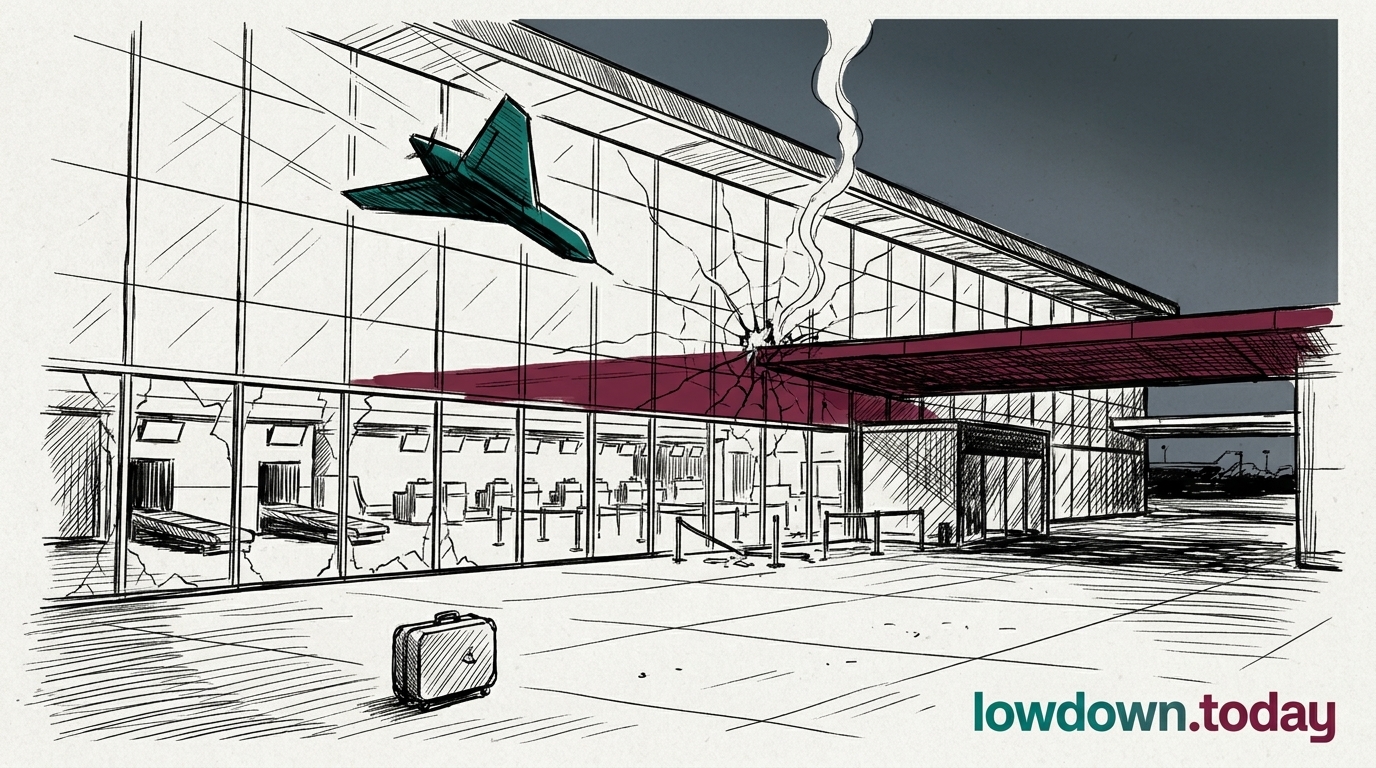
Kuwait expelled two Iranian diplomats within 24 hours of the airport strike, the strongest and fastest Kuwaiti diplomatic move of the conflict, while keeping the full mission in place to preserve a communication channel; it has now invoked Article 51 self-defence, filed a formal protest, and expelled diplomats, exhausting its formal toolkit short of full rupture.
United States
United States
Trump narrated a weekend deal while the channel Rubio described under oath, Khamenei's written-only couriers with a 3-to-5-day lag, cannot answer at that speed; CENTCOM called the airport strike deliberate, calculated and unjustified. The House 215-208 vote gave Congress its first on-record war-powers position against the deployment Trump has run without a signed instrument for 96 days.