Skip to content
Briefings are running a touch slower this week while we rebuild the foundations.See roadmap
Iran Conflict 2026
4JUN

Missile hits Bahrain BAPCO refinery

3 min read
11:25UTC

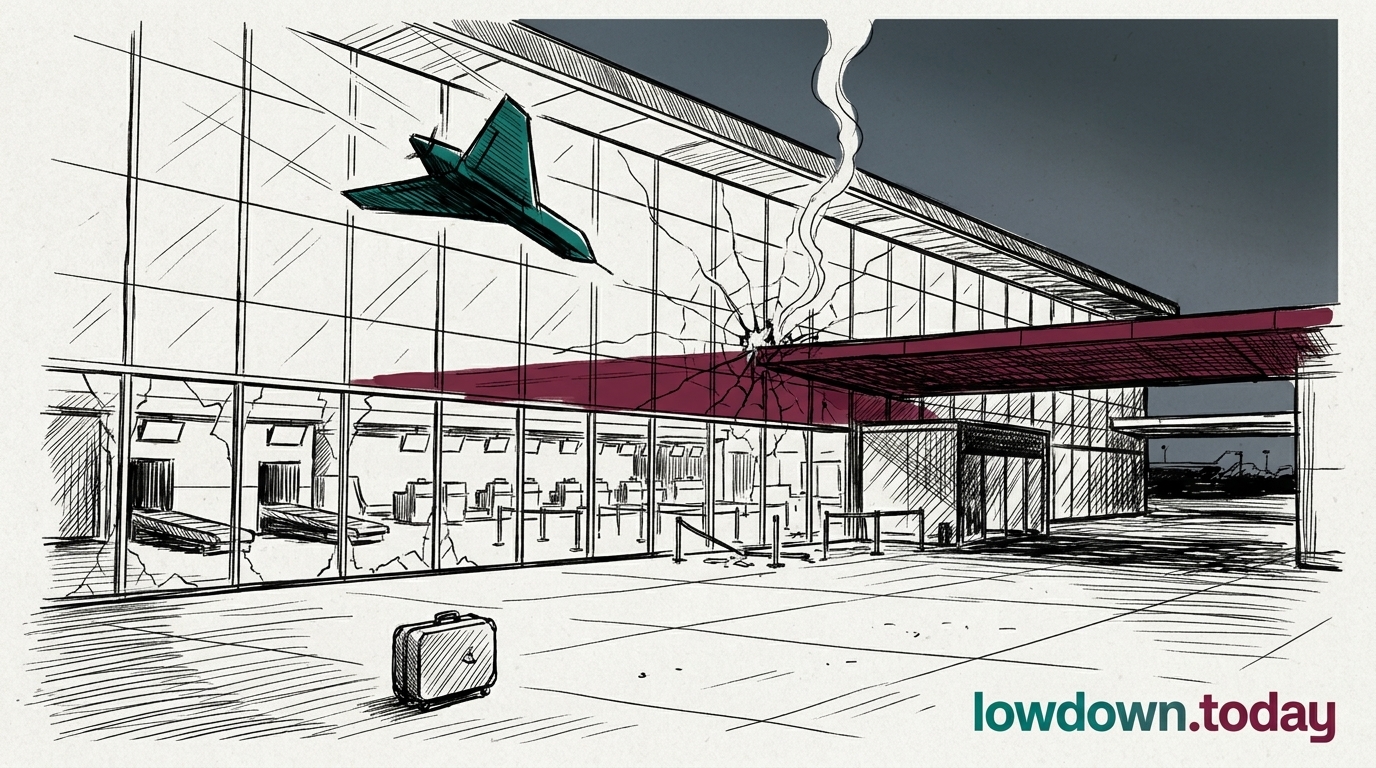
An Iranian ballistic missile struck BAPCO's Sitra refinery — Bahrain's primary refining operation — in the first confirmed attack on Gulf energy infrastructure since the conflict began.

ConflictDeveloping
Key takeaway

Targeting BAPCO on Sitra Island — the same island hosting the US Fifth Fleet headquarters — signals Iran is deliberately striking US-allied economic assets within direct range of America's primary Gulf command node, a qualitative shift in targeting geography.

An Iranian Ballistic missile struck the BAPCO Energies refinery at Sitra, Bahrain on Thursday — the first confirmed Iranian strike on Gulf energy infrastructure in this conflict. A fire started and was reported "contained." One hotel and two residential buildings were also hit. Bahraini authorities reported no casualties.

BAPCO is Bahrain's primary refining operation. The official language — "limited material damage," "contained" fire — does not address the operational question. Refineries that process flammable hydrocarbons at high temperature and pressure do not resume operations after a Ballistic missile strike without comprehensive safety inspections, a process that typically requires days. Whether BAPCO is currently producing refined product is unknown.

Bahrain has now absorbed 75 missiles and 123 drones since 28 February . The island — 780 square kilometres, roughly the area of New York City — hosts the US Fifth Fleet headquarters, where satellite imagery already confirmed several buildings destroyed and two AN/GSC-52B satellite communications terminals knocked out . The BAPCO strike extends Iranian targeting from the military infrastructure hosting American forces to the civilian energy infrastructure sustaining the Bahraini economy.

The distinction matters for Iran's strategic messaging. Striking the Fifth Fleet headquarters can be framed as self-defence against the force prosecuting the war. Striking a civilian refinery, a hotel, and residential buildings cannot. If Iran's Decentralised Mosaic Defence doctrine has devolved targeting authority to 31 provincial commanders , the question is whether the BAPCO strike reflects central strategic direction or an autonomous decision by a regional unit — and whether Tehran retains the ability to control that distinction.


Deep Analysis

In plain English

Iran fired a ballistic missile at Bahrain's main oil refinery. The refinery processes nearly all of Bahrain's oil exports and sits on the same island as the US Navy's Gulf headquarters. Even if the fire is contained, refineries that process flammable fuels must pass safety inspections before restarting after a missile strike — a process that takes days minimum. Bahrain is a small island nation that depends on oil revenue for roughly three-quarters of government spending, so even a short shutdown has a meaningful fiscal impact. The strike on a hotel and residential buildings in the same attack package suggests Iran is also trying to pressure Bahraini civilians, not just military and energy targets.

Deep Analysis
Synthesis

The targeting logic — energy infrastructure plus civilian structures in a single package — matches the pattern Iran used against Saudi Arabia in 2019 and mirrors classic coercive bombing theory: imposing economic and psychological costs on a host-nation population to erode domestic support for basing rights. Applied to Bahrain, a state of 1.5 million people with limited strategic depth, this coercive calculus is structurally more viable than against larger states, making Bahrain the most likely testing ground for whether civilian economic pressure can detach a Gulf host from US basing arrangements.

Escalation

Simultaneously targeting a refinery, a hotel, and residential buildings in a single strike package represents a qualitative escalation in Bahrain targeting: Iran is no longer restricting strikes to military and government infrastructure, introducing a civilian coercion dimension distinct from the cumulative quantity metrics already noted in the body.

What could happen next?
  • Consequence

    Mandatory post-strike safety inspections will take the refinery offline for days regardless of physical damage severity, reducing Bahrain's export revenue and potentially requiring emergency Saudi fuel supply arrangements.

    Immediate · Assessed
  • Risk

    Repeated strikes on BAPCO could force Bahrain into deeper economic dependence on Riyadh at a moment when Saudi Arabia is navigating its own neutrality, giving Riyadh leverage over Bahraini basing policy decisions.

    Short term · Suggested
  • Precedent

    The first confirmed Iranian strike on Bahraini energy infrastructure lowers the implicit threshold for future targeting of Gulf state civilian economic assets, signalling other host nations that basing rights carry direct economic costs.

    Short term · Assessed
First Reported In

Update #23 · Iran loses half its navy; China eyes Hormuz

Al Jazeera· 6 Mar 2026
Read original
Causes and effects
This Event
Missile hits Bahrain BAPCO refinery
Iran's targeting has expanded from military installations hosting US forces to civilian energy infrastructure sustaining the Bahraini economy. Whether the strike reflects central strategic direction or autonomous decision-making under Iran's decentralised command doctrine is an open question with implications for escalation control.
Different Perspectives
Israel
Israel
IDF Chief Eyal Zamir declared on 3 June there was no ceasefire for his forces, and strikes killed at least 10 civilians and one Israeli soldier on 4 June. The IDF killed Hezbollah's chief engineer and warned three south Lebanon villages to evacuate on 5 June, advancing into ground the unsigned Washington framework has not caught.
Hezbollah / Lebanon
Hezbollah / Lebanon
Naim Qassem rejected the Washington Lebanon framework on 4 June as "absurd, humiliating and insulting", blocking a ceasefire instrument that required Hezbollah to withdraw north of the Litani before any Israeli withdrawal. Over one million Lebanese remain displaced; the framework's collapse prolongs that toll.
Iran
Iran
Foreign Minister Araghchi publicly coupled the Lebanon ceasefire to the Iran-US nuclear track on 4 June, carrying IRGC authority rather than his own civilian mandate. The IRGC delegation has sent no HEU counter-proposal since Araghchi confirmed no progress that same day; Mojtaba Khamenei's 21 May order to keep the 440.9 kg stockpile inside Iran remains operative.
United States
United States
Rubio placed the Iran-US deal at 95 per cent complete on 4 June while the administration signed no Iran instrument and OFAC designated only Cuban targets. Trump separately disclosed and rejected an airlift plan to collect Iran's HEU stockpile, claiming the material is "entombed", a claim the IAEA cannot verify.
China
China
Beijing's MOFCOM Blocking Rules constrain OFAC enforcement on the mainland; China has not corroborated Trump's verbal account of any bilateral summit, and the rial's failure to hold its Rubio bounce, combined with the IRGC's stablecoin rail closure, increases Chinese yuan-denominated oil-payment exposure through Hormuz.
Bahrain
Bahrain
The IRGC struck Bahrain on 3 June as its sirens sounded and its PAC-3 magazine neared exhaustion; excluded from Rubio's 2 May emergency resupply, Bahrain received a 50-round Federal Register notice on 1 June on an 18-month delivery timeline, meaning it is defending the US Fifth Fleet headquarters on the last rounds it has.



