Skip to content
Briefings are running a touch slower this week while we rebuild the foundations.See roadmap
Iran Conflict 2026
4JUN

Second tanker blast off Fujairah

3 min read
11:25UTC

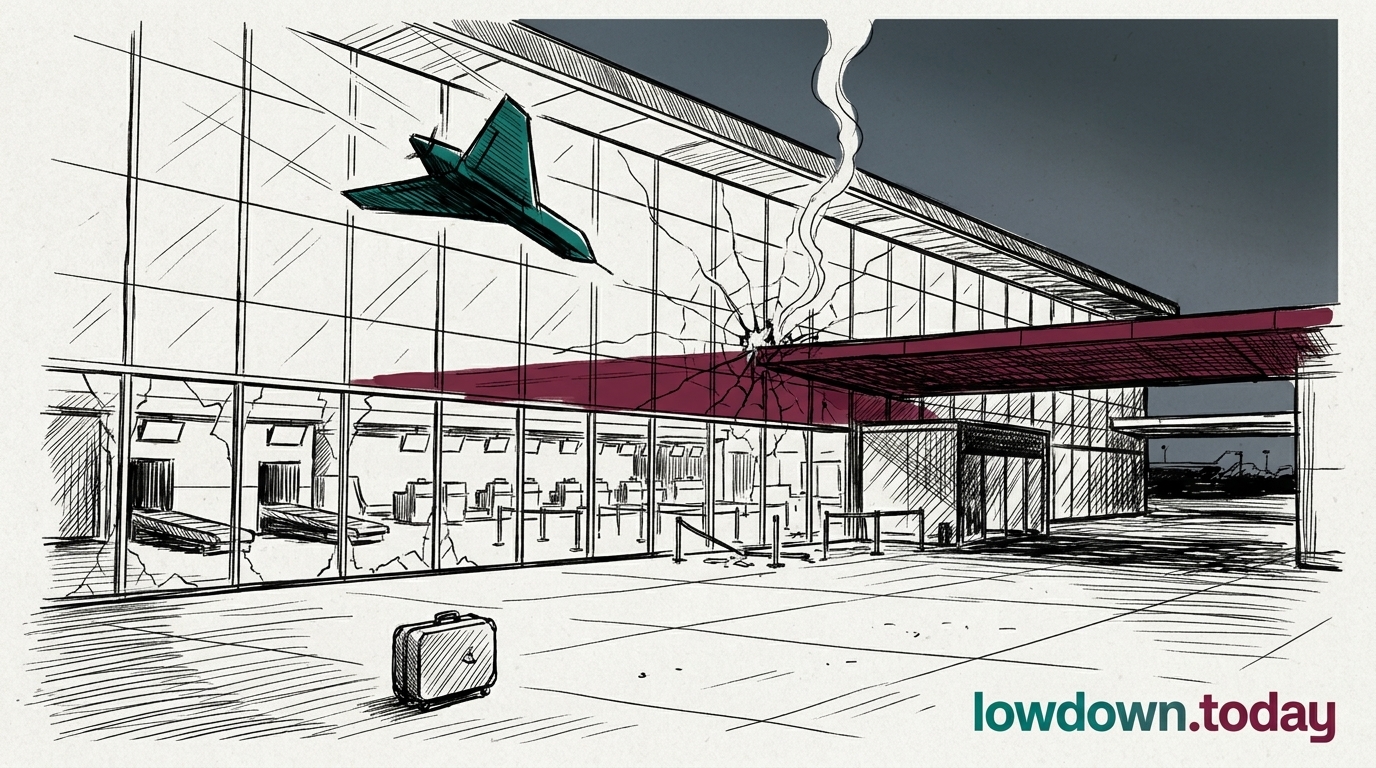
A second tanker reported a blast ten miles east of Fujairah, with minor damage and debris on deck. Two attacks in the same approaches, in the same period, complete the closure of the Gulf's last bypass route at every level.

ConflictDeveloping
Key takeaway

Two vessels struck in the same outer anchorage within hours of each other — combined with the earlier port strike — constitutes a layered closure of Fujairah at every level simultaneously, consistent with deliberate area-denial strategy rather than opportunistic targeting.

A second tanker reported a blast approximately 10 miles east of Fujairah, sustaining minor funnel damage with debris scattered across the deck. All crew were safe. The attack is distinct from the overnight strike on Fujairah port and from the Israeli-owned vessel hit 7 nautical miles to the east.

Two attacks on commercial vessels in the same approaches, in the same period, establish a pattern that the shipping industry will read as a standing threat rather than an isolated incident. Iran has now degraded every major Gulf energy export pathway at multiple points: production at Ras Laffan , refining at Ras Tanura , transit through the strait of Hormuz — where traffic has fallen 80% — the overland bypass infrastructure at Fujairah port , and now vessels in Fujairah's approaches. The systematic layering — fixed infrastructure, then pipeline terminus, then vessels at anchor — follows a military logic of closing escape routes before closing the door.

The commercial consequence is immediate. Fujairah's eastern anchorage had functioned as a holding area for vessels unable or unwilling to transit the strait. With the anchorage itself now under fire, those vessels face a choice between remaining stationary in waters where attacks have occurred and withdrawing entirely from The Gulf region. For the major shipping lines that had already halted Hormuz transits — CMA CGM, Maersk, Nippon Yusen, Mitsui, and Kawasaki Kisen — the Fujairah approach attacks remove the last commercial reason to keep vessels positioned in the area. CMA CGM's emergency surcharge of $2,000–$4,000 per container assumed some continued Gulf access; even that assumption is now in question. The geography of Gulf energy export has run out of alternatives.


Deep Analysis

In plain English

Think of Fujairah as the emergency exit for oil tankers that want to avoid the main contested channel. First the port facilities were struck. Then a ship was hit close to port. Now a second ship further out has been hit. Each strike extends the danger perimeter further from shore. Any tanker approaching to refuel, or waiting at anchor for conditions to improve, is now within demonstrated range. Ships cannot safely stage outside the danger zone because there is no longer a defined safe perimeter.

Deep Analysis
Synthesis

The three Fujairah incidents form a pattern that is analytically more significant than any one of them alone: simultaneous strikes on fixed port infrastructure, near-shore anchorage, and outer anchorage are consistent with a coordinated operational objective to close the Hormuz bypass entirely, not incidental targeting. This transforms Fujairah from a damaged facility into a denied zone — a distinction that determines whether commercial shipping can resume there once individual strikes stop.

Escalation

The three Fujairah incidents together — port infrastructure, near-shore vessel at 7nm, offshore vessel at 10nm — create a de facto maritime exclusion perimeter around UAE east coast waters. If sustained, this forces all tanker traffic onto the Cape of Good Hope route, adding 10–15 days to Asia-Europe voyages. This is a qualitative escalation beyond individual ship targeting: functional area denial of the world's second-largest bunkering hub is an economic weapon affecting all maritime trade, not just Gulf transit.

What could happen next?
  • Consequence

    Commercial shipping operators will cease UAE east coast anchorage operations, forcing diversion to longer Cape routes and sharply increasing Asia-Europe freight costs.

    Immediate · Assessed
  • Risk

    Loss of Fujairah bunkering capacity creates a refuelling bottleneck for vessels already in transit with insufficient fuel reserves to reach the next viable hub.

    Immediate · Assessed
  • Meaning

    Three simultaneous Fujairah strikes across port, near-shore, and offshore zones are consistent with deliberate strategic closure of the Hormuz bypass as a distinct operational objective.

    Immediate · Suggested
  • Precedent

    Systematic closure of bypass infrastructure alongside the primary strait sets a precedent for multi-layer maritime economic warfare that future actors will study.

    Long term · Suggested
First Reported In

Update #19 · First US torpedo kill since 1945

Argus Media· 4 Mar 2026
Read original
Causes and effects
This Event
Second tanker blast off Fujairah
A second vessel attack in Fujairah's eastern approaches establishes a pattern rather than an isolated incident and completes the closure of the Gulf's last overland and maritime bypass at every level: pipeline terminus, bunkering infrastructure, and commercial vessel anchorage.
Different Perspectives
Israel
Israel
IDF Chief Eyal Zamir declared on 3 June there was no ceasefire for his forces, and strikes killed at least 10 civilians and one Israeli soldier on 4 June. The IDF killed Hezbollah's chief engineer and warned three south Lebanon villages to evacuate on 5 June, advancing into ground the unsigned Washington framework has not caught.
Hezbollah / Lebanon
Hezbollah / Lebanon
Naim Qassem rejected the Washington Lebanon framework on 4 June as "absurd, humiliating and insulting", blocking a ceasefire instrument that required Hezbollah to withdraw north of the Litani before any Israeli withdrawal. Over one million Lebanese remain displaced; the framework's collapse prolongs that toll.
Iran
Iran
Foreign Minister Araghchi publicly coupled the Lebanon ceasefire to the Iran-US nuclear track on 4 June, carrying IRGC authority rather than his own civilian mandate. The IRGC delegation has sent no HEU counter-proposal since Araghchi confirmed no progress that same day; Mojtaba Khamenei's 21 May order to keep the 440.9 kg stockpile inside Iran remains operative.
United States
United States
Rubio placed the Iran-US deal at 95 per cent complete on 4 June while the administration signed no Iran instrument and OFAC designated only Cuban targets. Trump separately disclosed and rejected an airlift plan to collect Iran's HEU stockpile, claiming the material is "entombed", a claim the IAEA cannot verify.
China
China
Beijing's MOFCOM Blocking Rules constrain OFAC enforcement on the mainland; China has not corroborated Trump's verbal account of any bilateral summit, and the rial's failure to hold its Rubio bounce, combined with the IRGC's stablecoin rail closure, increases Chinese yuan-denominated oil-payment exposure through Hormuz.
Bahrain
Bahrain
The IRGC struck Bahrain on 3 June as its sirens sounded and its PAC-3 magazine neared exhaustion; excluded from Rubio's 2 May emergency resupply, Bahrain received a 50-round Federal Register notice on 1 June on an 18-month delivery timeline, meaning it is defending the US Fifth Fleet headquarters on the last rounds it has.



